
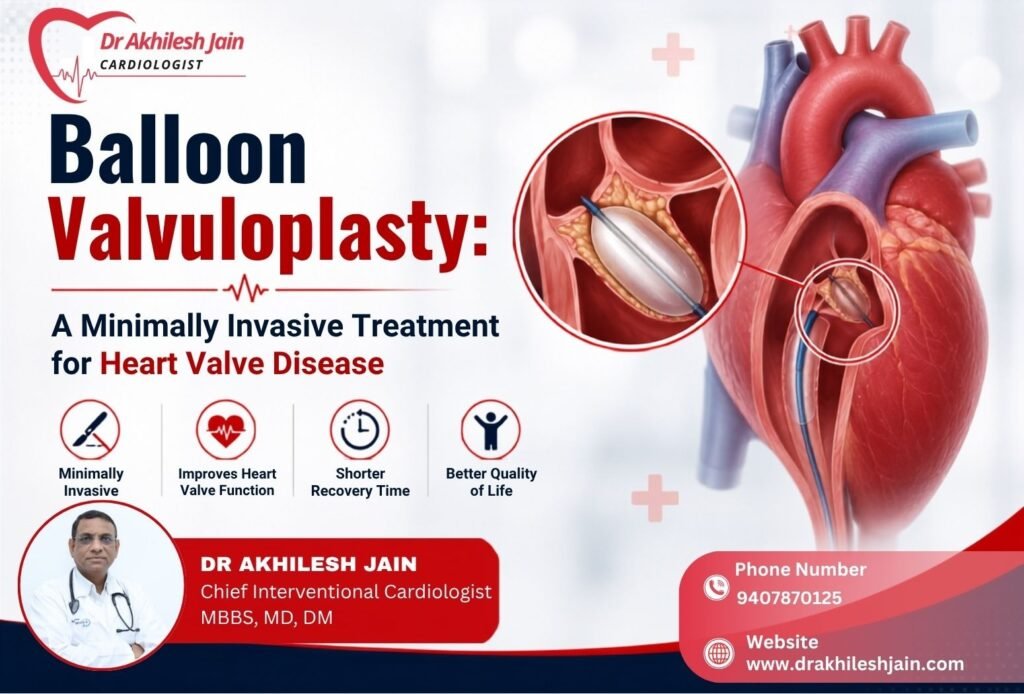
Balloon Valvuloplasty is an advanced minimally invasive procedure used to treat certain types of heart valve disease by improving blood flow through a narrowed heart valve. Many people diagnosed with heart valve disorders experience symptoms such as shortness of breath, chest discomfort, fatigue, dizziness, or reduced ability to perform daily activities. If left untreated, these conditions can place additional strain on the heart and may lead to serious complications. Fortunately, Balloon Valvuloplasty offers an effective treatment option for carefully selected patients, helping restore valve function without the need for open-heart surgery.
At the hands of an experienced Interventional Cardiologist in Indore, Balloon Valvuloplasty can significantly improve blood circulation, relieve symptoms, and enhance quality of life. The procedure involves inserting a thin catheter with a specially designed balloon into the narrowed heart valve. Once positioned correctly, the balloon is gently inflated to widen the valve opening, allowing blood to flow more freely through the heart.
At Dr. Akhilesh Jain’s Heart Care Centre, patients receive comprehensive evaluation and personalized treatment for various cardiac conditions, including Balloon Valvuloplasty in Indore. With advanced cardiac technology, extensive interventional cardiology experience, and a patient-centred approach, the focus remains on delivering safe, effective, and evidence-based heart care for every individual.
What is Balloon Valvuloplasty?
Balloon Valvuloplasty is a catheter-based cardiac procedure performed to treat narrowed heart valves, a condition medically known as valvular stenosis. Instead of replacing the affected valve through major surgery, this minimally invasive technique widens the narrowed valve using a balloon attached to the tip of a catheter.
Healthy heart valves open and close smoothly to regulate blood flow through the heart’s chambers. However, ageing, calcium deposits, congenital abnormalities, or rheumatic heart disease can cause the valve leaflets to become thickened and stiff. As the valve opening becomes narrower, the heart must work harder to pump blood throughout the body.
Balloon Valvuloplasty helps improve blood flow by gently stretching the narrowed valve, reducing pressure on the heart and relieving symptoms associated with valve stenosis.
The procedure is commonly recommended for selected patients with:
- Aortic valve stenosis
- Mitral valve stenosis
- Pulmonary valve stenosis
- Certain congenital heart valve abnormalities
Because it does not require opening the chest, Balloon Valvuloplasty usually offers a faster recovery compared to traditional heart surgery.
How Does Balloon Valvuloplasty Work?
To understand how Balloon Valvuloplasty improves heart function, it is important to know how healthy heart valves normally work.
The human heart contains four valves that ensure blood flows in the correct direction:
- Aortic Valve
- Mitral Valve
- Pulmonary Valve
- Tricuspid Valve
When one of these valves becomes narrowed, blood cannot pass through efficiently. As a result, the heart has to pump harder to maintain adequate circulation, increasing the workload on the heart muscle.
During Balloon Valvuloplasty, the interventional cardiologist inserts a thin catheter through a blood vessel, usually in the groin or arm, and carefully guides it to the affected heart valve using advanced imaging techniques.
Once the catheter reaches the narrowed valve, a small balloon at its tip is inflated for a few seconds. The balloon gently stretches the stiff valve leaflets, increasing the size of the valve opening and improving blood flow. After the valve has been widened sufficiently, the balloon is deflated and removed.
Because the procedure uses only a small puncture instead of a large surgical incision, patients generally experience:
- Smaller wounds
- Less pain
- Reduced blood loss
- Shorter hospital stay
- Faster recovery
- Earlier return to daily activities
This minimally invasive approach has made Balloon Valvuloplasty in Indore an important treatment option for appropriately selected patients with heart valve disease.
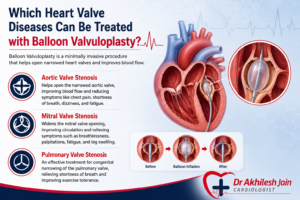
Which Heart Valve Diseases Can Be Treated with Balloon Valvuloplasty?
Although Balloon Valvuloplasty is not suitable for every type of valve disease, it is highly effective for several conditions involving narrowed heart valves.
Aortic Valve Stenosis
Aortic valve stenosis occurs when the aortic valve becomes narrowed, restricting blood flow from the heart to the rest of the body.
Common symptoms include:
- Chest pain
- Shortness of breath
- Dizziness
- Fatigue
- Fainting episodes
For selected patients, especially those who require temporary relief or are not immediate candidates for valve replacement surgery, Balloon Valvuloplasty may improve blood flow and reduce symptoms.
Mitral Valve Stenosis
Mitral valve stenosis is commonly associated with rheumatic heart disease and causes narrowing of the valve between the left atrium and left ventricle.
Symptoms may include:
- Breathlessness during activity
- Palpitations
- Fatigue
- Swelling of the legs
- Reduced exercise tolerance
In carefully selected patients, Balloon Valvuloplasty can significantly enlarge the mitral valve opening and improve circulation, often providing excellent symptomatic relief.
Pulmonary Valve Stenosis
Pulmonary valve stenosis is frequently seen as a congenital heart condition and affects blood flow from the right ventricle to the lungs.
Patients may experience:
- Shortness of breath
- Fatigue
- Bluish skin discoloration in severe cases
- Reduced physical endurance
Balloon Valvuloplasty is considered one of the preferred treatment options for many patients with pulmonary valve stenosis because of its excellent success rate and minimally invasive nature.
Signs That You May Need Balloon Valvuloplasty
Heart valve disease often develops gradually, and symptoms may become more noticeable as the condition progresses. Seeking timely evaluation from an experienced Best Cardiologist in Indore can help identify the problem before serious complications develop.
Some common signs include:
- Persistent shortness of breath
- Chest discomfort or chest pain
- Fatigue even after mild physical activity
- Dizziness or fainting spells
- Heart palpitations
- Swelling in the legs or ankles
- Difficulty climbing stairs
- Reduced exercise capacity
If these symptoms are associated with significant valve narrowing, your cardiologist may recommend further investigations such as Echocardiography, ECG, Cardiac CT, or Cardiac Catheterization to determine whether Balloon Valvuloplasty is the most appropriate treatment option.
Benefits of Balloon Valvuloplasty
One of the biggest advantages of Balloon Valvuloplasty is that it provides an effective treatment for selected patients with narrowed heart valves without the need for open-heart surgery. Advances in interventional cardiology have made this minimally invasive procedure a preferred option for many patients because it offers faster recovery, less discomfort, and improved heart function.
For individuals diagnosed with heart valve stenosis, Balloon Valvuloplasty in Indore can significantly improve blood flow, reduce symptoms, and enhance overall quality of life.
Some of the major benefits of Balloon Valvuloplasty include:
- Minimally invasive treatment
- No large surgical incision
- Improved blood flow through the heart
- Relief from symptoms such as breathlessness and chest discomfort
- Shorter hospital stay
- Faster recovery compared to open-heart surgery
- Reduced risk of surgical complications
- Improved exercise tolerance
- Better quality of life
- Suitable for carefully selected patients who may not be immediate candidates for valve replacement surgery
By restoring better blood circulation, Balloon Valvuloplasty helps reduce the workload on the heart, allowing patients to perform daily activities with greater comfort and confidence.
Who is the Right Candidate for Balloon Valvuloplasty?
Not every patient with heart valve disease requires the same treatment. The decision to perform Balloon Valvuloplasty depends on the type of valve affected, the severity of narrowing, the patient’s overall health, and findings from detailed cardiac investigations.
Your cardiologist may recommend Balloon Valvuloplasty in Indore if you have:
- Moderate to severe valve stenosis
- Symptoms such as shortness of breath, fatigue, or chest pain
- Rheumatic mitral valve stenosis
- Pulmonary valve stenosis
- Selected cases of aortic valve stenosis
- Congenital narrowing of a heart valve
- High surgical risk due to age or other medical conditions
- Need for temporary improvement before valve replacement
Before recommending the procedure, a detailed evaluation is performed, which may include:
- Echocardiography (2D Echo)
- Doppler Study
- Electrocardiogram (ECG)
- Chest X-ray
- Blood investigations
- Cardiac CT Scan (if required)
- Cardiac Catheterization
These tests help determine whether Balloon Valvuloplasty is the safest and most effective treatment option.
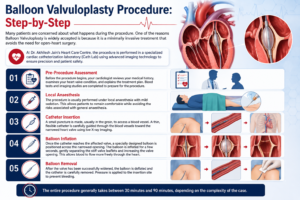
Balloon Valvuloplasty Procedure: Step-by-Step
Many patients are concerned about what happens during the procedure. One of the reasons Balloon Valvuloplasty is widely accepted is because it is a minimally invasive treatment that avoids the need for open-heart surgery.
At Dr. Akhilesh Jain’s Heart Care Centre, the procedure is performed in a specialized cardiac catheterization laboratory (Cath Lab) using advanced imaging technology to ensure precision and patient safety.
Step 1: Pre-Procedure Assessment
Before the procedure begins, your cardiologist reviews your medical history, examines your heart valve condition, and explains the treatment plan. Blood tests and imaging studies are completed to prepare for the procedure.
Step 2: Local Anaesthesia
The procedure is usually performed under local anaesthesia with mild sedation. This allows patients to remain comfortable while avoiding the risks associated with general anaesthesia.
Step 3: Catheter Insertion
A small puncture is made, usually in the groin, to access a blood vessel. A thin, flexible catheter is carefully guided through the blood vessels toward the narrowed heart valve using live X-ray imaging.
Step 4: Balloon Inflation
Once the catheter reaches the affected valve, a specially designed balloon is positioned across the narrowed opening.
The balloon is inflated for a few seconds, gently separating the stiff valve leaflets and increasing the valve opening. This allows blood to flow more freely through the heart.
Step 5: Balloon Removal
After the valve has been successfully widened, the balloon is deflated and the catheter is carefully removed. Pressure is applied to the insertion site to prevent bleeding.
The entire procedure generally takes between 30 minutes and 90 minutes, depending on the complexity of the case.
Recovery After Balloon Valvuloplasty
Recovery after Balloon Valvuloplasty is usually much quicker than recovery after open-heart surgery because the procedure involves only a small puncture rather than a large chest incision.
Most patients remain under observation for a short period before returning home, depending on their overall condition and the type of valve treated.
During the recovery period, patients are encouraged to:
- Walk as advised by their cardiologist
- Take prescribed medications regularly
- Keep the catheter insertion site clean and dry
- Avoid strenuous physical activity for a few days
- Attend scheduled follow-up appointments
- Follow dietary and lifestyle recommendations for heart health
Many patients notice significant improvement in breathing, energy levels, and exercise capacity within a short time after successful Balloon Valvuloplasty.
Risks and Success Rate of Balloon Valvuloplasty
Like any medical procedure, Balloon Valvuloplasty carries certain risks. However, when performed by an experienced Interventional Cardiologist in Indore, the procedure is generally considered safe, and serious complications are uncommon.
Possible risks may include:
- Bleeding at the catheter insertion site
- Infection
- Irregular heart rhythm
- Blood vessel injury
- Valve leakage
- Re-narrowing of the treated valve over time
- Rare need for emergency surgery
Although these risks exist, careful patient selection, detailed pre-procedure evaluation, and advanced Cath Lab technology help minimize complications.
The success rate of Balloon Valvuloplasty is particularly high in carefully selected patients with mitral valve stenosis and pulmonary valve stenosis. Many patients experience immediate improvement in blood flow and relief from symptoms following the procedure.
Regular follow-up with your cardiologist remains important to monitor valve function and overall heart health after treatment.
Why Choose Dr. Akhilesh Jain for Balloon Valvuloplasty in Indore?
Choosing the right cardiologist is one of the most important decisions when undergoing a specialized cardiac procedure like Balloon Valvuloplasty. While advanced technology plays a vital role, the experience, clinical expertise, and decision-making skills of the treating cardiologist are equally important in achieving successful outcomes.
Patients looking for Balloon Valvuloplasty in Indore trust Dr. Akhilesh Jain because of his extensive experience in interventional cardiology, advanced training at India’s leading cardiac institutes, and commitment to providing evidence-based heart care. Every patient undergoes a comprehensive cardiac evaluation before treatment, ensuring that the most appropriate and safest treatment plan is selected according to their individual heart condition.
Why patients choose Dr. Akhilesh Jain for Balloon Valvuloplasty in Indore:
- More than 20 years of experience in clinical and interventional cardiology
- Expertise in advanced minimally invasive cardiac procedures
- Extensive experience in Balloon Valvuloplasty and coronary interventions
- Personalized treatment plans based on each patient’s condition
- Advanced Cath Lab technology for accurate diagnosis and treatment
- Comprehensive evaluation before every cardiac procedure
- Focus on patient safety and evidence-based treatment
- Compassionate care with long-term cardiac follow-up
- Expertise in managing both simple and complex heart conditions
- Commitment to delivering high-quality cardiac care with excellent clinical outcomes
Whether treating heart valve disease, coronary artery disease, or other complex cardiac disorders, Dr. Akhilesh Jain combines advanced medical knowledge with patient-centred care to help individuals achieve better heart health and improved quality of life.
Professional Experience and Expertise
Dr. Akhilesh Jain’s professional journey reflects more than two decades of dedication to interventional cardiology and advanced cardiac care. During his career, he has worked with several reputed hospitals across India, gaining extensive experience in managing complex cardiovascular diseases.
Professional Experience
- Consultant Cardiologist (2011–2013) – Fortis Escorts Hospital, Raipur
- Consultant Cardiologist (2014) – Bansal Hospital, Bhopal
- Consultant Cardiologist (2015) – Sri Narayana Hospital, Raipur
- Senior Interventional Cardiologist (2016 onwards) – Shalby Multispeciality Hospital, Indore
Over the years, Dr. Akhilesh Jain has successfully performed:
- More than 10,000 Coronary Angiographies
- Over 2,000 Coronary Angioplasties
- More than 500 Permanent Pacemaker Implantations
- More than 200 Balloon Mitral Valvuloplasty (BMV) procedures
- Numerous congenital heart interventions including ASD and PDA device closures
- Advanced peripheral vascular and structural heart procedures
His expertise extends beyond routine coronary interventions to include highly specialized procedures such as:
- Balloon Valvuloplasty
- Balloon Mitral Valvuloplasty (BMV)
- Coronary Angioplasty (PCI)
- Pacemaker Implantation
- Complex Coronary Interventions
- Congenital Heart Disease Interventions
- Peripheral Angioplasty
- Aortic Stenting
- Bronchial Artery Embolization
Dr. Akhilesh Jain has also managed several rare and high-risk cardiac cases, demonstrating his ability to perform complex interventions with precision while maintaining the highest standards of patient safety.
His commitment to continuous learning, advanced technology, and evidence-based treatment has established him as one of the leading Interventional Cardiologists in Indore.
Summary
Balloon Valvuloplasty is an advanced minimally invasive procedure that offers an effective treatment option for selected patients with narrowed heart valves. Unlike traditional open-heart surgery, this catheter-based technique improves blood flow by widening the narrowed valve using a specially designed balloon. The procedure helps relieve symptoms such as shortness of breath, chest pain, fatigue, dizziness, and reduced exercise tolerance while allowing faster recovery and a shorter hospital stay.
For patients diagnosed with mitral valve stenosis, pulmonary valve stenosis, or selected cases of aortic valve stenosis, Balloon Valvuloplasty in Indore can significantly improve heart function and quality of life. The success of the procedure depends on accurate diagnosis, careful patient selection, advanced technology, and the expertise of an experienced interventional cardiologist.
At Dr. Akhilesh Jain’s Heart Care Centre, every patient undergoes a detailed cardiac evaluation before treatment. Using modern Cath Lab technology and evidence-based cardiology practices, Dr. Akhilesh Jain provides personalized treatment plans designed to ensure patient safety, improve heart valve function, and support long-term cardiovascular health.
Frequently Asked Questions (FAQs)
1. What is Balloon Valvuloplasty?
Balloon Valvuloplasty is a minimally invasive cardiac procedure used to treat narrowed heart valves. A balloon attached to a catheter is inserted through a blood vessel and inflated to widen the affected valve, allowing blood to flow more freely.
2. Who needs Balloon Valvuloplasty?
Patients with moderate to severe heart valve stenosis, particularly mitral valve stenosis, pulmonary valve stenosis, or selected cases of aortic valve stenosis, may benefit from Balloon Valvuloplasty after a detailed evaluation by an experienced cardiologist.
3. Is Balloon Valvuloplasty a major surgery?
No. Balloon Valvuloplasty is a minimally invasive procedure that does not require opening the chest. It is performed using a catheter inserted through a blood vessel, resulting in smaller wounds, less discomfort, and faster recovery compared to open-heart surgery.
4. How long does Balloon Valvuloplasty take?
The procedure generally takes between 30 and 90 minutes, depending on the complexity of the case and the type of heart valve being treated.
5. How long is the recovery after Balloon Valvuloplasty?
Recovery is usually much faster than open-heart surgery. Many patients are able to return to their normal routine within a few days, depending on their overall health and the advice of their cardiologist.
6. What are the benefits of Balloon Valvuloplasty?
Some of the major benefits include:
- Minimally invasive treatment
- Improved blood flow
- Faster recovery
- Shorter hospital stay
- Reduced symptoms
- Better quality of life
- Less postoperative discomfort
- Lower surgical risk for selected patients
7. Is Balloon Valvuloplasty safe?
When performed by an experienced Interventional Cardiologist in Indore, Balloon Valvuloplasty is generally considered a safe procedure. As with any medical treatment, there are some risks, but careful evaluation and advanced Cath Lab technology help minimize complications.
8. Will I need heart valve replacement after Balloon Valvuloplasty?
Some patients continue to do well after Balloon Valvuloplasty, while others may require additional treatment or valve replacement later, depending on the severity of their valve disease and long-term heart function.
9. Why choose Dr. Akhilesh Jain for Balloon Valvuloplasty in Indore?
Dr. Akhilesh Jain has more than 20 years of experience in interventional cardiology and has successfully performed thousands of advanced cardiac procedures. His expertise, advanced training, personalized patient care, and use of modern cardiac technology make him one of the preferred specialists for Balloon Valvuloplasty in Indore.
10. How do I know if I need Balloon Valvuloplasty?
If you experience symptoms such as breathlessness, chest pain, dizziness, fatigue, fainting, or reduced exercise tolerance, consult a cardiologist. After detailed investigations such as 2D Echo, ECG, and other cardiac tests, your doctor will determine whether Balloon Valvuloplasty is the most appropriate treatment.
Conclusion: Balloon Valvuloplasty – A Minimally Invasive Treatment for Heart Valve Disease
Balloon Valvuloplasty has transformed the treatment of selected heart valve diseases by offering a safe and effective minimally invasive alternative to traditional open-heart surgery. By improving blood flow through narrowed heart valves, the procedure helps relieve symptoms, improves daily functioning, and enhances overall quality of life. For many patients, it provides significant clinical improvement with less pain, faster recovery, and a shorter hospital stay.
If you are looking for Balloon Valvuloplasty in Indore, choosing an experienced interventional cardiologist is essential for achieving the best possible outcomes. At Dr. Akhilesh Jain’s Heart Care Centre, patients receive comprehensive cardiac evaluation, advanced diagnostic facilities, and personalized treatment plans based on evidence-based cardiology practices. With extensive experience in minimally invasive cardiac interventions, Dr. Akhilesh Jain remains committed to providing high-quality heart care focused on patient safety, precision, and long-term cardiovascular health.