
Heart rhythm plays an important role in maintaining proper blood circulation throughout the body. When the electrical signals that control the heartbeat become abnormal, the heart may beat too fast, too slowly, or irregularly. This condition is known as arrhythmia. For patients experiencing irregular heartbeat, palpitations, dizziness, chest discomfort, or shortness of breath, timely cardiac evaluation is important. Best Arrhythmia Treatment in Indore focuses on identifying the exact type and cause of the rhythm disorder and selecting the most appropriate treatment according to the patient’s condition. Depending on the severity and type of arrhythmia, treatment may include medicines, lifestyle changes, cardioversion, catheter ablation, or pacemaker implantation.
Patients with an abnormal heartbeat may experience symptoms such as palpitations, racing heartbeat, dizziness, fatigue, shortness of breath, chest discomfort, or fainting. In some cases, arrhythmia may not produce noticeable symptoms and may only be detected during a routine cardiac examination or ECG.
For patients looking for the Best Arrhythmia Treatment in Indore, accurate diagnosis is an important first step. The treatment depends on the type of rhythm abnormality, its severity, the patient’s overall health, and whether there is an underlying heart condition. Depending on the individual case, treatment may include medicines, lifestyle changes, cardioversion, catheter-based procedures, or pacemaker implantation.
At Dr. Akhilesh Jain’s Heart Care Centre, patients receive comprehensive cardiac evaluation and personalized treatment planning for different heart conditions. With more than 20 years of experience in clinical and interventional cardiology, Dr. Akhilesh Jain focuses on accurate diagnosis, evidence-based treatment, patient safety, and long-term cardiac care.
What is Arrhythmia?
Arrhythmia is a condition in which the heart beats in an abnormal rhythm. The heartbeat may become too fast, too slow, or irregular because of changes in the electrical signals responsible for controlling the heart.
A healthy heart has a specialized electrical system that coordinates the contraction of its four chambers. The electrical signal normally starts in the sinus node and travels through the heart in an organized pattern. This allows the heart chambers to contract properly and pump blood efficiently.
When this electrical activity is disrupted, an heart rhythm disorder can develop. Some rhythm abnormalities occur occasionally, while others may be persistent or recurrent.
Common types of arrhythmia include:
- Atrial Fibrillation
- Atrial Flutter
- Supraventricular Tachycardia
- Ventricular Tachycardia
- Ventricular Fibrillation
- Bradycardia
- Heart Block
- Sick Sinus Syndrome
- Premature Atrial Contractions
- Premature Ventricular Contractions
The treatment required depends on the specific type of arrhythmia and its effect on the patient’s heart function.
How Does Arrhythmia Affect the Heart?
The heart depends on precisely coordinated electrical signals to maintain an effective heartbeat. An heart rhythm disorder can interfere with this coordination and affect how efficiently the heart pumps blood.
When the heart beats too quickly, it may not have enough time to fill properly between contractions. When the heartbeat is too slow, the heart may not pump enough blood to meet the body’s requirements.
Irregular rhythms can also affect blood flow inside the heart. For example, atrial fibrillation can increase the risk of blood clot formation and stroke in certain patients. Some persistent or serious rhythm disorders can also contribute to weakening of the heart over time.
This is why proper diagnosis is important before selecting Arrhythmia Treatment in Indore. A cardiologist needs to determine the exact rhythm abnormality and identify any underlying cardiovascular condition.
Types of Arrhythmia
Different types of rhythm disorders affect the heart in different ways. Understanding the specific condition can help patients understand why particular treatment options may be recommended.
Atrial Fibrillation
Atrial fibrillation, commonly called AF or AFib, is one of the most common types of irregular heart rhythm. In this condition, the upper chambers of the heart beat in an irregular and disorganized manner.
Common symptoms include:
- Irregular heartbeat
- Racing or pounding heartbeat
- Palpitations
- Breathlessness
- Fatigue
- Dizziness
- Weakness
- Reduced exercise tolerance
Atrial fibrillation can increase the risk of blood clots and stroke in some patients. Treatment may involve medicines, heart-rate control, rhythm-control strategies, cardioversion, or catheter ablation depending on the patient’s condition.
Atrial Flutter
Atrial flutter is another rhythm abnormality originating in the upper chambers of the heart. It may cause a rapid heartbeat and symptoms similar to atrial fibrillation.
Treatment depends on the patient’s symptoms and cardiovascular risk and may include medicines, cardioversion, or catheter-based treatment.
Supraventricular Tachycardia
Supraventricular tachycardia, or SVT, causes episodes of an unusually rapid heartbeat originating above the ventricles.
Patients may experience:
- Sudden racing heartbeat
- Palpitations
- Dizziness
- Breathlessness
- Weakness
- Chest discomfort
- Fainting in some cases
Some patients can manage SVT with medicines, while recurrent or symptomatic cases may be considered for catheter ablation.
Bradycardia
Bradycardia refers to a slow heart rate. A slow heartbeat is not always a medical problem because healthy and physically active people can naturally have lower resting heart rates.
However, when a slow rhythm causes dizziness, weakness, fainting, fatigue, or inadequate blood circulation, further cardiac evaluation may be necessary.
In selected patients with significant conduction problems, pacemaker implantation may be recommended.
Ventricular Arrhythmias
Ventricular tachycardia and ventricular fibrillation originate from the lower chambers of the heart. Some ventricular rhythm disorders can be life-threatening and require emergency medical treatment.
Patients with serious ventricular rhythm abnormalities may require specialized evaluation and, depending on their risk, advanced treatment such as medication, ablation, or an implantable cardiac device.
Symptoms of Arrhythmia
The symptoms of arrhythmia can vary from person to person. Some patients may have no symptoms, while others may experience noticeable changes in their heartbeat.
Common symptoms include:
- Fast heartbeat
- Slow heartbeat
- Irregular heartbeat
- Fluttering sensation in the chest
- Pounding heartbeat
- Skipped beats
- Dizziness
- Lightheadedness
- Fatigue
- Weakness
- Shortness of breath
- Chest discomfort
- Reduced exercise capacity
- Fainting or near-fainting
Persistent or recurring symptoms should be evaluated by a qualified cardiologist. Patients searching for Arrhythmia Treatment in Indore should not ignore repeated palpitations or unexplained fainting, particularly when these symptoms occur with chest pain or breathlessness.
Severe chest pain, fainting, severe breathing difficulty, or symptoms suggesting a serious cardiac emergency require immediate medical attention.
Causes of Arrhythmia
An abnormal heart rhythm can develop because of problems within the heart’s electrical system or because of another medical condition affecting cardiovascular function.
Some common causes and contributing factors include:
- Coronary artery disease
- Previous heart attack
- High blood pressure
- Heart valve disease
- Heart failure
- Cardiomyopathy
- Congenital heart conditions
- Thyroid disorders
- Diabetes
- Sleep apnea
- Electrolyte imbalance
- Certain medications
- Excessive alcohol consumption
- Smoking
- Excessive stimulant or caffeine intake
- Stress
- Genetic factors
- Previous cardiac procedures
Changes in electrolytes such as potassium, sodium, calcium, or magnesium can affect the electrical activity of the heart.
In some patients, however, no obvious underlying cause may be identified.
Risk Factors for Arrhythmia
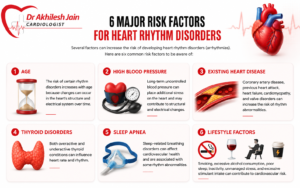
Several factors can increase the risk of developing an abnormal heart rhythm.
1. Age
The risk of certain rhythm disorders increases with age because changes can occur in the heart’s structure and electrical system over time.
2. High Blood Pressure
Long-term uncontrolled blood pressure can place additional stress on the heart and may contribute to structural and electrical changes.
3. Existing Heart Disease
Coronary artery disease, previous heart attack, heart failure, cardiomyopathy, and valve disorders can increase the risk of rhythm abnormalities.
4. Thyroid Disorders
Both overactive and underactive thyroid conditions can influence heart rate and rhythm.
5. Sleep Apnea
Sleep-related breathing disorders can affect cardiovascular health and are associated with some rhythm abnormalities.
6. Lifestyle Factors
Smoking, excessive alcohol consumption, poor sleep, inactivity, unmanaged stress, and excessive stimulant intake can contribute to cardiovascular risk.
Managing these factors can support overall heart health and may help reduce the risk of some rhythm disorders.
Diagnosis of Arrhythmia
Accurate diagnosis is an essential part of the Best Arrhythmia Treatment in Indore. Since different rhythm abnormalities require different approaches, identifying the exact type of arrhythmia is important before treatment begins.
A cardiologist may recommend one or more of the following tests.
Electrocardiogram (ECG)
An ECG records the electrical activity of the heart and can identify many types of abnormal rhythms.
Holter Monitoring
A Holter monitor continuously records the heart’s electrical activity over an extended period. It can be particularly useful when symptoms occur intermittently and are not present during a routine ECG.
Event Monitoring
Patients with less frequent symptoms may require longer-term rhythm monitoring to capture an abnormal heartbeat when symptoms occur.
Echocardiography
An echocardiogram uses ultrasound to assess the structure and pumping function of the heart. It can help identify structural heart conditions associated with an heart rhythm disorder.
Blood Tests
Blood investigations may be performed to check thyroid function, electrolyte levels, blood sugar, and other conditions that can influence heart rhythm.
Additional Cardiac Tests
Depending on the patient’s symptoms and medical history, additional imaging or specialized cardiac testing may be recommended.
Best Arrhythmia Treatment in Indore: Treatment Options
There is no single treatment suitable for every patient with an abnormal heartbeat. The Best Arrhythmia Treatment in Indore depends on the specific type of rhythm disorder, its severity, symptoms, underlying cause, and the patient’s overall cardiovascular health.
Treatment options may include:
- Lifestyle modification
- Medicines
- Heart-rate control
- Rhythm-control medicines
- Anticoagulant medicines for selected patients
- Electrical cardioversion
- Catheter ablation
- Pacemaker implantation
- Implantable cardioverter-defibrillator
- Treatment of underlying heart disease
The main goals of treatment are to control symptoms, maintain an appropriate heart rate or rhythm, prevent complications, and improve overall quality of life.
Medicines for Arrhythmia
Some patients can manage their rhythm disorder effectively with medicines.
Depending on the type of arrhythmia, medicines may be prescribed to:
- Control heart rate
- Maintain normal heart rhythm
- Reduce recurrence of certain rhythm disorders
- Prevent blood clot formation in appropriate patients
- Treat an underlying cardiovascular condition
For patients with atrial fibrillation, anticoagulant therapy may be recommended when the individual’s risk of stroke indicates a need for it.
Medication should always be taken according to the cardiologist’s prescription. Patients should not start, stop, or change cardiac medicines without professional medical advice.
Catheter Ablation for Arrhythmia
Catheter ablation is a minimally invasive procedure used to treat selected types of abnormal heart rhythms.
During the procedure, thin flexible catheters are introduced through a blood vessel and guided into the heart. Specialized mapping techniques help the cardiologist identify the area responsible for abnormal electrical activity.
Energy is then delivered to the targeted area to interrupt the abnormal electrical pathway.
Depending on the rhythm disorder, radiofrequency energy, cryotherapy, or another specialized ablation technique may be used.
Catheter Ablation can be considered for selected patients with recurrent or symptomatic rhythm disorders, particularly when medicines are ineffective, poorly tolerated, or when a procedure offers an appropriate treatment option.
The suitability of Catheter Ablation depends on the specific rhythm disorder and the individual patient’s medical condition.
Pacemaker Implantation for Slow Heart Rhythm
When an heart rhythm disorder causes the heart to beat dangerously slowly or when electrical signals do not travel properly through the heart, pacemaker implantation may be considered.
A pacemaker is a small electronic device designed to help regulate the heartbeat. It can deliver electrical impulses when the heart’s natural rhythm becomes too slow or unreliable.
Pacemaker Implantation is generally performed through a minimally invasive procedure. After the device is implanted, regular follow-up is required to check its function and monitor the patient’s cardiac condition.
Patients with symptomatic bradycardia or certain types of heart block may benefit from Pacemaker Implantation after detailed evaluation.
Cardioversion for Abnormal Heart Rhythm
Cardioversion is a treatment used to restore a normal rhythm in selected patients with certain arrhythmias.
It can involve medicines or a controlled electrical shock depending on the patient’s specific condition.
Cardioversion may be considered for selected patients with atrial fibrillation, atrial flutter, or other appropriate rhythm abnormalities.
Before cardioversion in certain situations, the cardiologist may evaluate the patient’s risk of blood clot formation and determine whether anticoagulation or other precautions are necessary.
Who is the Right Candidate for Arrhythmia Treatment?
Not every irregular heartbeat requires an invasive procedure. Some occasional rhythm abnormalities may not require specific treatment beyond observation and management of underlying risk factors.
However, treatment may be recommended when the rhythm disorder:
- Causes significant symptoms
- Occurs repeatedly
- Causes dizziness or fainting
- Produces persistent palpitations
- Reduces exercise tolerance
- Is associated with structural heart disease
- Increases stroke risk
- Causes or contributes to heart failure
- Does not respond adequately to medication
- Creates a risk of serious cardiac complications
A detailed assessment is required before deciding whether medicines, cardioversion, Catheter Ablation, Pacemaker Implantation, or another treatment is appropriate.
Arrhythmia Treatment Procedure: Step-by-Step
The treatment process depends on the type of rhythm abnormality. When a catheter-based treatment is recommended, the procedure generally involves several important stages.
Step 1: Detailed Cardiac Evaluation
The cardiologist reviews the patient’s symptoms, medical history, previous cardiac reports, medications, and risk factors.
ECG, Holter monitoring, echocardiography, blood investigations, and other tests may be performed.
Step 2: Identification of the Rhythm Disorder
The exact type of arrhythmia is identified using ECG and rhythm-monitoring techniques. This helps determine whether the patient requires medication, monitoring, cardioversion, Catheter Ablation, Pacemaker Implantation, or another treatment.
Step 3: Treatment Planning
The cardiologist discusses the available treatment options according to the patient’s condition.
The benefits, limitations, potential risks, and expected recovery are explained before proceeding.
Step 4: Preparation
If a catheter-based procedure is planned, the patient is prepared in a specialized cardiac catheterization or electrophysiology laboratory.
Step 5: Catheter Placement
Thin flexible catheters are inserted through a blood vessel, often through the groin, and guided toward the heart using specialized imaging.
Step 6: Electrical Mapping
For ablation procedures, the electrical activity of the heart is carefully assessed to locate the abnormal electrical pathway or area responsible for the rhythm disorder.
Step 7: Treatment
When ablation is appropriate, specialized energy is delivered to the identified area to modify the abnormal electrical pathway.
For patients requiring Pacemaker Implantation, the device is positioned and connected to the heart through specially placed leads.
Step 8: Monitoring
After treatment, the patient’s heart rhythm and access site are monitored. The cardiologist provides instructions regarding medications, physical activity, follow-up, and recovery.
Benefits of Appropriate Arrhythmia Treatment
Timely diagnosis and appropriate treatment can help patients manage symptoms and reduce the risk of complications associated with certain rhythm disorders.
Potential benefits include:
- Better heart-rate control
- Improved heart rhythm
- Reduced palpitations
- Relief from dizziness
- Improved exercise tolerance
- Better daily functioning
- Reduced risk of selected complications
- Improved quality of life
- Better management of underlying heart disease
- Reduced recurrence of some rhythm disorders
For appropriately selected patients, Catheter Ablation may provide long-term control of certain rhythm disorders. Similarly, Pacemaker Implantation can help maintain an appropriate heart rate in patients with significant slow rhythms or conduction abnormalities.
Recovery After Arrhythmia Treatment
Recovery depends on the type of treatment performed.
Patients treated with medication may not require a procedural recovery period. Those undergoing cardioversion or catheter-based treatment may require observation for a period before returning home.
After a procedure, patients may be advised to:
- Take prescribed medicines regularly
- Keep the catheter insertion site clean
- Avoid strenuous physical activity for the recommended period
- Monitor for recurrence of symptoms
- Attend follow-up appointments
- Follow a heart-healthy diet
- Maintain healthy blood pressure
- Manage diabetes and cholesterol
- Get adequate sleep
- Avoid smoking
- Limit excessive alcohol consumption
- Follow the cardiologist’s instructions carefully
Patients who undergo Pacemaker Implantation may require specific precautions during the initial recovery period and regular device follow-up.
Risks and Complications of Arrhythmia Treatment
Every medical treatment has potential risks, and the risks depend on the type of arrhythmia and treatment selected.
Possible complications associated with catheter-based procedures may include:
- Bleeding at the access site
- Infection
- Blood vessel injury
- Blood clot formation
- Abnormal heart rhythm
- Recurrence of arrhythmia
- Damage to surrounding cardiac structures
- Need for additional treatment
Catheter Ablation also carries procedure-specific risks, which should be discussed with the treating cardiologist before treatment.
Similarly, Pacemaker Implantation can have potential complications such as infection, bleeding, lead-related problems, or device-related issues.
The cardiologist evaluates the expected benefits and potential risks before recommending any procedure.
How to Reduce the Risk of Arrhythmia?
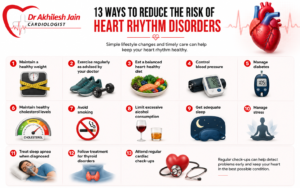
Not all rhythm disorders can be prevented, particularly those related to genetic or structural heart conditions. However, maintaining cardiovascular health can help reduce several risk factors.
Important measures include:
- Maintain a healthy weight
- Exercise regularly as advised by your doctor
- Eat a balanced heart-healthy diet
- Control blood pressure
- Manage diabetes
- Maintain healthy cholesterol levels
- Avoid smoking
- Limit excessive alcohol consumption
- Get adequate sleep
- Manage stress
- Treat sleep apnea when diagnosed
- Follow treatment for thyroid disorders
- Attend regular cardiac check-ups
Managing underlying health conditions is an important part of long-term heart rhythm management.
Why Choose Dr. Akhilesh Jain for Arrhythmia Treatment in Indore?
Choosing an experienced cardiologist is important when dealing with an abnormal heart rhythm because different arrhythmias require different diagnostic and treatment approaches.
Dr. Akhilesh Jain is recognized as the Best Cardiologist in Indore, with more than 20 years of experience in clinical and interventional cardiology.
Dr. Akhilesh Jain has extensive experience in managing complex cardiac conditions and performing advanced interventional procedures.
Why patients choose Dr. Akhilesh Jain:
- More than 20 years of clinical and interventional cardiology experience
- Advanced cardiology training
- Gold Medal recipient
- Training at reputed cardiac institutions
- Extensive interventional cardiology experience
- Experience in complex cardiac procedures
- More than 10,000 coronary angiographies
- More than 2,000 angioplasties
- More than 500 permanent pacemaker implantations
- More than 200 BMV procedures
- Comprehensive cardiac evaluation
- Personalized treatment planning
- Advanced cardiac facilities
- Focus on patient safety
- Long-term cardiac follow-up
Patients seeking Arrhythmia Treatment in Indore can undergo a detailed cardiac assessment to determine the underlying cause of their symptoms and the most appropriate management strategy.
Professional Experience And Expertise
Dr. Akhilesh Jain’s professional career reflects more than two decades of dedication to clinical and interventional cardiology. Over the years, he has worked with several reputed healthcare institutions and gained extensive experience in managing cardiovascular diseases.
Professional Experience
- Consultant Cardiologist (2011–2013): Fortis Escorts Hospital, Raipur
- Consultant Cardiologist (2014): Bansal Hospital, Bhopal
- Consultant Cardiologist (2015): Sri Narayana Hospital, Raipur
- Senior Interventional Cardiologist (2016 onwards): Shalby Multispeciality Hospital, Indore
Throughout his career, Dr. Akhilesh Jain has performed:
- More than 10,000 Coronary Angiographies
- More than 2,000 Angioplasties
- More than 500 Permanent Pacemaker Implantations
- More than 200 Balloon Mitral Valvuloplasty procedures
- Numerous congenital heart interventions
- ASD and PDA device closure procedures
- Complex and high-risk coronary interventions
His expertise includes:
- Coronary Angiography
- Coronary Angioplasty
- Complex Coronary Interventions
- Pacemaker Implantation
- Balloon Valvuloplasty
- Balloon Mitral Valvuloplasty
- Congenital Heart Interventions
- Peripheral Angioplasty
- Aortic Stenting
- Bronchial Artery Embolization
His broad experience in interventional cardiology allows him to evaluate patients with different cardiovascular conditions and develop individualized treatment strategies.
Summary
Arrhythmia is an abnormality of the heart’s electrical system that can cause the heart to beat too fast, too slowly, or irregularly. Symptoms may include palpitations, dizziness, fatigue, shortness of breath, chest discomfort, weakness, or fainting.
Timely diagnosis is important because some rhythm disorders can increase the risk of complications such as stroke, heart failure, or other serious cardiac problems.
The Best Arrhythmia Treatment in Indore depends on the type of rhythm disorder, its severity, symptoms, underlying cause, and overall cardiac health. Treatment may include medicines, lifestyle modification, cardioversion, Catheter Ablation, Pacemaker Implantation, or other specialized cardiac procedures.
For patients looking for the Best Arrhythmia Treatment in Indore, detailed evaluation by an experienced cardiologist can help identify the most appropriate treatment approach.
At Dr. Akhilesh Jain’s Heart Care Centre, every patient receives individualized cardiac assessment and treatment planning. With more than 20 years of experience in clinical and interventional cardiology, Dr. Akhilesh Jain focuses on accurate diagnosis, advanced cardiac care, patient safety, and long-term follow-up.
Frequently Asked Questions – Best Arrhythmia Treatment in Indore
1. What is arrhythmia?
Arrhythmia is an abnormal heart rhythm in which the heartbeat may become too fast, too slow, or irregular. It occurs because of changes in the electrical signals that control the heart.
2. What are the common symptoms of arrhythmia?
Common symptoms include palpitations, racing heartbeat, irregular heartbeat, dizziness, fatigue, weakness, shortness of breath, chest discomfort, and fainting.
3. What causes an abnormal heart rhythm?
An abnormal heart rhythm can be associated with coronary artery disease, high blood pressure, previous heart attack, heart valve disease, thyroid disorders, electrolyte imbalance, sleep apnea, certain medicines, smoking, alcohol, and other factors.
4. How is arrhythmia diagnosed?
Diagnosis may involve ECG, Holter monitoring, event monitoring, echocardiography, blood tests, and other cardiac investigations depending on the patient’s symptoms.
5. What is the Best Arrhythmia Treatment in Indore?
The appropriate treatment depends on the type and severity of the rhythm disorder. Options may include medicines, cardioversion, Catheter Ablation, Pacemaker Implantation, or other specialized treatments.
6. Can arrhythmia be treated without surgery?
Yes. Many rhythm disorders can be managed with medicines and lifestyle changes. Some patients may require minimally invasive procedures rather than traditional open-heart surgery.
7. When is Catheter Ablation recommended?
Catheter Ablation may be recommended for selected patients with recurrent or symptomatic arrhythmias, particularly when medicines are ineffective, poorly tolerated, or when ablation is considered an appropriate treatment option.
8. When is Pacemaker Implantation required?
Pacemaker Implantation may be recommended for selected patients with significant bradycardia, certain types of heart block, or other conduction disorders that cause symptoms or inadequate heart function.
9. Can arrhythmia increase the risk of stroke?
Certain rhythm disorders, particularly atrial fibrillation, can increase the risk of blood clot formation and stroke. A cardiologist can assess an individual’s risk and determine whether preventive treatment is appropriate.
10. Why choose Dr. Akhilesh Jain for Arrhythmia Treatment in Indore?
Dr. Akhilesh Jain has more than 20 years of clinical and interventional cardiology experience, advanced cardiology training, and extensive experience in complex cardiac procedures, including Pacemaker Implantation and other interventional treatments. His approach focuses on detailed diagnosis, personalized treatment planning, patient safety, and long-term cardiac care.
Conclusion: Best Arrhythmia Treatment in Indore
Arrhythmia can range from an occasional irregular heartbeat to a serious rhythm disorder that requires timely medical attention. Understanding the symptoms, causes, risk factors, diagnosis, and treatment options can help patients take appropriate steps toward better heart health.
If you experience repeated palpitations, racing heartbeat, dizziness, shortness of breath, chest discomfort, unexplained fatigue, or fainting, a cardiac evaluation can help determine whether an abnormal rhythm is present.
For patients searching for the Best Arrhythmia Treatment in Indore, the right treatment depends on an accurate diagnosis and individual assessment. Depending on the condition, management may involve medicines, cardioversion, Catheter Ablation, Pacemaker Implantation, or other specialized cardiac procedures.
At Dr. Akhilesh Jain’s Heart Care Centre, patients receive comprehensive cardiac evaluation and personalized treatment planning. With more than two decades of experience in clinical and interventional cardiology, Dr. Akhilesh Jain combines advanced cardiac knowledge, extensive procedural experience, and patient-focused care to support better cardiovascular outcomes.
Timely diagnosis, appropriate treatment, regular follow-up, and a heart-healthy lifestyle can help many patients manage their rhythm disorder and maintain a better quality of life.