
Treadmill Test (TMT) in Indore
Exercise Stress Testing and Cardiac Evaluation by Dr. Akhilesh Jain
The heart needs an adequate supply of blood and oxygen to function properly, especially during physical activity. In some people, problems with blood flow to the heart may become more noticeable when the heart works harder. A Treadmill Test (TMT) is a diagnostic investigation that evaluates the heart’s response to controlled physical exercise while monitoring its electrical activity, heart rate, blood pressure, and symptoms.
Treadmill Test (TMT) in Indore may be recommended when a doctor needs to assess exercise-related chest discomfort, breathlessness, or suspected coronary artery disease. Dr. Akhilesh Jain provides cardiology consultation to help patients understand their symptoms and determine whether an exercise stress test is appropriate.
A TMT Test in Indore can form part of a wider cardiac evaluation, depending on the patient’s medical history, symptoms, and risk factors.
What Is a Treadmill Test (TMT)?
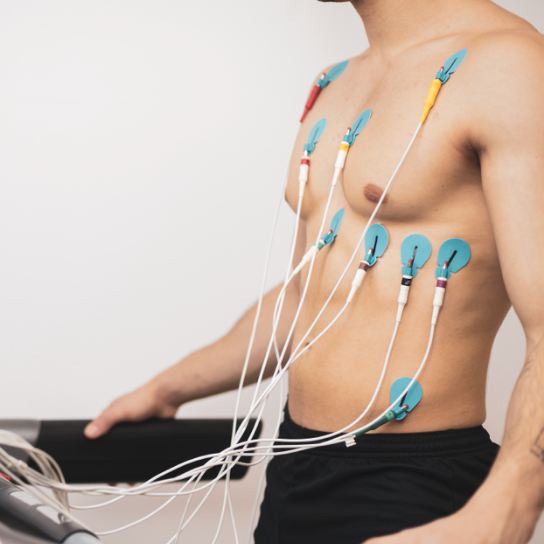
A Treadmill Test, also called an exercise stress test or exercise ECG, evaluates how the heart responds when the body performs controlled physical activity. During the test, the patient walks on a treadmill while electrodes attached to the chest record the heart’s electrical activity.
The treadmill speed and incline are gradually increased according to a standardised protocol and the patient’s ability. The medical team monitors the ECG, heart rate, blood pressure, and any symptoms throughout the procedure.
Treadmill Test (TMT) in Indore may help doctors identify ECG changes that occur during exercise and assess the patient’s exercise capacity. It is important to understand that a TMT does not directly show the coronary arteries. Additional investigations may be required if the findings or symptoms suggest a possible heart problem.

Why Is a Treadmill Test Recommended?
During physical activity, the heart requires more oxygen-rich blood. If blood supply is reduced because of narrowed coronary arteries, certain symptoms or ECG changes may appear during exercise.
A doctor may recommend a Cardiac Stress Test in Indore for selected patients to:
Evaluate chest discomfort that occurs during physical activity.
Investigate unexplained breathlessness during exertion.
Assess exercise tolerance and functional capacity.
Look for ECG changes associated with reduced blood supply to the heart.
Evaluate selected patients with suspected coronary artery disease.
Assess the response to treatment in certain cardiac conditions.
Help guide further cardiac investigations when clinically appropriate.
The decision to perform a stress test depends on symptoms, examination findings, medical history, and the patient’s ability to exercise safely.
How Is a Treadmill Test Performed?
A Treadmill Stress Test in Indore is generally performed in a supervised medical setting with ECG and blood pressure monitoring.
1. Initial Assessment
Before the test, the medical team reviews the patient’s medical history, current medicines, symptoms, and previous cardiac reports. Resting heart rate, blood pressure, and ECG may be recorded.
2. Electrode Placement
Small adhesive electrodes are attached to the chest. These are connected to an ECG monitoring system that records the heart’s electrical activity during exercise.
3. Walking on the Treadmill
The patient begins walking at a comfortable speed. The treadmill speed and incline are gradually increased according to the selected exercise protocol and the patient’s tolerance.
4. Completion of the Test
The test is stopped when the required exercise level is achieved or when symptoms, ECG changes, blood pressure response, or other clinical findings indicate that it should be discontinued.
What Does a TMT Report Show?
A Cardiac Stress Test in Indore provides information about how the heart responds to physical exertion. The report may include:
Exercise duration.
Maximum heart rate achieved.
Blood pressure response.
ECG changes during exercise.
Symptoms experienced during the test.
Exercise capacity or workload achieved.
Heart rate recovery.
The cardiologist interprets these findings alongside the patient’s symptoms, risk factors, resting ECG, and other investigations.
A positive or abnormal result does not always confirm coronary artery disease. Similarly, a normal result does not rule out every type of heart condition. Further testing may be recommended when clinical suspicion remains.
How to Prepare for a TMT Test
Preparation helps the medical team perform the test safely and obtain useful results. Patients should follow the specific instructions provided by the testing centre.
General preparation may include:
Wear comfortable clothes and walking shoes.
Avoid a heavy meal immediately before the test.
Follow instructions about caffeine and smoking before testing.
Inform the medical team about all current medicines.
Carry previous ECG, echocardiogram, and other cardiac reports.
Inform the doctor about chest pain, breathlessness, dizziness, or recent illness.
Ask whether any medicine needs adjustment before the test.
Do not stop beta-blockers or any other prescribed medicine on your own. Medication changes should only be made when specifically advised by the treating doctor.
A Heart Checkup in Indore may include a TMT when the patient’s symptoms and clinical assessment indicate that exercise-based cardiac evaluation is appropriate.
TMT Testing and Local Cardiac Care in Indore
People searching for a Treadmill Stress Test in Indore may also need a consultation to understand the reason for testing and the significance of the report. Patients from areas such as Vijay Nagar, Palasia, Scheme 54, Nipania, and nearby parts of Indore can seek cardiac evaluation based on their symptoms and medical needs.
A Heart Checkup in Indore may involve a clinical consultation, ECG, blood investigations, echocardiography, or exercise testing, depending on the doctor’s assessment. The specific tests required vary from person to person.
For individuals seeking Cardiac Stress Test in Indore, the choice of investigation should be based on clinical indications, exercise capacity, and safety considerations. A test report should always be reviewed by a qualified doctor.
Why Dr. Akhilesh Jain is the Best Cardiologist in Indore
Dr. Akhilesh Jain provides cardiology consultation for patients who need evaluation of cardiac symptoms and diagnostic reports. His clinical approach includes reviewing medical history, assessing cardiovascular risk factors, and deciding which investigations may be appropriate.
A Cardiologist in Indore can help determine whether a treadmill test is suitable, interpret the findings in the context of the patient’s condition, and recommend further evaluation when required.
His achievements include:
- Gold Medalist in DM Cardiology
- Recipient of the Padma Shri Dr. S. K. Mukherjee Chikitsa Seva Award
- 20+ years of expertise in Interventional Cardiology
His calm demeanor, ethical practice, and patient-first approach have made him a household name for people seeking the Best Cardiologist in Indore.
Some Frequent Asked Question's
A TMT is an exercise-based cardiac investigation that records the heart's electrical activity, heart rate, and blood pressure while a person walks on a treadmill.
It may be recommended to investigate selected cases of exertional chest discomfort, unexplained breathlessness, suspected coronary artery disease, or reduced exercise capacity.
The exercise portion generally lasts several minutes, depending on the patient's exercise capacity and the protocol used. Preparation and recovery monitoring take additional time.
The test is not usually painful. Patients walk on a treadmill while ECG electrodes monitor their heart. They may experience temporary tiredness or breathlessness due to exercise.
A long fasting period is not generally required, but patients are usually advised to avoid a heavy meal immediately before testing. Follow the testing centre's instructions.
Some medicines can influence the heart rate and test findings. Inform the doctor about all medicines and follow specific instructions. Do not stop prescribed medicines independently.
A positive result may indicate ECG changes during exercise that require further evaluation. It does not automatically confirm a coronary artery blockage.
No. A normal result can be reassuring in an appropriate clinical setting, but it cannot exclude every type of coronary or structural heart condition. Further evaluation may be needed if symptoms continue.
People with certain unstable cardiac conditions, serious uncontrolled symptoms, or physical limitations may not be suitable for exercise testing. A doctor must assess suitability before the procedure.
A qualified cardiologist should interpret the report along with the patient's symptoms, medical history, ECG, and other relevant investigations.