
Pacemaker Implantation in Indore
Advanced Heart Rhythm Treatment by Dr. Akhilesh Jain
When the heart beats too slowly or develops an irregular rhythm, it may not pump enough blood to meet the body’s requirements. Pacemaker Implantation in Indore is an advanced cardiac procedure that helps regulate abnormal heart rhythms and maintain a more consistent heartbeat.
Under the expert guidance of Dr. Akhilesh Jain, patients receive comprehensive evaluation and treatment for different heart rhythm disorders. With over 20 years of experience in cardiology, Dr. Akhilesh Jain focuses on accurate diagnosis, appropriate treatment planning, and personalized cardiac care.
A pacemaker is a small electronic device implanted beneath the skin to monitor and regulate the heart’s electrical activity. Patients experiencing dizziness, fainting, unusual fatigue, or a slow heartbeat may require cardiac evaluation to determine whether pacemaker therapy is appropriate.
Timely Cardiac Care in Indore helps identify rhythm abnormalities and supports the selection of suitable treatment options based on individual medical conditions.
What is Pacemaker Implantation?
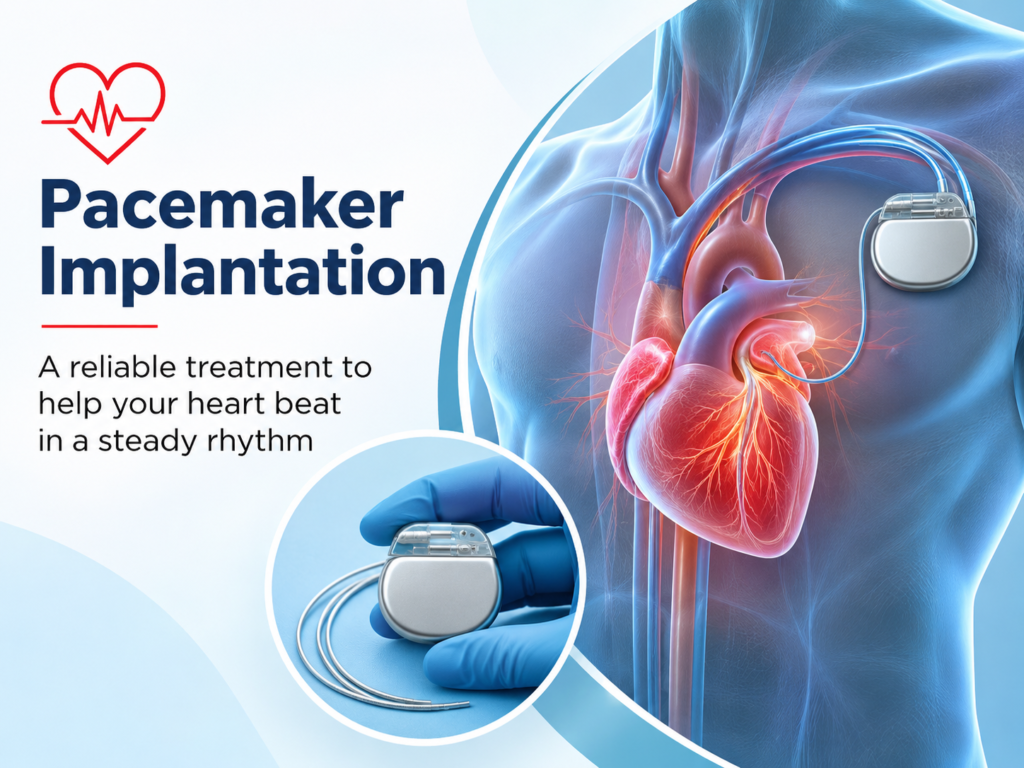
Pacemaker implantation is a medical procedure in which a small electronic device is placed beneath the skin, usually near the collarbone. The device sends electrical impulses to the heart when required to help maintain an appropriate heart rate.
The pacemaker consists of two main components:
1. Pulse Generator: A small battery-powered electronic unit that generates electrical signals and controls the pacing function.
2. Leads: Thin insulated wires that carry electrical impulses from the generator to the heart when a lead-based pacemaker is used.
During Pacemaker Implantation in Indore, the device is positioned beneath the skin, and the leads are guided through a blood vessel into the appropriate heart chambers when required. The system is programmed according to the patient’s heart rhythm and medical needs.
Some modern pacemakers are leadless and are implanted directly inside the heart through a catheter-based procedure.
This treatment is commonly recommended for patients with symptomatic bradycardia, certain heart block conditions, and other electrical conduction abnormalities.
Why Choose Pacemaker Implantation in Indore?
Heart rhythm disorders require proper diagnosis and timely medical management. An experienced cardiologist evaluates the patient’s symptoms, ECG findings, medical history, and heart function before recommending pacemaker therapy.
Dr. Akhilesh Jain provides comprehensive cardiac evaluation and interventional treatment guidance for patients experiencing different cardiovascular conditions.
Key Reasons Patients Consult Dr. Akhilesh Jain
Extensive Clinical Experience: More than 20 years of experience in cardiology and cardiovascular disease management.
Advanced Cardiac Evaluation: Assessment through ECG, Echocardiography, Holter monitoring, and other investigations when required.
Individualized Treatment Planning: Recommendations based on the patient’s heart rhythm and overall health.
Experience in Complex Cardiac Conditions: Management of different cardiovascular diseases and rhythm-related problems.
Patient-Centered Approach: Clear explanations about diagnosis, treatment procedures, and recovery.
Patients looking for Pacemaker Surgery in Indore should undergo a detailed cardiac assessment to understand the cause of their abnormal heartbeat and determine the appropriate treatment.
When Do You Need a Pacemaker?
A pacemaker may be recommended when the heart’s natural electrical system cannot maintain an adequate heartbeat. This can happen because of problems with the sinus node or electrical conduction pathways.
Common symptoms that may indicate a need for pacemaker evaluation include:
Slow heartbeat (bradycardia).
Frequent dizziness or lightheadedness.
Unexplained fainting episodes.
Persistent fatigue or weakness.
Shortness of breath.
Difficulty performing routine physical activities.
Unusual tiredness during exercise.
Heart rhythm abnormalities.
Certain types of heart block.
Symptoms associated with an abnormally slow heart rate.
Patients experiencing these symptoms should consult an experienced Cardiologist in Indore for appropriate evaluation.
An ECG, Holter monitoring, and other cardiac investigations may help identify the underlying rhythm abnormality. A pacemaker is recommended only when supported by the patient’s clinical condition and diagnostic findings.
How is Pacemaker Implantation Performed?
Pacemaker Implantation in Indore is generally performed using a minimally invasive technique under local anaesthesia with sedation when appropriate. The exact procedure depends on the type of pacemaker and the patient’s heart condition.
Step-by-Step Pacemaker Implantation Procedure
1. Pre-Procedure Evaluation
The cardiologist reviews the patient’s medical history, ECG reports, heart function, and other relevant investigations to determine the appropriate device.
2. Anaesthesia Administration
Local anaesthesia is administered near the upper chest area. Sedation may also be provided depending on the patient’s condition and procedural requirements.
3. Small Incision
A small incision is made near the collarbone, usually below the skin where the pulse generator will be positioned.
4. Lead Placement
For a traditional pacemaker, thin insulated leads are guided through a blood vessel into the appropriate heart chamber under X-ray guidance.
5. Device Connection
The leads are connected to the pulse generator, which is placed beneath the skin.
6. Device Programming and Testing
The pacemaker is programmed and tested to ensure that it detects the heart’s electrical activity and delivers pacing impulses when required.
7. Incision Closure
The incision is closed, and the patient is monitored following the procedure.
The procedure commonly takes around 1–2 hours for a standard lead-based pacemaker, although the duration may vary depending on complexity and device type.
Types of Pacemakers
Different pacemakers are available to manage specific heart rhythm disorders. Dr. Akhilesh Jain evaluates the patient’s condition before determining the appropriate device.
1. Single-Chamber Pacemaker
A single-chamber pacemaker uses one lead to deliver electrical impulses to either the right atrium or right ventricle, depending on the patient’s medical requirement.
2. Dual-Chamber Pacemaker
A dual-chamber pacemaker generally uses two leads, one in the right atrium and another in the right ventricle. It helps coordinate electrical activity between the upper and lower heart chambers.
3. Biventricular Pacemaker
A biventricular pacemaker, also known as a cardiac resynchronization therapy pacemaker (CRT-P), helps coordinate the contraction of the heart’s lower chambers in selected patients with heart failure and electrical conduction abnormalities.
4. Leadless Pacemaker
A leadless pacemaker is a small device implanted directly inside the heart through a catheter inserted into a blood vessel. It does not require traditional pacing leads or a chest pocket.
5. Temporary Pacemaker
A temporary pacemaker provides short-term electrical pacing support when a patient develops a serious heart rhythm problem. It is generally used in emergency or hospital settings until the underlying condition is treated or a permanent treatment decision is made.
The selection of a Permanent Pacemaker in Indore depends on the patient’s rhythm disorder, heart function, medical history, and clinical requirements.
Benefits of Pacemaker Implantation
Pacemaker therapy can provide important benefits for patients with specific heart rhythm abnormalities.
Some potential benefits include:
Helps maintain an appropriate heart rate.
Reduces symptoms associated with slow heart rhythms.
Helps manage certain types of heart block.
May reduce dizziness and fainting episodes caused by bradycardia.
Improves exercise tolerance in suitable patients.
Supports normal daily activities.
Provides continuous monitoring and pacing when required.
Can improve quality of life in patients with symptomatic rhythm disorders.
The benefits depend on the underlying heart condition and the patient’s response to treatment. A pacemaker does not treat every type of arrhythmia or eliminate all cardiovascular risks.
Recovery After Pacemaker Implantation
Recovery following Pacemaker Implantation in Indore depends on the type of device, patient’s general health, and complexity of the procedure.
Important Recovery Guidelines
Keep the incision area clean and dry according to medical instructions.
Avoid heavy lifting during the initial recovery period.
Follow the recommended restrictions on arm movement.
Take prescribed medicines regularly.
Attend scheduled pacemaker follow-up appointments.
Avoid applying pressure directly over the implanted device.
Inform healthcare professionals about the pacemaker before medical procedures.
Carry the pacemaker identification card.
Follow the recommended device-monitoring schedule.
Patients undergoing Pacemaker Surgery in Indore should follow their cardiologist’s instructions regarding physical activity and return to normal routines.
Why Consult Dr. Akhilesh Jain for Cardiologist in Indore
Dr. Akhilesh Jain has more than two decades of experience in cardiology and the management of various cardiovascular conditions. His clinical experience includes evaluating coronary artery disease, heart rhythm abnormalities, and complex cardiac problems.
Professional Experience and Achievements
- Gold Medalist in DM Cardiology
- Recipient of the Padma Shri Dr. S. K. Mukherjee Chikitsa Seva Award
- 20+ years of expertise in Interventional Cardiology
His calm demeanor, ethical practice, and patient-first approach have made him a household name for people seeking the Cardiologist in Indore.
Some Frequent Asked Question's
Pacemaker implantation may be recommended for patients with symptomatic bradycardia, certain types of heart block, or other electrical conduction disorders. The decision depends on symptoms, ECG findings, and the patient's overall clinical condition.
A standard lead-based pacemaker procedure generally takes around 1–2 hours. However, the duration may vary depending on the device type, patient's anatomy, and procedural complexity.
It is generally considered a minimally invasive cardiac procedure. A small incision is made near the collarbone for a traditional pacemaker, and the device is placed beneath the skin. Leadless pacemakers use a catheter-based approach.
The cost depends on the type of pacemaker, device manufacturer, number of leads, hospital facilities, investigations, and duration of hospitalization. Patients should discuss the estimated cost with their healthcare provider before the procedure.
Pacemaker battery life commonly ranges from approximately 5–15 years, depending on the device type, pacing requirements, and battery technology. Regular device checks help determine when replacement is required.
Yes. Many patients can return to their routine activities after recovery. They should follow medical advice, attend regular device checks, and take precautions around equipment that may interfere with pacemaker functioning.
The procedure is generally performed under local anaesthesia, so patients usually do not experience significant pain during implantation. Mild soreness, swelling, or discomfort around the incision area may occur during recovery.
Patients should follow wound-care instructions, avoid heavy lifting during the initial recovery period, attend device-check appointments, and follow guidance regarding physical activity and electronic equipment.
No. A pacemaker regulates certain abnormal heart rhythms but does not prevent or treat coronary artery blockages or heart attacks. Patients with chest pain or suspected heart attack require immediate emergency evaluation.
Patients experiencing recurrent fainting, dizziness, unexplained fatigue, or an unusually slow heartbeat should undergo cardiac evaluation. An ECG and other investigations can help determine whether pacemaker therapy is required.