
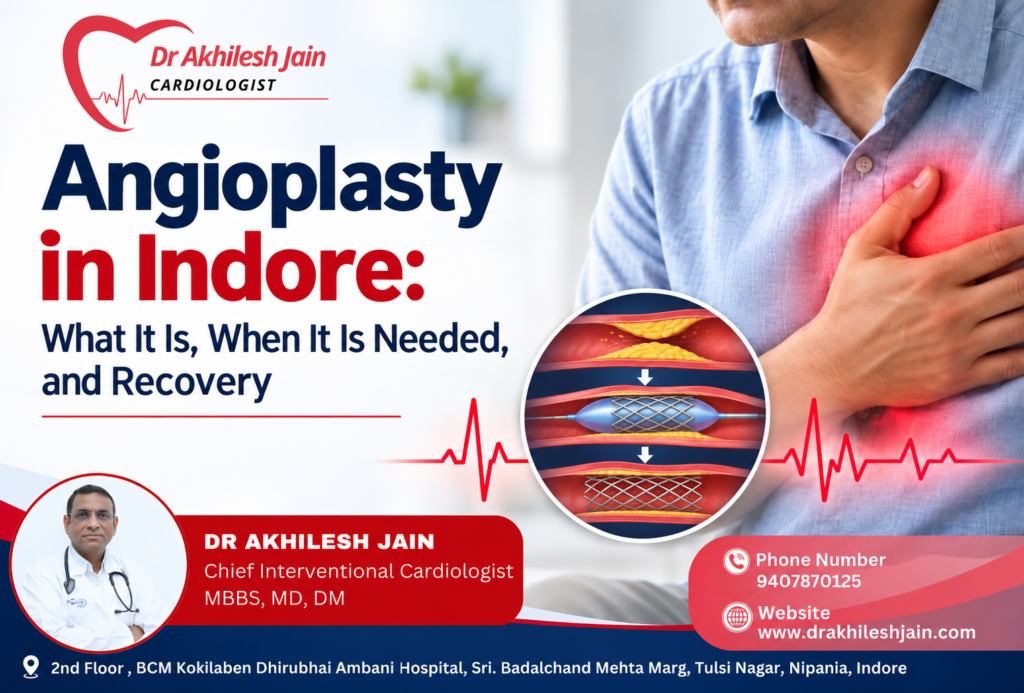
Angioplasty in Indore is a minimally invasive procedure used to open narrowed or blocked heart arteries and restore blood flow to the heart muscle. It is also called coronary angioplasty or percutaneous coronary intervention (PCI).
If you have chest pain, breathlessness, or a heart attack, consulting a heart specialist in Indore is important. Dr. Akhilesh Jain, an experienced cardiologist in Indore, can assess whether angioplasty treatment in Indore is appropriate based on your symptoms, ECG, echo, TMT, and angiography reports. Angioplasty is often performed with a stent to keep the artery open after the blockage is widened. It may be done as a planned procedure for coronary artery disease or urgently during a heart attack.
What Is Angioplasty in Indore?
Angioplasty in Indore is a procedure that opens narrowed or blocked coronary arteries. It is performed using a thin, flexible tube called a catheter, which is guided through an artery in the wrist or groin to the heart. A small balloon at the tip of the catheter is inflated at the site of blockage to widen the artery. In most cases, a stent is then placed to keep the artery open.
What Is Coronary Angioplasty?
Coronary angioplasty is a type of angioplasty that treats blockages in the arteries supplying blood to the heart. It is also called percutaneous coronary intervention (PCI). The goal is to restore blood flow to the heart muscle, relieve symptoms, and reduce the risk of further heart damage. Coronary angioplasty is commonly used for coronary artery disease and heart attack.
What Is a Heart Stent?
A stent is a small mesh tube placed inside a narrowed or blocked artery to keep it open after angioplasty. Most stents are drug-eluting stents, which release medicine to reduce the risk of the artery narrowing again. Stent placement in Indore is a common part of angioplasty treatment in Indore, especially when the artery is at risk of collapsing or re-narrowing after the balloon is deflated.
What Is the Difference Between Angiography and Angioplasty?
Angiography is a diagnostic test that uses X-ray imaging and contrast dye to identify blockages in the heart arteries. Angioplasty is a treatment procedure that opens the blocked artery and may place a stent.
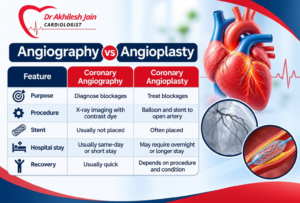
Angiography vs angioplasty
| Feature | Coronary angiography | Coronary angioplasty |
| Purpose | Diagnose blockages | Treat blockages |
| Procedure | X-ray imaging with contrast dye | Balloon and stent to open artery |
| Stent | Usually not placed | Often placed |
| Hospital stay | Usually same-day or short stay | May require overnight or longer stay |
| Recovery | Usually quick | Depends on procedure and condition |
Angiography in Indore may be performed first to assess the location and severity of blockage. If a significant blockage is found, angioplasty may be performed in the same sitting if needed.
When Is Angioplasty Needed?
Angioplasty may be needed when a coronary artery is significantly narrowed or blocked and is causing symptoms or reducing blood flow to the heart. It may also be needed urgently during a heart attack.
Heart blockage treatment in Indore
Heart blockage treatment in Indore depends on the severity and location of the blockage. Angioplasty is often considered when blockages are causing angina, abnormal stress test results, or reduced blood flow to the heart muscle.
Common reasons for angioplasty include:
- Chest pain or angina
- Abnormal ECG, echo, or TMT
- Significant coronary artery blockage on angiography
- Heart attack
- Reduced heart pumping function
- Recurrent symptoms despite medicines
Heart attack treatment in Indore
Heart attack treatment in Indore may involve emergency angioplasty to reopen the blocked artery as quickly as possible. This is called primary angioplasty or primary PCI. During a heart attack, every minute matters. Emergency angioplasty can restore blood flow, limit heart muscle damage, and improve survival.
When is angioplasty not needed?
Angioplasty is not needed for every patient with coronary artery disease. Some patients may be managed with medicines, lifestyle changes, or bypass surgery, depending on the extent and location of blockages. Your heart doctor in Indore will decide the best treatment based on your symptoms, angiography findings, heart function, and overall health.
Angioplasty Procedure in Indore: Step-by-Step
Angioplasty surgery in Indore is usually performed in a cardiac catheterisation laboratory, also called a cath lab. It is a minimally invasive procedure and does not require open-heart surgery.
Before angioplasty
Before angioplasty, your cardiologist in Indore may advise:
- Blood tests
- ECG
- Echocardiogram
- TMT or stress test
- Coronary angiography
- Kidney function tests
- Blood sugar and blood pressure assessment
- Medicines review
You may be advised to stop certain medicines before the procedure, especially blood thinners, but only as instructed by your heart specialist in Indore.
During angioplasty
During angioplasty treatment in Indore, the cardiologist:
- Numbs the wrist or groin area with local anaesthesia
- Inserts a thin catheter through an artery
- Guides the catheter to the heart using X-ray imaging
- Injects contrast dye to identify the blockage
- Inflates a balloon at the site of blockage
- Places a stent to keep the artery open
- Removes the catheter and closes the entry site
The procedure usually takes about 30 minutes to 2 hours, depending on the number and complexity of blockages.
After angioplasty
After angioplasty, you will be monitored in a recovery area or hospital ward. Your heart rate, blood pressure, and catheter insertion site will be checked regularly. Most patients with a planned, uncomplicated angioplasty go home the same day or the next day. Heart attack patients may need closer monitoring and a longer hospital stay.
Angioplasty Recovery Time: What to Expect
Recovery after angioplasty varies from patient to patient. It depends on whether the procedure was planned or emergency, the number of blockages treated, and your overall health.
What Is the Hospital Stay After Angioplasty?
Many patients with a planned, uncomplicated angioplasty can go home the same day or the next day. However, heart attack patients may need closer monitoring and a longer hospital stay.
What Is the Recovery Time After Angioplasty?
Most people can return to light activities within a few days. However, recovery time may vary depending on whether the procedure was emergency or planned.
What Medicines Are Needed After Angioplasty?
After angioplasty, patients are usually prescribed antiplatelet medicines such as aspirin and another blood-thinning medicine to prevent clots from forming in the stent. Do not stop these medicines without consulting your cardiologist.
Other medicines may include:
- Cholesterol-lowering medicines
- Blood pressure medicines
- Diabetes medicines
- Beta-blockers
- Medicines to prevent further blockage
Lifestyle changes after angioplasty
Lifestyle changes are important after angioplasty to prevent future blockages. These include:
- Eating a heart-healthy diet
- Exercising regularly, if medically appropriate
- Quitting smoking and tobacco
- Controlling blood pressure
- Managing diabetes
- Lowering cholesterol
- Maintaining a healthy weight
- Managing stress
- Attending regular follow-up appointments
Risks and Benefits of Angioplasty
Potential benefits
Angioplasty can improve blood flow and relieve symptoms. It may also reduce the risk of further heart damage during a heart attack.
Potential benefits include:
- Relief from chest pain
- Improved exercise tolerance
- Improved blood flow to the heart
- Reduced risk of further heart damage during a heart attack
- Faster recovery compared with bypass surgery in selected cases
Potential risks
Angioplasty is generally safe, but like any procedure, it carries some risks. Possible risks include:
- Bleeding or bruising at the catheter insertion site
- Allergic reaction to contrast dye
- Kidney problems
- Irregular heartbeat
- Heart attack
- Stroke
- Re-narrowing of the artery
- Need for repeat procedure
Your heart doctor in Indore will discuss the expected benefits and risks based on your specific condition.
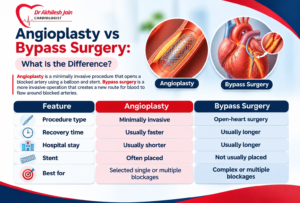
Angioplasty vs Bypass Surgery: What Is the Difference?
Angioplasty is a minimally invasive procedure that opens a blocked artery using a balloon and stent. Bypass surgery is a more invasive operation that creates a new route for blood to flow around blocked arteries.
| Feature | Angioplasty | Bypass surgery |
| Procedure type | Minimally invasive | Open-heart surgery |
| Recovery time | Usually faster | Usually longer |
| Hospital stay | Usually shorter | Usually longer |
| Stent | Often placed | Not usually placed |
| Best for | Selected single or multiple blockages | Complex or multiple blockages |
Your heart specialist in Indore will decide whether angioplasty or bypass surgery is more suitable based on your angiography findings and overall health.
When to Consult a Cardiologist in Indore for Angioplasty
Consult a cardiologist in Indore if you have chest pain, breathlessness, palpitations, abnormal stress test results, or a history of heart attack. A heart specialist in Indore can assess whether angioplasty in Indore is appropriate for you.
You may benefit from a consultation if:
- You have chest pain or angina
- You have breathlessness during activity
- You have abnormal ECG, echo, or TMT
- You have a history of heart attack
- You have suspected heart blockage
- You have been advised angiography
- You have been advised angioplasty
- You need a second opinion about heart treatment in Indore
Why Choose Dr. Akhilesh Jain for Angioplasty in Indore?
Dr. Akhilesh Jain is a Senior Interventional Cardiologist in Indore with expertise in angiography, angioplasty, coronary heart disease, pacemakers, echocardiography, and TMT. He can assess whether angioplasty in Indore is appropriate based on your symptoms, test reports, and overall heart health. Patients seeking a heart doctor in Indore for chest pain, breathlessness, palpitations, high blood pressure, or suspected heart blockage can consult Dr. Akhilesh Jain for a detailed evaluation. He can also guide patients on whether they need angiography, angioplasty treatment in Indore, or other heart treatment in Indore based on their individual condition.
When to book an appointment
Book an appointment with Dr. Akhilesh Jain if you have:
- Chest pain or angina
- Breathlessness during activity
- Palpitations or irregular heartbeat
- High blood pressure
- High cholesterol
- Diabetes with heart-related concerns
- Family history of heart disease
- Abnormal ECG, echo, or TMT report
- Need for heart checkup in Indore
- Need for angiography or angioplasty in Indore
FAQs: Angioplasty in Indore, Stent, and Recovery
What is angioplasty in Indore?
Angioplasty in Indore is a minimally invasive procedure used to open narrowed or blocked heart arteries. It is also called coronary angioplasty or percutaneous coronary intervention (PCI).
What is coronary angioplasty?
Coronary angioplasty is a procedure that uses a balloon-tipped catheter to widen narrowed or blocked coronary arteries. A stent is often placed to keep the artery open.
What is the difference between angiography and angioplasty?
Angiography is a diagnostic test that uses X-ray imaging and contrast dye to identify blockages in the heart arteries. Angioplasty is a treatment procedure that opens the blocked artery and may place a stent.
When is angioplasty needed?
Angioplasty may be needed for significant coronary artery blockage causing chest pain, breathlessness, or reduced blood flow to the heart. It is also performed urgently during a heart attack to reopen the blocked artery.
Is angioplasty painful?
Angioplasty is usually performed under local anaesthesia with sedation, so patients do not feel pain during the procedure. Some discomfort, bruising, or soreness at the catheter insertion site can occur afterwards.
How long does angioplasty take?
Angioplasty usually takes about 30 minutes to 2 hours, depending on the number and complexity of blockages.
What is the recovery time after angioplasty?
Recovery after angioplasty varies. Many patients with a planned, uncomplicated procedure go home the same day or the next day, while heart attack patients may need a longer hospital stay.
Can I go home the same day after angioplasty?
Many patients with a planned, uncomplicated angioplasty can go home the same day or the next day. However, heart attack patients may need closer monitoring and a longer hospital stay.
What medicines are needed after angioplasty?
After angioplasty, patients are usually prescribed antiplatelet medicines such as aspirin and another blood-thinning medicine to prevent clots from forming in the stent. Do not stop these medicines without consulting your cardiologist.
Can angioplasty cure heart disease?
Angioplasty can improve blood flow and relieve symptoms, but it does not cure the underlying coronary artery disease. Lifestyle changes and medicines are still important to prevent future blockages.
When should I see a cardiologist in Indore for angioplasty?
Consult a cardiologist in Indore if you have chest pain, breathlessness, palpitations, abnormal stress test results, or a history of heart attack. A heart specialist in Indore can assess whether angioplasty in Indore is appropriate for you.
Final Thoughts: Angioplasty in Indore
Angioplasty in Indore is a minimally invasive procedure used to open narrowed or blocked heart arteries and restore blood flow to the heart muscle. It may be performed as a planned procedure for coronary artery disease or urgently during a heart attack. If you have chest pain, breathlessness, palpitations, or a history of heart attack, consult a heart specialist in Indore for evaluation. Dr. Akhilesh Jain, an experienced cardiologist in Indore, can assess whether angioplasty treatment in Indore is appropriate based on your symptoms, test reports, and overall heart health.
Timely angioplasty surgery in Indore, along with lifestyle changes and regular follow-up, can help improve symptoms, prevent further heart damage, and improve long-term quality of life. This article is for educational purposes only and does not replace personalised medical advice. Do not start, stop, or change heart medicines without consulting a qualified cardiologist in Indore.