
A cardiologist in Indore is a heart specialist who diagnoses and manages conditions affecting the heart and blood vessels. You should consult a cardiologist if you have chest pain, breathlessness, palpitations, dizziness, swelling in the legs, or risk factors such as high blood pressure, diabetes, high cholesterol, smoking, or a family history of heart disease.
If you are looking for a heart specialist in Indore, Dr. Akhilesh Jain is a Senior Interventional Cardiologist who provides heart treatment in Indore, including angiography, angioplasty, echocardiography, TMT, and pacemaker implantation in Indore. Timely consultation with a heart doctor in Indore can help detect heart disease early and reduce the risk of serious complications. Heart disease can develop silently for years. Many people do not realise they have coronary artery disease until they develop chest pain, breathlessness, or a heart attack. Understanding the warning signs and knowing when to consult a cardiologist in Indore can make a major difference to long-term heart health.
What Does a Cardiologist in Indore Treat?
A cardiologist in Indore diagnoses and treats conditions affecting the heart, arteries, and circulation. A heart doctor in Indore may manage:
- Coronary artery disease and heart blockages
- High blood pressure
- High cholesterol and lipid disorders
- Heart attack and acute coronary syndrome
- Heart failure
- Arrhythmias or abnormal heart rhythms
- Palpitations
- Valve diseases
- Heart murmurs
- Cardiomyopathy
- Congenital heart conditions in selected cases
- Heart failure and fluid retention
Some cardiologists, especially interventional cardiologists, also perform procedures such as coronary angiography, angioplasty, and pacemaker implantation in Indore.
What Is Coronary Artery Disease?
Coronary artery disease occurs when cholesterol-rich plaque builds up inside the arteries that supply blood to the heart. This narrowing can reduce blood flow to the heart muscle and cause chest pain, breathlessness, or a heart attack. Common risk factors include high blood pressure, high cholesterol, diabetes, smoking, obesity, physical inactivity, stress, and a family history of early heart disease. A heart specialist in Indore can assess your risk and recommend appropriate tests and treatment.
Early Signs of Heart Disease You Should Not Ignore
Heart disease does not always cause dramatic chest pain. Some people, especially women, older adults, and people with diabetes, may have subtle or atypical symptoms.
Common early signs include:
- Chest discomfort, pressure, tightness, or heaviness
- Pain spreading to the left arm, shoulder, back, neck, or jaw
- Breathlessness during routine activity
- Unusual fatigue or weakness
- Palpitations or a racing heartbeat
- Dizziness or fainting
- Swelling in the feet, ankles, or legs
- Reduced exercise tolerance
- Cold sweat with chest discomfort
- Recurrent indigestion-like discomfort, especially with exertion
If you have persistent or worsening symptoms, consult a cardiologist in Indore for evaluation. Do not ignore new breathlessness, unexplained fatigue, or chest discomfort, particularly if you have diabetes, high blood pressure, or a family history of heart disease.
When Should You Consult a Cardiologist in Indore?
You should consult a cardiologist in Indore if you have symptoms that may suggest a heart problem or if you have risk factors that increase your chance of developing heart disease.
Symptoms that need evaluation
Consult a heart specialist in Indore if you have:
- Chest pain, pressure, or tightness
- Breathlessness during activity or while lying flat
- Palpitations or irregular heartbeat
- Dizziness, light-headedness, or fainting
- Swelling in the legs, ankles, or abdomen
- Unexplained fatigue
- Reduced ability to exercise
- Recurrent palpitations
- High blood pressure that is difficult to control
- Abnormal ECG, echo, or TMT report
Risk factors that need assessment
Even without symptoms, you may benefit from a heart checkup in Indore if you have:
- High blood pressure
- Diabetes or prediabetes
- High LDL cholesterol or triglycerides
- Smoking or tobacco use
- Obesity or abdominal obesity
- Physical inactivity
- Family history of early heart attack or sudden cardiac death
- Previous heart attack, angioplasty, or bypass surgery
- Chronic kidney disease
- Long-term stress or poor sleep
A heart doctor in Indore can assess your overall cardiovascular risk and recommend preventive steps, medicines, and lifestyle changes.
Chest Pain: When Is It a Heart Emergency?
Chest pain can have many causes, including acidity, muscle strain, anxiety, lung problems, or heart disease. However, chest pain should never be ignored, especially if it is new, severe, persistent, or associated with other warning signs.
What Are the Warning Signs of a Heart Attack?
Warning signs of a heart attack may include:
- Chest pressure, squeezing, heaviness, or burning
- Pain spreading to the left arm, shoulder, back, neck, or jaw
- Shortness of breath
- Cold sweating
- Nausea or vomiting
- Dizziness or fainting
- Extreme weakness
- Palpitations
- Anxiety or a feeling of impending doom
Seek emergency heart attack treatment in Indore immediately if chest pain is severe, lasts more than a few minutes, or occurs with breathlessness, sweating, nausea, or fainting. Do not drive yourself to the hospital in this situation.
Is Chest Pain Always a Heart Problem?
No. Chest pain can also occur due to acidity, gastritis, muscle strain, anxiety, lung infection, or musculoskeletal pain. However, only a doctor can safely determine the cause. If you are unsure whether your chest pain is cardiac, seek urgent medical assessment. Early heart attack treatment in Indore can save heart muscle and reduce the risk of life-threatening complications.
Heart Disease Risk Factors: High BP, Diabetes, and Cholesterol
High blood pressure and heart disease
High blood pressure forces the heart to work harder and can damage the arteries over time. Uncontrolled hypertension increases the risk of coronary artery disease, heart failure, stroke, kidney disease, and irregular heartbeat. Regular monitoring, salt restriction, weight management, exercise, and prescribed medicines can help control blood pressure. A cardiologist in Indore can assess whether your blood pressure is affecting your heart.
Diabetes and heart disease
Diabetes increases the risk of coronary artery disease and heart attack. High blood sugar can damage blood vessels over time and may make heart symptoms less obvious. If you have diabetes, regular follow-up with a heart doctor in Indore is important, especially if you also have high blood pressure, high cholesterol, or a family history of heart disease.
Cholesterol and heart blockage
High LDL cholesterol can contribute to plaque buildup in the coronary arteries, leading to narrowing or blockage. A lipid profile helps assess LDL cholesterol, HDL cholesterol, triglycerides, and overall cardiovascular risk. A cardiologist in Indore may advise lifestyle changes, dietary modification, exercise, and cholesterol-lowering medicines based on your risk profile.
Heart Tests: ECG, Echo Test, TMT, and Angiography in Indore
Heart tests help diagnose the cause of symptoms and assess how well the heart is functioning.
What Is an ECG Test?
An ECG, or electrocardiogram, records the electrical activity of the heart. It can detect abnormal rhythms, previous heart attack, heart enlargement, and conduction problems. An ECG is often the first test advised when a patient has chest pain, palpitations, dizziness, or suspected heart disease.
What Is an Echo Test in Indore?
An echo test, or echocardiogram, uses ultrasound waves to create images of the heart. It helps assess heart pumping function, valve problems, heart chamber size, and some causes of breathlessness or murmurs. An echo test in Indore may be advised for breathlessness, heart murmur, suspected valve disease, heart failure, or abnormal ECG findings.
What Is a TMT Test in Indore?
A TMT test, or treadmill test, checks how the heart responds to exercise. It may be advised to evaluate chest pain, exercise-related breathlessness, palpitations, or suspected coronary artery disease. A TMT test in Indore can help identify reduced blood flow to the heart during exertion, but it may not be suitable for everyone. Your heart specialist in Indore will decide whether it is appropriate based on your symptoms and medical history.
What Is Coronary Angiography in Indore?
Coronary angiography in Indore is a test that uses X-ray imaging and contrast dye to check for blockages in the arteries supplying blood to the heart. It helps a cardiologist assess the severity and location of coronary artery disease. Angiography may be advised if you have typical angina, abnormal stress test results, suspected heart attack, or high-risk features on non-invasive testing.
Heart Treatment in Indore: What to Expect
Heart treatment in Indore depends on the underlying condition, severity of symptoms, and results of your tests. Treatment may include lifestyle changes, medicines, procedures, or surgery in selected cases.
Lifestyle changes for heart health
Lifestyle changes are important for preventing and managing heart disease. These include:
- Eating a balanced, low-salt, low-trans-fat diet
- Increasing fruits, vegetables, whole grains, and fibre
- Limiting fried foods, processed foods, and added sugar
- Exercising regularly, if medically appropriate
- Maintaining a healthy weight
- Quitting smoking and tobacco
- Limiting alcohol
- Managing stress and sleep
- Controlling blood pressure, diabetes, and cholesterol
Medicines for heart disease
Depending on your condition, your cardiologist in Indore may prescribe medicines to control blood pressure, cholesterol, diabetes, heart rhythm, clot formation, or heart failure. Never start, stop, or change heart medicines without medical advice.
Procedures for heart disease
Some patients may need procedures such as coronary angiography, angioplasty, or pacemaker implantation in Indore. The decision depends on the type and severity of the heart problem.
Angiography and Angioplasty in Indore: When Are They Needed?
What is angiography and when is it needed?
Coronary angiography is a diagnostic test used to identify blockages in the heart arteries. It may be needed if you have typical angina, abnormal stress test results, suspected heart attack, or high-risk features on non-invasive testing.
What is angioplasty and when is it needed?
Coronary angioplasty is a procedure used to open narrowed or blocked heart arteries, often with a stent. It may be needed during a heart attack or for significant coronary artery blockages causing symptoms or reduced blood flow.
If you have been advised angiography or angioplasty, consult a heart specialist in Indore to understand the procedure, benefits, risks, and recovery plan.
Pacemaker Implantation in Indore: When Is It Needed?
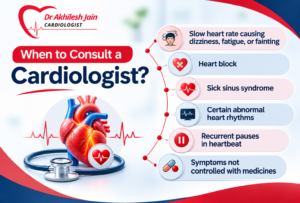
A pacemaker is a small device implanted under the skin to help regulate the heartbeat. It may be needed when the heart beats too slowly, pauses abnormally, or has certain electrical conduction problems.
When Is a Pacemaker Needed?
Pacemaker implantation in Indore may be advised for:
- Slow heart rate causing dizziness, fatigue, or fainting
- Heart block
- Sick sinus syndrome
- Certain abnormal heart rhythms
- Recurrent pauses in heartbeat
- Symptoms not controlled with medicines
If you experience dizziness, fainting, extreme fatigue, or a very slow pulse, consult a cardiologist in Indore promptly. A heart specialist in Indore can assess your ECG and decide whether pacemaker implantation in Indore is required.
How to Choose the Right Cardiologist in Indore?
When choosing a cardiologist in Indore, consider the following factors:
- Qualifications and experience in cardiology
- Expertise in the specific condition you have
- Availability of diagnostic tests such as ECG, echo, and TMT
- Experience in angiography and angioplasty, if needed
- Hospital facilities and emergency care support
- Clear communication and willingness to explain treatment options
- Follow-up care and preventive guidance
- Patient reviews and referrals from your physician
For a suspected heart attack or severe chest pain, do not wait for a routine OPD appointment—seek emergency care at a hospital with 24×7 cardiac emergency facilities.
Why Choose Dr. Akhilesh Jain as Your Heart Specialist in Indore?
Dr. Akhilesh Jain is a Senior Interventional Cardiologist in Indore with expertise in angiography, angioplasty, coronary heart disease, pacemakers, echocardiography, and TMT. If you need a heart doctor in Indore, he can assess your symptoms, risk factors, and heart tests to create a personalised heart treatment in Indore plan.
Patients seeking a cardiologist in Indore for chest pain, breathlessness, palpitations, high blood pressure, or suspected heart blockage can consult Dr. Akhilesh Jain for a detailed evaluation. He can also guide patients on whether they need angiography, angioplasty, or pacemaker implantation in Indore based on their individual condition.
When to book an appointment
Book an appointment with Dr. Akhilesh Jain if you have:
- Chest pain or discomfort
- Breathlessness during activity
- Palpitations or irregular heartbeat
- Dizziness or fainting
- High blood pressure
- High cholesterol
- Diabetes with heart-related concerns
- Family history of heart disease
- Abnormal ECG, echo, or TMT report
- Need for heart checkup in Indore
Dr. Akhilesh Jain can help determine whether your symptoms are due to a heart condition and recommend appropriate heart treatment in Indore.
FAQs: Cardiologist in Indore, Heart Symptoms, and Heart Tests
When should I consult a cardiologist in Indore?
Consult a cardiologist in Indore if you have chest pain, breathlessness, palpitations, dizziness, fainting, swelling in the legs, or unusual fatigue. You should also consult a heart specialist in Indore if you have high blood pressure, diabetes, high cholesterol, smoking history, obesity, or a family history of heart disease.
Is chest pain always a sign of heart disease?
No. Chest pain can have many causes, including acidity, muscle strain, anxiety, lung problems, or heart disease. However, new, persistent, or severe chest pain—especially with sweating, breathlessness, nausea, or pain spreading to the arm or jaw—needs urgent medical assessment.
What are the warning signs of a heart attack?
Warning signs of a heart attack may include chest pressure or pain, breathlessness, sweating, nausea, dizziness, and pain spreading to the left arm, shoulder, back, neck, or jaw. Seek emergency heart attack treatment in Indore immediately if these symptoms are severe or persistent.
When should I seek heart attack treatment in Indore?
Seek emergency heart attack treatment in Indore immediately if you have severe chest pain, breathlessness, cold sweating, fainting, or pain spreading to the arm, jaw, neck, or back. Do not wait for symptoms to settle on their own.
What is the difference between a cardiologist and a heart surgeon?
A cardiologist diagnoses and medically manages heart conditions, while a cardiac surgeon performs operations on the heart and major blood vessels. A cardiologist in Indore may perform procedures such as angiography and angioplasty, depending on their specialisation.
What is angiography and when is it needed?
Coronary angiography is a test that uses X-ray imaging and contrast dye to check for blockages in the arteries supplying blood to the heart. It helps a cardiologist assess the severity and location of coronary artery disease.
What is angioplasty and when is it needed?
Coronary angioplasty is a procedure used to open narrowed or blocked heart arteries, often with a stent. It may be needed during a heart attack or for significant coronary artery blockages causing symptoms or reduced blood flow.
What is an echo test in Indore?
An echo test, or echocardiogram, uses ultrasound waves to create images of the heart. It helps assess heart pumping function, valve problems, heart chamber size, and some causes of breathlessness or murmurs.
What is a TMT test in Indore?
A TMT test, or treadmill test, checks how the heart responds to exercise. It may be advised to evaluate chest pain, exercise-related breathlessness, palpitations, or suspected coronary artery disease.
When is pacemaker implantation in Indore needed?
Pacemaker implantation in Indore may be needed when the heart beats too slowly, pauses abnormally, or has certain electrical conduction problems. A heart specialist in Indore can assess your ECG and symptoms to decide whether a pacemaker is required.
Can high blood pressure damage the heart?
Yes. Uncontrolled high blood pressure can increase the risk of coronary artery disease, heart failure, stroke, and kidney problems. Regular heart checkups in Indore and blood-pressure control are important for long-term heart health.
Why choose Dr. Akhilesh Jain as your heart specialist in Indore?
Dr. Akhilesh Jain is a Senior Interventional Cardiologist in Indore with expertise in angiography, angioplasty, coronary heart disease, pacemakers, echocardiography, and TMT. He can assess your symptoms, risk factors, and heart tests to create a personalised heart-care plan.
Final Thoughts: When to Consult a Heart Specialist in Indore
Heart disease can develop silently, but early detection and timely treatment can reduce the risk of heart attack, heart failure, and other complications. If you have chest pain, breathlessness, palpitations, dizziness, or risk factors such as high blood pressure, diabetes, or high cholesterol, consult a cardiologist in Indore.
For a suspected heart attack or severe chest pain, seek emergency heart attack treatment in Indore immediately. For routine evaluation, preventive heart checkups, angiography, angioplasty, or pacemaker implantation in Indore, consult Dr. Akhilesh Jain, an experienced heart specialist in Indore. Timely heart treatment in Indore, along with lifestyle changes and regular follow-up, can help protect your heart and improve long-term quality of life.