
Heart Health Awareness

Obesity increasing heart attack risk explained by Dr. Akhilesh Jain with heart health awareness graphic.
Uncategorized

Can Obesity Increase the Risk of Heart Attack? Here’s What You Need to Know

Obesity is not just about weight gain or body appearance. It is a serious health condition that can silently affect many organs in the body, especially the heart. According to global health studies, obesity has nearly tripled worldwide since 1975, and millions of people now face heart-related complications because of unhealthy weight gain. Seeking the Best Obesity Treatment in Indore at the right time can help reduce these risks and improve overall health. Many people do not realize that excess body weight forces the heart to work harder every day. Over time, this extra pressure can increase the chances of high blood pressure, diabetes, blocked arteries, and even heart attacks. Early consultation with a Best Cardiologist in Indore can help identify warning signs before they become serious. With proper lifestyle changes and expert guidance from a Best Heart Specialist in Indore, obesity-related heart risks can often be controlled effectively, helping people live healthier and more active lives. What Is Obesity? Obesity is a health condition in which the body stores excessive fat, affecting overall physical health and increasing the risk of several medical problems. Doctors often use a measurement called Body Mass Index (BMI) to determine whether a person’s weight is within a healthy range. Understanding obesity early and seeking the Best Obesity Treatment in Indore can help prevent serious health complications. A BMI above 25 is considered overweight A BMI above 30 is considered obesity Obesity usually develops gradually over time rather than suddenly. Unhealthy eating habits, lack of physical activity, stress, poor sleep, and lifestyle imbalance are some of the most common causes of unhealthy weight gain. If left unmanaged, obesity can negatively affect heart health, blood pressure, cholesterol levels, and overall quality of life. How Obesity Affects Heart Health Your heart works continuously to pump blood and oxygen throughout the body. When body weight increases excessively, the heart must work much harder to meet the body’s demands. This extra pressure can slowly weaken the heart and increase the risk of serious health problems. Seeking the Best Obesity Treatment in Indore at the right time can help reduce these risks and improve overall heart health. Medical studies show that obesity can increase the risk of heart disease by nearly 40–60%. This happens because obesity is closely linked to several conditions that affect the heart, including: High blood pressure High cholesterol levels Diabetes Reduced blood circulation Increased strain on the heart Over time, these problems can damage blood vessels, reduce blood flow, and significantly increase the risk of heart attack and other heart-related complications. The Hidden Link Between Obesity and Heart Attack Many people believe that heart attacks happen suddenly without any warning signs. In reality, obesity slowly increases several health problems that can damage the heart over time. This is why seeking the Best Obesity Treatment in Indore early can help reduce the risk of serious heart complications. Excess body fat affects the body in many harmful ways. It can increase inflammation, raise cholesterol levels, and narrow the arteries that supply blood to the heart. As the arteries become narrower, blood flow reduces, increasing pressure on the heart and raising the chances of a heart attack. Medical studies show that people with obesity are nearly twice as likely to develop coronary artery disease compared to individuals with healthy body weight. Managing weight early through healthy lifestyle changes and proper medical guidance is extremely important for protecting long-term heart health. Common Symptoms That Should Never Be Ignored Obesity-related heart problems usually develop slowly, which is why many people fail to notice the warning signs in the beginning. Recognizing these symptoms early and seeking the Best Obesity Treatment in Indore can help prevent serious heart complications. Some common warning signs include: Chest discomfort, pressure, or heaviness Shortness of breath, especially during physical activity Extreme tiredness or low energy levels Fast or irregular heartbeat Swelling in the legs, ankles, or feet Difficulty walking, climbing stairs, or exercising Ignoring these symptoms for a long time can increase the risk of heart disease, high blood pressure, and heart attack. Early medical attention and lifestyle changes can make a significant difference in protecting heart health. Why Obesity Increases Heart Attack Risk Obesity affects the heart in many harmful ways and gradually increases the risk of serious heart conditions, including heart attack. Excess body weight places extra pressure on the heart, making it work harder to pump blood throughout the body. Seeking the Best Obesity Treatment in Indore at the right time can help reduce these risks and improve overall heart health. 1. High Blood Pressure Excess body fat increases pressure on the blood vessels, forcing the heart to work harder and raising blood pressure levels over time. 2. Cholesterol Imbalance Obesity often increases bad cholesterol (LDL) and reduces good cholesterol (HDL), leading to plaque buildup and narrowing of the arteries. 3. Increased Diabetes Risk People with obesity are at a much higher risk of developing type 2 diabetes, which further damages blood vessels and affects heart health. 4. Reduced Physical Activity Lack of regular movement and exercise weakens heart function and lowers overall cardiovascular fitness. Together, these factors significantly increase the chances of developing heart disease and suffering a heart attack. How Doctors Diagnose Obesity-Related Heart Problems A Best Cardiologist in Indore may recommend: BMI Evaluation Measures healthy weight range. Blood Pressure Monitoring Detects hypertension. Lipid Profile Test Checks cholesterol levels. ECG & Echocardiography Evaluate heart function and rhythm. Stress Test Assesses how the heart works during activity. Early diagnosis helps prevent severe complications. Treatment Options for Obesity and Heart Health The right treatment depends on overall health, weight, and heart condition. Lifestyle Modifications Healthy diet Regular exercise Better sleep Stress management Medical Management Doctors may prescribe medicines to control: Blood pressure Cholesterol Blood sugar levels Weight Management Programs Structured programs help patients lose weight safely. These approaches support the Best Obesity Treatment in Indore and improve long-term heart health. Lifestyle Changes That Protect Your Heart Medical studies suggest that losing even 5–10%

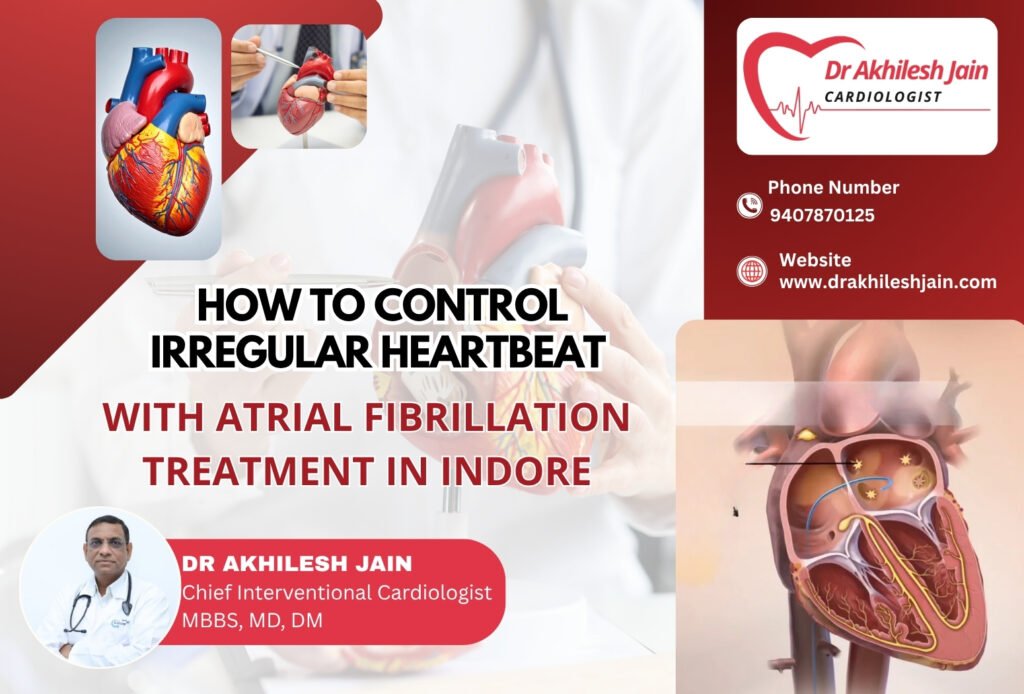
How to control irregular heartbeat with atrial fibrillation treatment in Indore by Dr. Akhilesh Jain with heart diagram.
Uncategorized

How to Control Irregular Heartbeat with Atrial Fibrillation Treatment in Indore

Your heart beats every second without you even noticing, but when that rhythm becomes irregular, it can be a sign of a serious condition. Atrial fibrillation (AFib) is one such condition that can cause an uneven heartbeat, discomfort, and anxiety. Seeking the Best Atrial Fibrillation Treatment in Indore at the right time can help control the condition and protect your heart from further complications. Irregular heartbeat should never be ignored. Studies show that atrial fibrillation can increase the risk of stroke by nearly 5 times if left untreated. Early consultation with a Best Cardiologist in Indore helps in accurate diagnosis and timely management of the condition. With proper care and guidance from a Best Heart Specialist in Indore, patients can effectively manage their heart rhythm, reduce risks, and lead a healthier, more active life. What Is Atrial Fibrillation? Atrial fibrillation is a condition in which the heart beats in an irregular or uneven rhythm, affecting the way blood flows through the body. In a healthy heart, the rhythm is steady and well-coordinated, but in AFib, the heartbeat can become fast and unpredictable. That is why timely care through the Best Atrial Fibrillation Treatment in Indore is important to manage the condition effectively. In atrial fibrillation: The heartbeat becomes fast or irregular Blood does not flow properly through the heart The heart becomes less efficient over time Think of your heart like a drum. When the beat is steady, everything feels smooth and balanced. But when the rhythm becomes irregular, it creates confusion and imbalance. Early diagnosis by a Best Cardiologist in Indore and proper guidance from a Best Heart Specialist in Indore can help restore a healthy heart rhythm and prevent complications. Why Irregular Heartbeat Is Dangerous Many people ignore an irregular heartbeat, assuming it is caused by stress or tiredness. However, it can be a sign of a serious heart condition that requires immediate attention. Seeking the Best Atrial Fibrillation Treatment in Indore at the right time can help prevent life-threatening complications. If left untreated, irregular heartbeat can lead to: Stroke (up to 5 times higher risk) Heart failure Blood clots Reduced heart efficiency Early diagnosis and proper treatment are essential to protect your heart. Consulting a Best Cardiologist in Indore and getting guidance from a Best Heart Specialist in Indore can help manage the condition effectively and reduce long-term risks. Common Symptoms of Atrial Fibrillation Atrial fibrillation can show different symptoms in different people. Some may feel clear warning signs, while others may not notice anything at all. Recognizing these symptoms early and seeking the Best Atrial Fibrillation Treatment in Indore can help prevent serious complications. Common symptoms include: Fast or irregular heartbeat Palpitations (a fluttering or racing feeling in the chest) Shortness of breath Fatigue or weakness Dizziness or lightheadedness In some cases, atrial fibrillation may not show any symptoms, which makes regular heart check-ups very important. Early consultation with a Best Cardiologist in Indore and proper guidance from a Best Heart Specialist in Indore can help detect the condition in time and ensure effective treatment. A Real Story – From Fear to Recovery Amit, a 45-year-old professional, started feeling his heart racing randomly. He ignored it at first. One day, he felt dizzy and collapsed briefly. After diagnosis, he was found to have atrial fibrillation. With timely care and proper treatment, Amit recovered well. Causes of Atrial Fibrillation Atrial fibrillation can develop due to various health conditions and lifestyle factors that affect the heart’s normal rhythm. Understanding these causes can help in early prevention and timely treatment. Common causes include: High blood pressure, which puts extra strain on the heart Existing heart disease or heart-related conditions Diabetes, which affects blood vessels and heart function Stress, which can disturb the heart’s rhythm Smoking, which damages blood vessels and the heart Excess alcohol consumption, which can trigger irregular heartbeat People above the age of 40 years are at a higher risk of developing atrial fibrillation, making regular heart check-ups important for early detection and management. Diagnosis – How Doctors Detect Atrial Fibrillation To diagnose atrial fibrillation accurately, a Best Heart Specialist in Indore may recommend a series of tests that help evaluate the heart’s rhythm and overall function. These tests allow doctors to detect irregularities early and plan the right treatment. Common diagnostic tests include: ECG (Electrocardiogram) This test records the electrical activity of the heart and helps identify irregular heart rhythms. Holter Monitoring A portable device is used to track the heart’s rhythm continuously for 24 hours or more. Echocardiography This imaging test uses ultrasound to check the heart’s structure and how well it is functioning. Early diagnosis helps in starting timely treatment and reducing the risk of complications. Treatment Options for Atrial Fibrillation The treatment for atrial fibrillation depends on the severity of the condition and the patient’s overall health. After proper evaluation, doctors choose the most suitable approach to control the heart rhythm and reduce complications. 1. Medications Help control heart rate and rhythm Prevent blood clots and reduce stroke risk 2. Cardioversion Uses controlled electrical shocks Helps restore the heart’s normal rhythm 3. Catheter Ablation Targets and blocks abnormal electrical signals Helps maintain a stable and regular heartbeat All these advanced treatment options are included in the Best Atrial Fibrillation Treatment in Indore, ensuring effective management and better heart health outcomes. Lifestyle Changes That Help Control Atrial Fibrillation Lifestyle plays a very important role in managing atrial fibrillation. Medical studies suggest that making the right lifestyle changes can improve heart health by up to 30% and help control irregular heartbeat more effectively. Simple daily habits that can make a difference include: Eating a healthy and balanced diet Exercising regularly to strengthen the heart Avoiding smoking, which can worsen heart rhythm problems Reducing caffeine intake to prevent irregular heartbeat triggers Managing stress through relaxation techniques like yoga or meditation Along with medical care, these lifestyle changes support the Best Atrial Fibrillation Treatment in Indore and help maintain a stable and healthy heart rhythm. Why

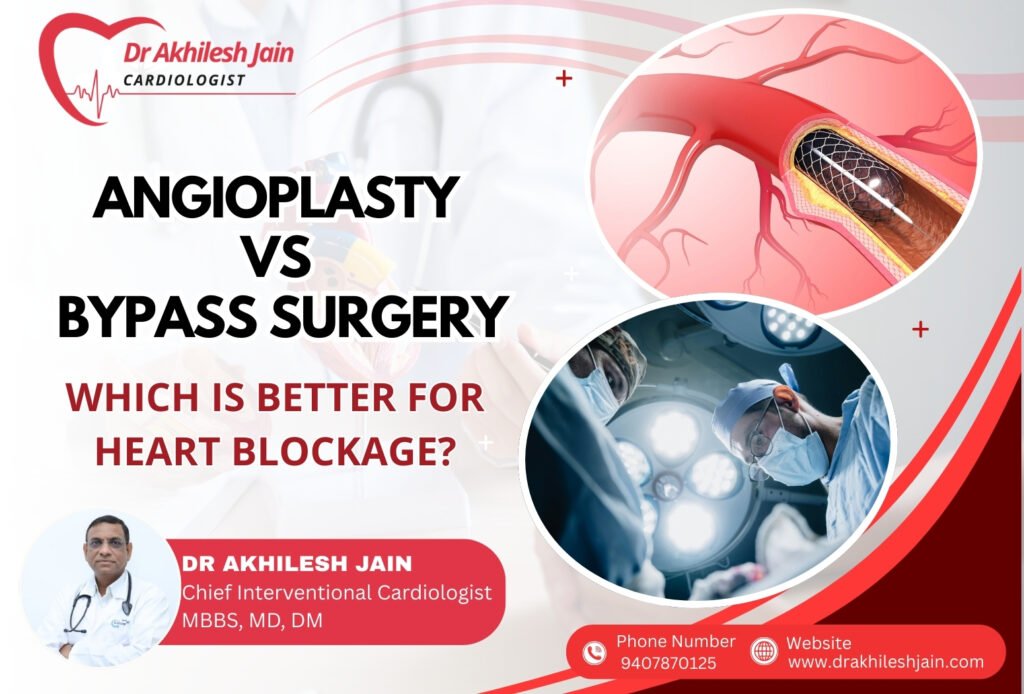
Angioplasty vs bypass surgery for heart blockage explained by Dr. Akhilesh Jain, interventional cardiologist.
Uncategorized

Angioplasty vs Bypass Surgery: Best Angioplasty in Indore or Best Bypass Surgery in Indore – Which Is Better for Heart Blockage?

Heart disease is one of the leading causes of death worldwide. Global health reports show that heart-related conditions cause nearly 17.9 million deaths every year, and blocked heart arteries contribute to many of these cases. When such problems occur, timely medical care and the Best Angioplasty in Indore can play a crucial role in restoring proper blood flow and protecting heart health. When arteries become blocked, doctors usually recommend two main treatment options: angioplasty and bypass surgery. Both procedures are effective, but the right choice depends on the severity of the blockage and the patient’s overall health. Consulting a Best Cardiologist in Indore helps patients understand their condition clearly and choose the most suitable treatment. In cases where blockages are severe or involve multiple arteries, doctors may recommend surgical options such as the Best Bypass Surgery in Indore. Understanding the differences between these treatments can help patients make informed decisions about their heart care. Understanding Heart Blockage Your heart needs a constant supply of oxygen-rich blood to function properly. This blood travels through special vessels called coronary arteries, which play a vital role in maintaining heart health. When these arteries become narrowed or blocked, doctors may recommend treatments such as the Best Angioplasty in Indore to restore normal blood flow and protect the heart. Over time, fat, cholesterol, and other substances can build up inside the artery walls. This buildup forms a substance called plaque, which gradually narrows the arteries and restricts blood circulation. In many cases, a Best Cardiologist in Indore evaluates the severity of the blockage and recommends the most suitable treatment based on the patient’s condition. Medical research shows that when artery blockage reaches 60–70%, the risk of a heart attack increases significantly. In severe cases, advanced treatments like the Best Bypass Surgery in Indore may be required to create a new pathway for blood flow. This condition is medically known as Coronary Artery Disease (CAD).   What Is Angioplasty? Angioplasty is a modern and minimally invasive procedure used to treat blocked or narrowed heart arteries. It helps restore proper blood flow to the heart without the need for major surgery. Many patients choose this procedure because recovery is faster and the treatment is highly effective, especially when performed by an experienced specialist like Dr. Akhilesh Jain as part of the Best Angioplasty in Indore. How Angioplasty Is Performed A thin, flexible tube called a catheter is inserted into a blood vessel, usually through the wrist or groin. The catheter is carefully guided toward the blocked coronary artery. Once it reaches the blockage, a small balloon is inflated to widen the narrowed artery. In many cases, doctors place a stent (tiny metal mesh tube) to keep the artery open and prevent future blockage. Procedure and Recovery The angioplasty procedure usually takes 30 to 60 minutes. Most patients can return home within 24–48 hours. Patients usually recover faster compared to major heart surgery. Because of its effectiveness and shorter recovery time, many patients prefer the Best Angioplasty in Indore for treating heart blockages safely and efficiently. What Is Bypass Surgery? Bypass surgery, medically known as Coronary Artery Bypass Grafting (CABG), is a surgical procedure used to treat severe or multiple heart artery blockages. Doctors recommend this treatment to restore blood flow to the heart when simpler procedures cannot treat severe artery blockages. How Bypass Surgery Works Doctors create a new pathway for blood flow around the blocked artery. A healthy blood vessel is taken from another part of the body, such as the chest, leg, or arm. This vessel is attached to the heart to bypass the blocked section of the artery, allowing blood to flow normally again. Procedure and Recovery The surgery usually takes 3 to 6 hours depending on the number of blockages. Patients typically stay in the hospital for several days after the procedure. Full recovery may take around 4 to 8 weeks. In cases where patients have multiple or severe blockages, doctors may recommend the Best Bypass Surgery in Indore to restore healthy blood circulation and reduce the risk of heart attack. Key Differences of Angioplasty vs Bypass Surgery  Feature Angioplasty Bypass Surgery Procedure Type Minimally invasive Major surgery Hospital Stay 1–2 days 5–7 days Recovery Time 1 week 4–8 weeks Best For Single blockage Multiple blockages Risk Level Lower Higher Both treatment options can provide excellent results when chosen based on proper diagnosis and expert medical advice. Consulting an experienced Best Cardiologist in Indore helps ensure the most suitable and safest treatment for each patient. When Do Doctors Recommend Angioplasty? Doctors usually recommend angioplasty when they can safely treat the blockage in the heart arteries without performing major surgery. After proper evaluation, a heart specialist may suggest the Best Angioplasty in Indore as an effective treatment option for restoring blood flow to the heart. Doctors generally recommend angioplasty when: Only one or two coronary arteries are blocked The blockage is not extremely complex or widespread The patient requires a faster recovery and shorter hospital stay Medical studies show that angioplasty has a success rate of more than 95% in many cases, making it a reliable and commonly preferred treatment for heart artery blockages. Why Experience Matters in Heart Treatment Heart procedures require high precision, accurate diagnosis, and careful decision-making. Even a small delay or incorrect treatment choice can affect the patient’s recovery, which is why experience plays a crucial role in heart care. Patients searching for a Best Cardiologist in Indore often prefer specialists who have extensive experience in diagnosing and treating heart artery blockages. An experienced cardiologist can evaluate the severity of the condition and recommend the most suitable treatment, whether it is angioplasty or bypass surgery. Dr. Akhilesh Jain, known as a Best Cardiologist in Indore is recognized for his patient-focused approach and expertise in advanced cardiac procedures. His priority is always to recommend the safest and most effective treatment plan to help patients recover and maintain long-term heart health. How Lifestyle Changes Help Prevent Heart Blockage While treatments like the

Dr. Akhilesh Jain explaining coronary artery disease treatment in Indore with a heart model and patient awareness graphic.
Uncategorized

Looking for Coronary Artery Disease Treatment in Indore? Here’s What You Should Know

Heart disease does not develop in a single day. It builds up slowly and silently over time, often without clear warning signs in the early stages. Many people ignore mild symptoms until the condition becomes serious, which is why seeking the Best Coronary Artery Disease Treatment in Indore at the right time can make a life-saving difference. In many cases, individuals delay visiting a specialist until chest pain becomes severe or a heart attack suddenly occurs. Early consultation with a Best Cardiologist in Indore helps detect problems before they turn critical and ensures proper guidance and timely treatment. Understanding coronary artery disease and acting early can protect your heart and improve your long-term health. What Is Coronary Artery Disease? Your heart needs oxygen to work properly, and this oxygen reaches the heart through special blood vessels called coronary arteries. When these arteries are healthy, blood flows smoothly and the heart functions efficiently. However, studies show that nearly 50–60% of heart attacks occur due to blocked coronary arteries, making early detection extremely important. This is why timely care and the Best Coronary Artery Disease Treatment in Indore can play a crucial role in preventing serious complications. Over time, fat, cholesterol, and other substances can slowly build up inside these arteries. As this buildup increases, the arteries become narrow and stiff. This condition is known as Coronary Artery Disease (CAD), and it reduces the amount of blood and oxygen reaching the heart muscle. Think of it like a water pipe in your home. If dirt and debris collect inside the pipe, the flow of water becomes slow and weak. In the same way, when arteries become blocked, blood flow to the heart decreases, making it harder for the heart to function properly. Why Coronary Artery Disease Is Dangerous Coronary artery disease can become serious when the arteries supplying blood to the heart become significantly blocked. When blood flow reduces, the heart does not receive enough oxygen, and this can lead to several warning signs and life-threatening complications. Seeking the Best Coronary Artery Disease Treatment in Indore at the right time can greatly reduce these risks. Blocked arteries may cause: Chest pain or pressure (Angina) Shortness of breath, even during mild activity Unusual fatigue or weakness Heart attack due to complete blockage Sudden cardiac arrest in severe cases Medical studies show that severe artery blockage can increase the risk of heart attack by more than 50% if left untreated. Without timely care and evaluation by a Best Cardiologist in Indore, the condition can quickly become life-threatening. Early diagnosis and proper treatment are essential to protect heart health and prevent serious damage. A Real-Life Story – When Ignoring Symptoms Became Risky Rajesh, a 48-year-old businessman, often experienced mild chest discomfort. Like many people, he assumed it was due to stress, long working hours, or acidity. He chose to ignore the symptoms, thinking they were temporary and not serious. One evening, however, the discomfort turned into intense chest pressure accompanied by sweating and breathlessness. His family quickly realized something was wrong and rushed him to a heart specialist. After detailed tests, doctors found severe blockage in his coronary arteries. Fortunately, Rajesh received timely medical care and underwent proper treatment. Today, he walks daily, follows a heart-healthy diet, and prioritizes regular check-ups. Symptoms You Should Never Ignore Coronary artery disease often shows early warning signs, but many people ignore them until the condition becomes serious. Recognizing these symptoms on time and seeking the Best Coronary Artery Disease Treatment in Indore can significantly reduce the risk of complications. Common symptoms include: Chest tightness, pressure, or heaviness Pain spreading to the arm, jaw, neck, or back Shortness of breath, even during light activity Dizziness or a faint feeling Unusual or extreme tiredness Even mild symptoms deserve immediate attention. Consulting a Best Cardiologist in Indore at the right time can help detect the problem early and protect your heart from severe damage. Who Is at Higher Risk? Coronary artery disease does not affect everyone in the same way. However, certain health conditions and lifestyle habits can significantly increase the risk. In fact, studies show that people with multiple risk factors are 2 to 4 times more likely to develop heart artery blockages. Seeking the Best Coronary Artery Disease Treatment in Indore at an early stage can help reduce these risks and prevent serious complications. You may be at higher risk if you have: Diabetes – Diabetic patients have nearly 2x higher risk of heart disease. High blood pressure – Increases strain on the arteries over time. High cholesterol – Responsible for plaque buildup inside arteries. Smoking habits – Smokers are up to 70% more likely to develop coronary artery disease. Family history of heart disease – Genetic factors can increase risk. Sedentary lifestyle – Lack of exercise weakens heart health. Regular heart check-ups with a Best Cardiologist in Indore and early screening can detect problems before they become severe, helping prevent major heart complications. Diagnosis – How Doctors Detect Coronary Artery Disease Diagnosing coronary artery disease at the right time can prevent serious heart complications. When you consult a heart specialist, they may recommend specific tests to understand how well your heart is functioning and whether there are any blockages in the arteries. Early detection plays a key role in planning the most effective treatment. Some common diagnostic tests include: ECG (Electrocardiogram) This test records the electrical activity of the heart and helps identify irregular rhythms or signs of reduced blood flow. EchocardiographyAn ultrasound-based scan that shows the structure and pumping function of the heart in real time. TMT (Treadmill Stress Test)This test evaluates how the heart performs during physical activity and can reveal symptoms that may not appear while resting. Coronary AngiographyA specialized imaging test that clearly shows the exact location and severity of artery blockages. With proper guidance from Dr. Akhilesh Jain, who is known as a Best Cardiologist in Indore, these diagnostic tests help identify the exact problem and allow doctors to plan the most

Scroll to Top