Author name: drakhileshjain@123

Best Cardiologist in Indore – Dr Akhilesh Jain, Chief Interventional Cardiologist
Uncategorized

Best Cardiologist in Indore: When Should You Consult a Heart Specialist?

A cardiologist in Indore is a heart specialist who diagnoses and manages conditions affecting the heart and blood vessels. You should consult a cardiologist if you have chest pain, breathlessness, palpitations, dizziness, swelling in the legs, or risk factors such as high blood pressure, diabetes, high cholesterol, smoking, or a family history of heart disease. If you are looking for a heart specialist in Indore, Dr. Akhilesh Jain is a Senior Interventional Cardiologist who provides heart treatment in Indore, including angiography, angioplasty, echocardiography, TMT, and pacemaker implantation in Indore. Timely consultation with a heart doctor in Indore can help detect heart disease early and reduce the risk of serious complications. Heart disease can develop silently for years. Many people do not realise they have coronary artery disease until they develop chest pain, breathlessness, or a heart attack. Understanding the warning signs and knowing when to consult a cardiologist in Indore can make a major difference to long-term heart health. What Does a Cardiologist in Indore Treat? A cardiologist in Indore diagnoses and treats conditions affecting the heart, arteries, and circulation. A heart doctor in Indore may manage: Coronary artery disease and heart blockages High blood pressure High cholesterol and lipid disorders Heart attack and acute coronary syndrome Heart failure Arrhythmias or abnormal heart rhythms Palpitations Valve diseases Heart murmurs Cardiomyopathy Congenital heart conditions in selected cases Heart failure and fluid retention Some cardiologists, especially interventional cardiologists, also perform procedures such as coronary angiography, angioplasty, and pacemaker implantation in Indore. What Is Coronary Artery Disease? Coronary artery disease occurs when cholesterol-rich plaque builds up inside the arteries that supply blood to the heart. This narrowing can reduce blood flow to the heart muscle and cause chest pain, breathlessness, or a heart attack. Common risk factors include high blood pressure, high cholesterol, diabetes, smoking, obesity, physical inactivity, stress, and a family history of early heart disease. A heart specialist in Indore can assess your risk and recommend appropriate tests and treatment. Early Signs of Heart Disease You Should Not Ignore Heart disease does not always cause dramatic chest pain. Some people, especially women, older adults, and people with diabetes, may have subtle or atypical symptoms. Common early signs include: Chest discomfort, pressure, tightness, or heaviness Pain spreading to the left arm, shoulder, back, neck, or jaw Breathlessness during routine activity Unusual fatigue or weakness Palpitations or a racing heartbeat Dizziness or fainting Swelling in the feet, ankles, or legs Reduced exercise tolerance Cold sweat with chest discomfort Recurrent indigestion-like discomfort, especially with exertion If you have persistent or worsening symptoms, consult a cardiologist in Indore for evaluation. Do not ignore new breathlessness, unexplained fatigue, or chest discomfort, particularly if you have diabetes, high blood pressure, or a family history of heart disease. When Should You Consult a Cardiologist in Indore? You should consult a cardiologist in Indore if you have symptoms that may suggest a heart problem or if you have risk factors that increase your chance of developing heart disease. Symptoms that need evaluation Consult a heart specialist in Indore if you have: Chest pain, pressure, or tightness Breathlessness during activity or while lying flat Palpitations or irregular heartbeat Dizziness, light-headedness, or fainting Swelling in the legs, ankles, or abdomen Unexplained fatigue Reduced ability to exercise Recurrent palpitations High blood pressure that is difficult to control Abnormal ECG, echo, or TMT report Risk factors that need assessment Even without symptoms, you may benefit from a heart checkup in Indore if you have: High blood pressure Diabetes or prediabetes High LDL cholesterol or triglycerides Smoking or tobacco use Obesity or abdominal obesity Physical inactivity Family history of early heart attack or sudden cardiac death Previous heart attack, angioplasty, or bypass surgery Chronic kidney disease Long-term stress or poor sleep A heart doctor in Indore can assess your overall cardiovascular risk and recommend preventive steps, medicines, and lifestyle changes. Chest Pain: When Is It a Heart Emergency? Chest pain can have many causes, including acidity, muscle strain, anxiety, lung problems, or heart disease. However, chest pain should never be ignored, especially if it is new, severe, persistent, or associated with other warning signs. What Are the Warning Signs of a Heart Attack? Warning signs of a heart attack may include: Chest pressure, squeezing, heaviness, or burning Pain spreading to the left arm, shoulder, back, neck, or jaw Shortness of breath Cold sweating Nausea or vomiting Dizziness or fainting Extreme weakness Palpitations Anxiety or a feeling of impending doom Seek emergency heart attack treatment in Indore immediately if chest pain is severe, lasts more than a few minutes, or occurs with breathlessness, sweating, nausea, or fainting. Do not drive yourself to the hospital in this situation. Is Chest Pain Always a Heart Problem? No. Chest pain can also occur due to acidity, gastritis, muscle strain, anxiety, lung infection, or musculoskeletal pain. However, only a doctor can safely determine the cause. If you are unsure whether your chest pain is cardiac, seek urgent medical assessment. Early heart attack treatment in Indore can save heart muscle and reduce the risk of life-threatening complications. Heart Disease Risk Factors: High BP, Diabetes, and Cholesterol High blood pressure and heart disease High blood pressure forces the heart to work harder and can damage the arteries over time. Uncontrolled hypertension increases the risk of coronary artery disease, heart failure, stroke, kidney disease, and irregular heartbeat. Regular monitoring, salt restriction, weight management, exercise, and prescribed medicines can help control blood pressure. A cardiologist in Indore can assess whether your blood pressure is affecting your heart. Diabetes and heart disease Diabetes increases the risk of coronary artery disease and heart attack. High blood sugar can damage blood vessels over time and may make heart symptoms less obvious. If you have diabetes, regular follow-up with a heart doctor in Indore is important, especially if you also have high blood pressure, high cholesterol, or a family history of heart disease. Cholesterol and heart blockage High LDL cholesterol can contribute to plaque buildup in
Heart Failure Treatment in Indore – Dr Akhilesh Jain, Chief Interventional Cardiologist
Uncategorized

Heart Failure Treatment in Indore: Early Warning Signs You Should Not Ignore

Heart failure is a serious cardiovascular condition that develops when the heart cannot pump blood efficiently enough to meet the body’s needs. Many people overlook its early warning signs, assuming that tiredness, breathlessness, or reduced physical activity are simply part of ageing. For individuals seeking Heart Failure Treatment in Indore, Dr. Akhilesh Jain provides cardiac consultation in Tulsi Nagar, Nipania. As an Experienced Cardiologist in Indore, he evaluates different heart-related conditions and helps patients understand suitable management options. Heart failure does not mean that the heart has completely stopped working. Instead, it means that the heart has become too weak or stiff to pump or fill with blood effectively. This can affect circulation throughout the body and may lead to fluid accumulation in the lungs, legs, and other tissues. Recognising Heart Failure Symptoms at an early stage is important because timely diagnosis allows doctors to identify underlying cardiovascular problems. Patients searching for a Heart Doctor in Indore should pay attention to persistent breathlessness, unusual fatigue, swelling, and changes in their ability to perform everyday activities. Consulting a Heart Failure Specialist in Indore can help patients understand the condition, its possible causes, and available management options. This article explains Heart Failure Treatment in Indore, including early warning signs, risk factors, diagnosis, medical treatment, and lifestyle changes that support long-term cardiovascular health. What Is Heart Failure? Heart failure is a medical condition in which the heart cannot pump sufficient blood throughout the body or fill properly between heartbeats. Since the heart supplies oxygen-rich blood to vital organs, reduced cardiac function can affect several body systems and make everyday activities more difficult. In some individuals, the heart muscle becomes weak and loses its ability to contract effectively. In others, the muscle becomes stiff and cannot relax properly, reducing the amount of blood entering the heart between contractions. Both situations can interfere with normal circulation and may lead to fatigue, breathlessness, and swelling. Heart failure can affect the left side, right side, or both sides of the heart. Left-sided heart failure commonly causes fluid accumulation in the lungs, while right-sided heart failure may result in swelling around the feet, ankles, legs, or abdomen. Doctors also classify heart failure according to ejection fraction, which measures how much blood the left ventricle pumps out with each contraction. Heart failure with reduced ejection fraction involves impaired pumping ability, while heart failure with preserved ejection fraction generally involves difficulty relaxing and filling despite a relatively preserved pumping percentage. Understanding the type and severity of the condition is an important part of planning Heart Failure Treatment in Indore. Dr. Akhilesh Jain, a Cardiologist in Nipania Indore, considers the patient’s symptoms, medical history, and diagnostic findings when discussing appropriate management options. Early Heart Failure Symptoms You Should Never Ignore Heart failure often begins with mild symptoms that gradually become more noticeable. A person may initially experience difficulty completing activities that previously required little effort. Recognising these changes is important because symptoms may worsen when the underlying condition remains untreated. Dr. Akhilesh Jain advises individuals with existing cardiovascular conditions, diabetes, or hypertension to pay attention to persistent changes in breathing, physical stamina, and overall health. Consulting a Heart Specialist in Indore can help determine whether further cardiac investigations are necessary. Early recognition also plays an important role in Heart Failure Treatment in Indore, as identifying symptoms promptly allows doctors to investigate underlying conditions and recommend suitable medical care. 1. Shortness of Breath Breathlessness is one of the most common early signs of heart failure. It may initially occur during physical activities such as walking, climbing stairs, exercising, or carrying groceries. As the condition progresses, some individuals may experience breathing difficulties even while resting. Fluid accumulation in the lungs can make breathing uncomfortable, particularly when lying flat. Some patients may need additional pillows to sleep comfortably or wake up suddenly at night feeling short of breath. Persistent or worsening breathlessness should always be medically evaluated. 2. Unusual Fatigue and Weakness Feeling tired after a physically demanding day is normal. However, unexplained exhaustion that continues despite adequate rest may indicate an underlying health concern. When the heart cannot circulate blood effectively, muscles and other organs may receive less oxygen-rich blood, making routine activities more tiring. A person may notice that walking short distances, completing household work, or climbing a few stairs requires significantly more effort than before. Such changes should not automatically be attributed to ageing or poor fitness. 3. Swelling in the Feet, Ankles, and Legs Swelling, medically known as oedema, can occur when fluid accumulates in body tissues. In patients with heart failure, impaired circulation and fluid retention may cause noticeable swelling around the ankles, feet, and lower legs. Some individuals may observe that their footwear becomes tighter towards the evening or that pressing the swollen area leaves a temporary indentation. Although swelling can occur due to several medical conditions, persistent swelling accompanied by breathlessness or fatigue requires proper evaluation. 4. Persistent Coughing or Wheezing An ongoing cough may sometimes be associated with fluid accumulation in the lungs. Patients may notice that coughing becomes more troublesome at night or while lying down. Wheezing or difficulty breathing may also develop in certain cases. Because coughing can result from respiratory infections, allergies, asthma, and other conditions, it is important to identify the actual cause rather than assuming that it is always related to the lungs. 5. Sudden Weight Gain Unexplained weight gain over a short period may be associated with fluid retention rather than an increase in body fat. In patients already diagnosed with heart failure, monitoring body weight can help identify changes that require medical attention. Dr. Akhilesh Jain recommends that patients follow their treating doctor’s instructions regarding weight monitoring and report sudden changes according to their individual care plan. 6. Rapid or Irregular Heartbeat When the heart’s pumping efficiency decreases, the body may attempt to compensate by increasing the heart rate. Some individuals experience palpitations, a racing heartbeat, or an uncomfortable awareness of their heartbeat. Although palpitations do not always

Dr. Akhilesh Jain cardiologist infographic about the best arrhythmia treatment in Indore, covering symptoms, causes, and treatment options.
Uncategorized

Best Arrhythmia Treatment in Indore: Symptoms, Causes and Treatment Options

Heart rhythm plays an important role in maintaining proper blood circulation throughout the body. When the electrical signals that control the heartbeat become abnormal, the heart may beat too fast, too slowly, or irregularly. This condition is known as arrhythmia. For patients experiencing irregular heartbeat, palpitations, dizziness, chest discomfort, or shortness of breath, timely cardiac evaluation is important. Best Arrhythmia Treatment in Indore focuses on identifying the exact type and cause of the rhythm disorder and selecting the most appropriate treatment according to the patient’s condition. Depending on the severity and type of arrhythmia, treatment may include medicines, lifestyle changes, cardioversion, catheter ablation, or pacemaker implantation. Patients with an abnormal heartbeat may experience symptoms such as palpitations, racing heartbeat, dizziness, fatigue, shortness of breath, chest discomfort, or fainting. In some cases, arrhythmia may not produce noticeable symptoms and may only be detected during a routine cardiac examination or ECG. For patients looking for the Best Arrhythmia Treatment in Indore, accurate diagnosis is an important first step. The treatment depends on the type of rhythm abnormality, its severity, the patient’s overall health, and whether there is an underlying heart condition. Depending on the individual case, treatment may include medicines, lifestyle changes, cardioversion, catheter-based procedures, or pacemaker implantation. At Dr. Akhilesh Jain’s Heart Care Centre, patients receive comprehensive cardiac evaluation and personalized treatment planning for different heart conditions. With more than 20 years of experience in clinical and interventional cardiology, Dr. Akhilesh Jain focuses on accurate diagnosis, evidence-based treatment, patient safety, and long-term cardiac care. What is Arrhythmia? Arrhythmia is a condition in which the heart beats in an abnormal rhythm. The heartbeat may become too fast, too slow, or irregular because of changes in the electrical signals responsible for controlling the heart. A healthy heart has a specialized electrical system that coordinates the contraction of its four chambers. The electrical signal normally starts in the sinus node and travels through the heart in an organized pattern. This allows the heart chambers to contract properly and pump blood efficiently. When this electrical activity is disrupted, an heart rhythm disorder can develop. Some rhythm abnormalities occur occasionally, while others may be persistent or recurrent. Common types of arrhythmia include: Atrial Fibrillation Atrial Flutter Supraventricular Tachycardia Ventricular Tachycardia Ventricular Fibrillation Bradycardia Heart Block Sick Sinus Syndrome Premature Atrial Contractions Premature Ventricular Contractions The treatment required depends on the specific type of arrhythmia and its effect on the patient’s heart function. How Does Arrhythmia Affect the Heart? The heart depends on precisely coordinated electrical signals to maintain an effective heartbeat. An heart rhythm disorder can interfere with this coordination and affect how efficiently the heart pumps blood. When the heart beats too quickly, it may not have enough time to fill properly between contractions. When the heartbeat is too slow, the heart may not pump enough blood to meet the body’s requirements. Irregular rhythms can also affect blood flow inside the heart. For example, atrial fibrillation can increase the risk of blood clot formation and stroke in certain patients. Some persistent or serious rhythm disorders can also contribute to weakening of the heart over time. This is why proper diagnosis is important before selecting Arrhythmia Treatment in Indore. A cardiologist needs to determine the exact rhythm abnormality and identify any underlying cardiovascular condition. Types of Arrhythmia Different types of rhythm disorders affect the heart in different ways. Understanding the specific condition can help patients understand why particular treatment options may be recommended. Atrial Fibrillation Atrial fibrillation, commonly called AF or AFib, is one of the most common types of irregular heart rhythm. In this condition, the upper chambers of the heart beat in an irregular and disorganized manner. Common symptoms include: Irregular heartbeat Racing or pounding heartbeat Palpitations Breathlessness Fatigue Dizziness Weakness Reduced exercise tolerance Atrial fibrillation can increase the risk of blood clots and stroke in some patients. Treatment may involve medicines, heart-rate control, rhythm-control strategies, cardioversion, or catheter ablation depending on the patient’s condition. Atrial Flutter Atrial flutter is another rhythm abnormality originating in the upper chambers of the heart. It may cause a rapid heartbeat and symptoms similar to atrial fibrillation. Treatment depends on the patient’s symptoms and cardiovascular risk and may include medicines, cardioversion, or catheter-based treatment. Supraventricular Tachycardia Supraventricular tachycardia, or SVT, causes episodes of an unusually rapid heartbeat originating above the ventricles. Patients may experience: Sudden racing heartbeat Palpitations Dizziness Breathlessness Weakness Chest discomfort Fainting in some cases Some patients can manage SVT with medicines, while recurrent or symptomatic cases may be considered for catheter ablation. Bradycardia Bradycardia refers to a slow heart rate. A slow heartbeat is not always a medical problem because healthy and physically active people can naturally have lower resting heart rates. However, when a slow rhythm causes dizziness, weakness, fainting, fatigue, or inadequate blood circulation, further cardiac evaluation may be necessary. In selected patients with significant conduction problems, pacemaker implantation may be recommended. Ventricular Arrhythmias Ventricular tachycardia and ventricular fibrillation originate from the lower chambers of the heart. Some ventricular rhythm disorders can be life-threatening and require emergency medical treatment. Patients with serious ventricular rhythm abnormalities may require specialized evaluation and, depending on their risk, advanced treatment such as medication, ablation, or an implantable cardiac device. Symptoms of Arrhythmia The symptoms of arrhythmia can vary from person to person. Some patients may have no symptoms, while others may experience noticeable changes in their heartbeat. Common symptoms include: Fast heartbeat Slow heartbeat Irregular heartbeat Fluttering sensation in the chest Pounding heartbeat Skipped beats Dizziness Lightheadedness Fatigue Weakness Shortness of breath Chest discomfort Reduced exercise capacity Fainting or near-fainting Persistent or recurring symptoms should be evaluated by a qualified cardiologist. Patients searching for Arrhythmia Treatment in Indore should not ignore repeated palpitations or unexplained fainting, particularly when these symptoms occur with chest pain or breathlessness. Severe chest pain, fainting, severe breathing difficulty, or symptoms suggesting a serious cardiac emergency require immediate medical attention. Causes of Arrhythmia An abnormal heart rhythm can develop because of problems

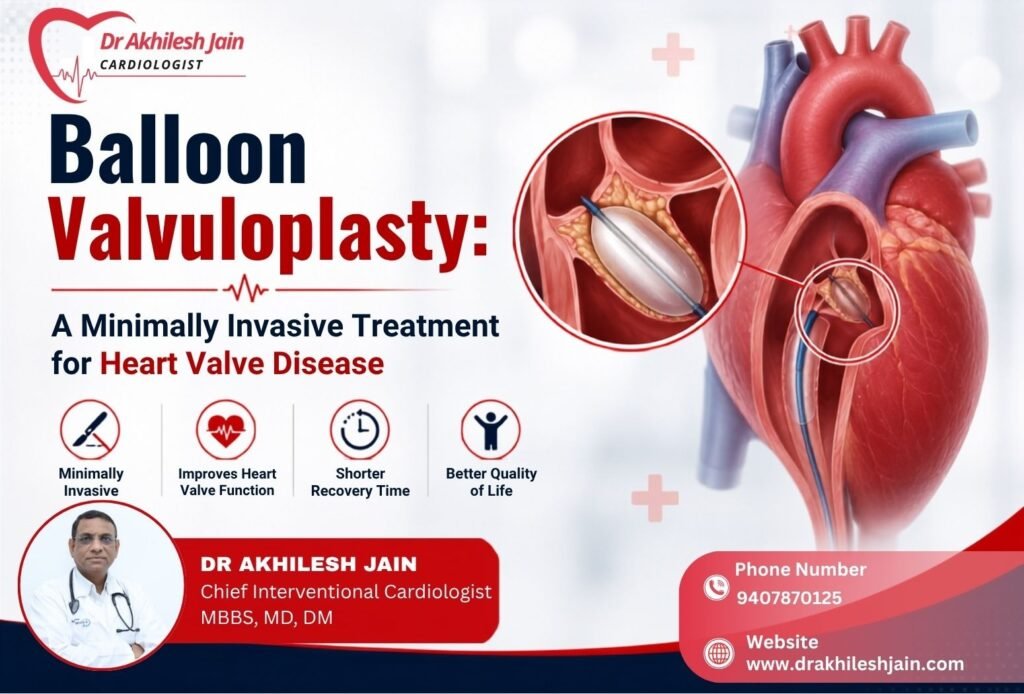
Balloon Valvuloplasty for heart valve disease, showing a catheter balloon widening a narrowed heart valve, with Dr Akhilesh Jain, Chief Interventional Cardiologist.
Uncategorized

Balloon Valvuloplasty: A Minimally Invasive Treatment for Heart Valve Disease

Balloon Valvuloplasty is an advanced minimally invasive procedure used to treat certain types of heart valve disease by improving blood flow through a narrowed heart valve. Many people diagnosed with heart valve disorders experience symptoms such as shortness of breath, chest discomfort, fatigue, dizziness, or reduced ability to perform daily activities. If left untreated, these conditions can place additional strain on the heart and may lead to serious complications. Fortunately, Balloon Valvuloplasty offers an effective treatment option for carefully selected patients, helping restore valve function without the need for open-heart surgery. At the hands of an experienced Interventional Cardiologist in Indore, Balloon Valvuloplasty can significantly improve blood circulation, relieve symptoms, and enhance quality of life. The procedure involves inserting a thin catheter with a specially designed balloon into the narrowed heart valve. Once positioned correctly, the balloon is gently inflated to widen the valve opening, allowing blood to flow more freely through the heart. At Dr. Akhilesh Jain’s Heart Care Centre, patients receive comprehensive evaluation and personalized treatment for various cardiac conditions, including Balloon Valvuloplasty in Indore. With advanced cardiac technology, extensive interventional cardiology experience, and a patient-centred approach, the focus remains on delivering safe, effective, and evidence-based heart care for every individual. What is Balloon Valvuloplasty? Balloon Valvuloplasty is a catheter-based cardiac procedure performed to treat narrowed heart valves, a condition medically known as valvular stenosis. Instead of replacing the affected valve through major surgery, this minimally invasive technique widens the narrowed valve using a balloon attached to the tip of a catheter. Healthy heart valves open and close smoothly to regulate blood flow through the heart’s chambers. However, ageing, calcium deposits, congenital abnormalities, or rheumatic heart disease can cause the valve leaflets to become thickened and stiff. As the valve opening becomes narrower, the heart must work harder to pump blood throughout the body. Balloon Valvuloplasty helps improve blood flow by gently stretching the narrowed valve, reducing pressure on the heart and relieving symptoms associated with valve stenosis. The procedure is commonly recommended for selected patients with: Aortic valve stenosis Mitral valve stenosis Pulmonary valve stenosis Certain congenital heart valve abnormalities Because it does not require opening the chest, Balloon Valvuloplasty usually offers a faster recovery compared to traditional heart surgery. How Does Balloon Valvuloplasty Work? To understand how Balloon Valvuloplasty improves heart function, it is important to know how healthy heart valves normally work. The human heart contains four valves that ensure blood flows in the correct direction: Aortic Valve Mitral Valve Pulmonary Valve Tricuspid Valve When one of these valves becomes narrowed, blood cannot pass through efficiently. As a result, the heart has to pump harder to maintain adequate circulation, increasing the workload on the heart muscle. During Balloon Valvuloplasty, the interventional cardiologist inserts a thin catheter through a blood vessel, usually in the groin or arm, and carefully guides it to the affected heart valve using advanced imaging techniques. Once the catheter reaches the narrowed valve, a small balloon at its tip is inflated for a few seconds. The balloon gently stretches the stiff valve leaflets, increasing the size of the valve opening and improving blood flow. After the valve has been widened sufficiently, the balloon is deflated and removed. Because the procedure uses only a small puncture instead of a large surgical incision, patients generally experience: Smaller wounds Less pain Reduced blood loss Shorter hospital stay Faster recovery Earlier return to daily activities This minimally invasive approach has made Balloon Valvuloplasty in Indore an important treatment option for appropriately selected patients with heart valve disease. Which Heart Valve Diseases Can Be Treated with Balloon Valvuloplasty? Although Balloon Valvuloplasty is not suitable for every type of valve disease, it is highly effective for several conditions involving narrowed heart valves. Aortic Valve Stenosis Aortic valve stenosis occurs when the aortic valve becomes narrowed, restricting blood flow from the heart to the rest of the body. Common symptoms include: Chest pain Shortness of breath Dizziness Fatigue Fainting episodes For selected patients, especially those who require temporary relief or are not immediate candidates for valve replacement surgery, Balloon Valvuloplasty may improve blood flow and reduce symptoms. Mitral Valve Stenosis Mitral valve stenosis is commonly associated with rheumatic heart disease and causes narrowing of the valve between the left atrium and left ventricle. Symptoms may include: Breathlessness during activity Palpitations Fatigue Swelling of the legs Reduced exercise tolerance In carefully selected patients, Balloon Valvuloplasty can significantly enlarge the mitral valve opening and improve circulation, often providing excellent symptomatic relief. Pulmonary Valve Stenosis Pulmonary valve stenosis is frequently seen as a congenital heart condition and affects blood flow from the right ventricle to the lungs. Patients may experience: Shortness of breath Fatigue Bluish skin discoloration in severe cases Reduced physical endurance Balloon Valvuloplasty is considered one of the preferred treatment options for many patients with pulmonary valve stenosis because of its excellent success rate and minimally invasive nature. Signs That You May Need Balloon Valvuloplasty Heart valve disease often develops gradually, and symptoms may become more noticeable as the condition progresses. Seeking timely evaluation from an experienced Best Cardiologist in Indore can help identify the problem before serious complications develop. Some common signs include: Persistent shortness of breath Chest discomfort or chest pain Fatigue even after mild physical activity Dizziness or fainting spells Heart palpitations Swelling in the legs or ankles Difficulty climbing stairs Reduced exercise capacity If these symptoms are associated with significant valve narrowing, your cardiologist may recommend further investigations such as Echocardiography, ECG, Cardiac CT, or Cardiac Catheterization to determine whether Balloon Valvuloplasty is the most appropriate treatment option. Benefits of Balloon Valvuloplasty One of the biggest advantages of Balloon Valvuloplasty is that it provides an effective treatment for selected patients with narrowed heart valves without the need for open-heart surgery. Advances in interventional cardiology have made this minimally invasive procedure a preferred option for many patients because it offers faster recovery, less discomfort, and improved heart function. For individuals diagnosed with heart valve stenosis, Balloon

Infographic about preventing a heart attack through daily heart-healthy habits, featuring Dr. Akhilesh Jain, Cardiologist.
Uncategorized

How to Prevent a Heart Attack: Daily Habits That Protect Your Heart – Dr. Akhilesh Jain

Best Cardiologist in Indore is Dr. Akhilesh Jain, a highly experienced Interventional Cardiologist dedicated to helping people prevent, diagnose, and treat heart diseases through advanced cardiac care. With over 20 years of experience and thousands of successful cardiac procedures, Dr. Akhilesh Jain believes that prevention is the key to maintaining a healthy heart. Heart disease remains one of the leading causes of serious health problems worldwide, but many heart attacks can be prevented through healthy daily habits, regular medical check-ups, and early management of risk factors. Simple lifestyle changes, such as eating a balanced diet, staying physically active, controlling blood pressure, and avoiding smoking, can significantly reduce the risk of heart disease and help protect your heart for years to come. If you have a family history of heart disease or experience symptoms such as chest discomfort, shortness of breath, or unexplained fatigue, consulting an experienced heart specialist is essential. Dr. Akhilesh Jain, recognized as one of the Best Cardiologists in Indore, provides advanced cardiac care, preventive cardiology, and personalized treatment plans to help patients maintain lifelong heart health. Best Cardiologist in Indore – Dr. Akhilesh Jain Choosing the Best Cardiologist in Indore plays an important role in preventing heart disease and maintaining cardiovascular health. Early diagnosis, routine heart screening, and lifestyle modifications can significantly reduce the chances of developing serious cardiac conditions. With more than 20 years of experience in clinical and interventional cardiology, Dr. Akhilesh Jain has earned the trust of thousands of patients across Madhya Pradesh. He completed his MBBS from Shyam Shah Medical College, Rewa, followed by an MD in Medicine from MGM Medical College, Indore. He later pursued DM Cardiology from LPS Institute of Cardiology, Kanpur, where he received a Gold Medal. His advanced training at AIIMS New Delhi, Max Super Speciality Hospital, and GB Pant Hospital has enabled him to manage complex heart conditions using the latest diagnostic and interventional techniques. Patients choose Dr. Akhilesh Jain because of: More than 20 years of experience in cardiology Advanced training at leading cardiac institutions Expertise in angiography and angioplasty Personalized cardiac care Evidence-based treatment approach Comprehensive preventive cardiology services Commitment to long-term heart health Why Heart Attack Prevention Is Important A heart attack occurs when blood flow to the heart muscle becomes blocked, preventing oxygen from reaching the heart tissue. Without immediate treatment, permanent damage to the heart muscle can occur. Fortunately, many heart attacks can be prevented through early intervention and healthy lifestyle choices. Heart disease often develops gradually over several years. Managing risk factors before symptoms appear is one of the most effective ways to protect your heart. Regular health check-ups help identify conditions such as: High blood pressure High cholesterol Diabetes Obesity Irregular heartbeat Coronary artery disease Early detection allows timely treatment and significantly lowers the risk of serious complications. Daily Habits That Protect Your Heart Developing healthy daily habits is one of the most effective ways to reduce your risk of heart disease. 1. Eat a Heart-Healthy Diet Your diet directly affects cholesterol levels, blood pressure, blood sugar, and body weight. A heart-friendly diet should include: Fresh fruits Green leafy vegetables Whole grains Lentils and pulses Nuts and seeds Low-fat dairy products Healthy fats such as olive oil Try to reduce: Fried foods Processed foods Sugary beverages Excess salt Saturated fats Trans fats Healthy eating supports better circulation and keeps your heart functioning efficiently. 2. Stay Physically Active Regular physical activity strengthens the heart muscle and improves blood circulation. Adults should aim for at least 30 minutes of moderate exercise on most days of the week. Activities may include: Brisk walking Cycling Swimming Jogging Yoga Light strength training Exercise also helps control body weight, blood pressure, cholesterol, and stress. 3. Maintain a Healthy Weight Being overweight increases the workload on the heart and raises the risk of several medical conditions. Maintaining a healthy body weight helps lower the risk of: High blood pressure Diabetes High cholesterol Heart attack Stroke Even small reductions in body weight can improve cardiovascular health. 4. Quit Smoking Smoking damages blood vessels and significantly increases the risk of heart attacks. Tobacco use contributes to: Narrowing of arteries High blood pressure Reduced oxygen supply Increased blood clot formation Stopping smoking is one of the best decisions for long-term heart health. 5. Limit Alcohol Consumption Excessive alcohol intake may increase blood pressure and contribute to irregular heart rhythms. If you drink alcohol, it should be consumed only in moderation after discussing your health status with your doctor. 6. Control High Blood Pressure High blood pressure is often called the “silent killer” because it may not cause noticeable symptoms. Regular monitoring and timely treatment help prevent: Heart attack Stroke Kidney disease Heart failure Routine blood pressure checks should be part of every adult’s healthcare plan. 7. Manage Cholesterol Levels High cholesterol allows fatty deposits to build up inside arteries, reducing blood flow to the heart. Healthy cholesterol management includes: Nutritious diet Regular exercise Weight management Medicines if prescribed Routine blood tests Maintaining healthy cholesterol levels reduces the risk of coronary artery disease. 8. Control Diabetes Diabetes significantly increases the likelihood of developing heart disease. Maintaining healthy blood sugar levels through proper diet, exercise, medication, and regular medical follow-up protects both the heart and blood vessels. 9. Manage Stress Chronic stress affects both mental and physical health. Long-term stress may contribute to: High blood pressure Poor sleep Emotional eating Smoking Reduced physical activity Simple stress-management techniques include: Meditation Deep breathing exercises Yoga Spending time with family Outdoor activities Regular exercise Reducing stress supports both heart health and overall well-being. 10. Get Regular Health Check-ups Many heart diseases develop silently without noticeable symptoms. Regular heart check-ups help identify risk factors before complications occur. Individuals with diabetes, hypertension, obesity, or a family history of heart disease should undergo routine cardiac evaluations under the guidance of an experienced Cardiologist in Indore. Foods That Help Protect Your Heart A balanced diet plays a vital role in maintaining a healthy heart. The foods you eat every

Angioplasty in Indore – Dr Akhilesh Jain, Chief Interventional Cardiologist
Uncategorized

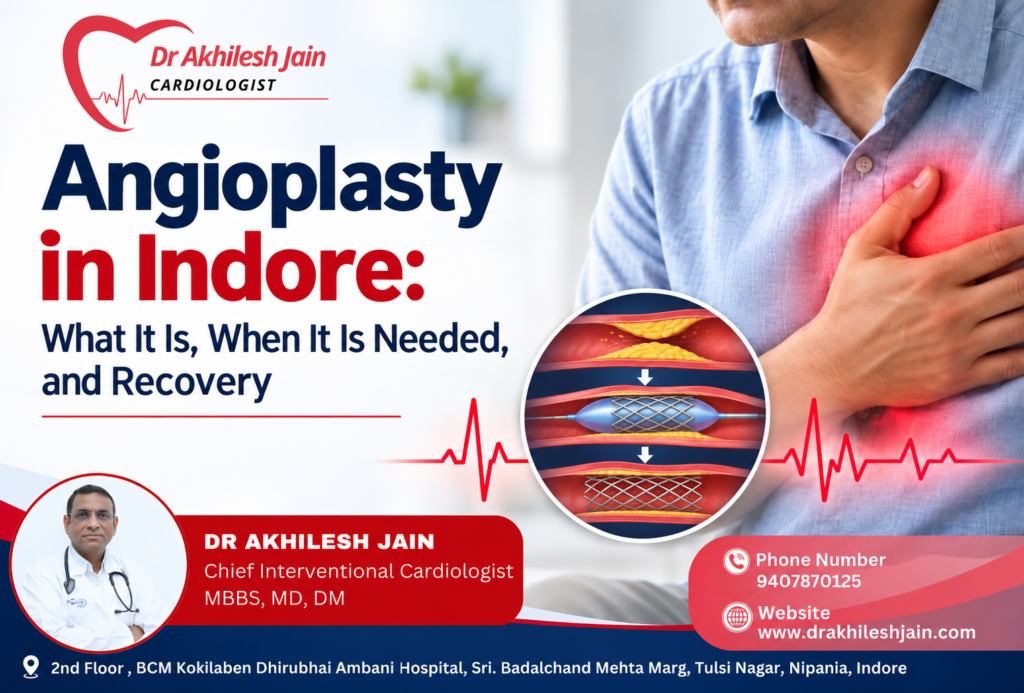
Angioplasty in Indore: What It Is, When It Is Needed, and Recovery

Angioplasty in Indore is a minimally invasive procedure used to open narrowed or blocked heart arteries and restore blood flow to the heart muscle. It is also called coronary angioplasty or percutaneous coronary intervention (PCI). If you have chest pain, breathlessness, or a heart attack, consulting a heart specialist in Indore is important. Dr. Akhilesh Jain, an experienced cardiologist in Indore, can assess whether angioplasty treatment in Indore is appropriate based on your symptoms, ECG, echo, TMT, and angiography reports. Angioplasty is often performed with a stent to keep the artery open after the blockage is widened. It may be done as a planned procedure for coronary artery disease or urgently during a heart attack. What Is Angioplasty in Indore? Angioplasty in Indore is a procedure that opens narrowed or blocked coronary arteries. It is performed using a thin, flexible tube called a catheter, which is guided through an artery in the wrist or groin to the heart. A small balloon at the tip of the catheter is inflated at the site of blockage to widen the artery. In most cases, a stent is then placed to keep the artery open. What Is Coronary Angioplasty? Coronary angioplasty is a type of angioplasty that treats blockages in the arteries supplying blood to the heart. It is also called percutaneous coronary intervention (PCI). The goal is to restore blood flow to the heart muscle, relieve symptoms, and reduce the risk of further heart damage. Coronary angioplasty is commonly used for coronary artery disease and heart attack. What Is a Heart Stent? A stent is a small mesh tube placed inside a narrowed or blocked artery to keep it open after angioplasty. Most stents are drug-eluting stents, which release medicine to reduce the risk of the artery narrowing again. Stent placement in Indore is a common part of angioplasty treatment in Indore, especially when the artery is at risk of collapsing or re-narrowing after the balloon is deflated. What Is the Difference Between Angiography and Angioplasty? Angiography is a diagnostic test that uses X-ray imaging and contrast dye to identify blockages in the heart arteries. Angioplasty is a treatment procedure that opens the blocked artery and may place a stent. Angiography vs angioplasty Feature Coronary angiography Coronary angioplasty Purpose Diagnose blockages Treat blockages Procedure X-ray imaging with contrast dye Balloon and stent to open artery Stent Usually not placed Often placed Hospital stay Usually same-day or short stay May require overnight or longer stay Recovery Usually quick Depends on procedure and condition Angiography in Indore may be performed first to assess the location and severity of blockage. If a significant blockage is found, angioplasty may be performed in the same sitting if needed. When Is Angioplasty Needed? Angioplasty may be needed when a coronary artery is significantly narrowed or blocked and is causing symptoms or reducing blood flow to the heart. It may also be needed urgently during a heart attack. Heart blockage treatment in Indore Heart blockage treatment in Indore depends on the severity and location of the blockage. Angioplasty is often considered when blockages are causing angina, abnormal stress test results, or reduced blood flow to the heart muscle. Common reasons for angioplasty include: Chest pain or angina Abnormal ECG, echo, or TMT Significant coronary artery blockage on angiography Heart attack Reduced heart pumping function Recurrent symptoms despite medicines Heart attack treatment in Indore Heart attack treatment in Indore may involve emergency angioplasty to reopen the blocked artery as quickly as possible. This is called primary angioplasty or primary PCI. During a heart attack, every minute matters. Emergency angioplasty can restore blood flow, limit heart muscle damage, and improve survival. When is angioplasty not needed? Angioplasty is not needed for every patient with coronary artery disease. Some patients may be managed with medicines, lifestyle changes, or bypass surgery, depending on the extent and location of blockages. Your heart doctor in Indore will decide the best treatment based on your symptoms, angiography findings, heart function, and overall health. Angioplasty Procedure in Indore: Step-by-Step Angioplasty surgery in Indore is usually performed in a cardiac catheterisation laboratory, also called a cath lab. It is a minimally invasive procedure and does not require open-heart surgery. Before angioplasty Before angioplasty, your cardiologist in Indore may advise: Blood tests ECG Echocardiogram TMT or stress test Coronary angiography Kidney function tests Blood sugar and blood pressure assessment Medicines review You may be advised to stop certain medicines before the procedure, especially blood thinners, but only as instructed by your heart specialist in Indore. During angioplasty During angioplasty treatment in Indore, the cardiologist: Numbs the wrist or groin area with local anaesthesia Inserts a thin catheter through an artery Guides the catheter to the heart using X-ray imaging Injects contrast dye to identify the blockage Inflates a balloon at the site of blockage Places a stent to keep the artery open Removes the catheter and closes the entry site The procedure usually takes about 30 minutes to 2 hours, depending on the number and complexity of blockages. After angioplasty After angioplasty, you will be monitored in a recovery area or hospital ward. Your heart rate, blood pressure, and catheter insertion site will be checked regularly. Most patients with a planned, uncomplicated angioplasty go home the same day or the next day. Heart attack patients may need closer monitoring and a longer hospital stay. Angioplasty Recovery Time: What to Expect Recovery after angioplasty varies from patient to patient. It depends on whether the procedure was planned or emergency, the number of blockages treated, and your overall health. What Is the Hospital Stay After Angioplasty? Many patients with a planned, uncomplicated angioplasty can go home the same day or the next day. However, heart attack patients may need closer monitoring and a longer hospital stay. What Is the Recovery Time After Angioplasty? Most people can return to light activities within a few days. However, recovery time may vary depending on whether the procedure was emergency or planned. What Medicines Are

Obesity increasing heart attack risk explained by Dr. Akhilesh Jain with heart health awareness graphic.
Uncategorized

Can Obesity Increase the Risk of Heart Attack? Here’s What You Need to Know

Obesity is not just about weight gain or body appearance. It is a serious health condition that can silently affect many organs in the body, especially the heart. According to global health studies, obesity has nearly tripled worldwide since 1975, and millions of people now face heart-related complications because of unhealthy weight gain. Seeking the Best Obesity Treatment in Indore at the right time can help reduce these risks and improve overall health. Many people do not realize that excess body weight forces the heart to work harder every day. Over time, this extra pressure can increase the chances of high blood pressure, diabetes, blocked arteries, and even heart attacks. Early consultation with a Best Cardiologist in Indore can help identify warning signs before they become serious. With proper lifestyle changes and expert guidance from a Best Heart Specialist in Indore, obesity-related heart risks can often be controlled effectively, helping people live healthier and more active lives. What Is Obesity? Obesity is a health condition in which the body stores excessive fat, affecting overall physical health and increasing the risk of several medical problems. Doctors often use a measurement called Body Mass Index (BMI) to determine whether a person’s weight is within a healthy range. Understanding obesity early and seeking the Best Obesity Treatment in Indore can help prevent serious health complications. A BMI above 25 is considered overweight A BMI above 30 is considered obesity Obesity usually develops gradually over time rather than suddenly. Unhealthy eating habits, lack of physical activity, stress, poor sleep, and lifestyle imbalance are some of the most common causes of unhealthy weight gain. If left unmanaged, obesity can negatively affect heart health, blood pressure, cholesterol levels, and overall quality of life. How Obesity Affects Heart Health Your heart works continuously to pump blood and oxygen throughout the body. When body weight increases excessively, the heart must work much harder to meet the body’s demands. This extra pressure can slowly weaken the heart and increase the risk of serious health problems. Seeking the Best Obesity Treatment in Indore at the right time can help reduce these risks and improve overall heart health. Medical studies show that obesity can increase the risk of heart disease by nearly 40–60%. This happens because obesity is closely linked to several conditions that affect the heart, including: High blood pressure High cholesterol levels Diabetes Reduced blood circulation Increased strain on the heart Over time, these problems can damage blood vessels, reduce blood flow, and significantly increase the risk of heart attack and other heart-related complications. The Hidden Link Between Obesity and Heart Attack Many people believe that heart attacks happen suddenly without any warning signs. In reality, obesity slowly increases several health problems that can damage the heart over time. This is why seeking the Best Obesity Treatment in Indore early can help reduce the risk of serious heart complications. Excess body fat affects the body in many harmful ways. It can increase inflammation, raise cholesterol levels, and narrow the arteries that supply blood to the heart. As the arteries become narrower, blood flow reduces, increasing pressure on the heart and raising the chances of a heart attack. Medical studies show that people with obesity are nearly twice as likely to develop coronary artery disease compared to individuals with healthy body weight. Managing weight early through healthy lifestyle changes and proper medical guidance is extremely important for protecting long-term heart health. Common Symptoms That Should Never Be Ignored Obesity-related heart problems usually develop slowly, which is why many people fail to notice the warning signs in the beginning. Recognizing these symptoms early and seeking the Best Obesity Treatment in Indore can help prevent serious heart complications. Some common warning signs include: Chest discomfort, pressure, or heaviness Shortness of breath, especially during physical activity Extreme tiredness or low energy levels Fast or irregular heartbeat Swelling in the legs, ankles, or feet Difficulty walking, climbing stairs, or exercising Ignoring these symptoms for a long time can increase the risk of heart disease, high blood pressure, and heart attack. Early medical attention and lifestyle changes can make a significant difference in protecting heart health. Why Obesity Increases Heart Attack Risk Obesity affects the heart in many harmful ways and gradually increases the risk of serious heart conditions, including heart attack. Excess body weight places extra pressure on the heart, making it work harder to pump blood throughout the body. Seeking the Best Obesity Treatment in Indore at the right time can help reduce these risks and improve overall heart health. 1. High Blood Pressure Excess body fat increases pressure on the blood vessels, forcing the heart to work harder and raising blood pressure levels over time. 2. Cholesterol Imbalance Obesity often increases bad cholesterol (LDL) and reduces good cholesterol (HDL), leading to plaque buildup and narrowing of the arteries. 3. Increased Diabetes Risk People with obesity are at a much higher risk of developing type 2 diabetes, which further damages blood vessels and affects heart health. 4. Reduced Physical Activity Lack of regular movement and exercise weakens heart function and lowers overall cardiovascular fitness. Together, these factors significantly increase the chances of developing heart disease and suffering a heart attack. How Doctors Diagnose Obesity-Related Heart Problems A Best Cardiologist in Indore may recommend: BMI Evaluation Measures healthy weight range. Blood Pressure Monitoring Detects hypertension. Lipid Profile Test Checks cholesterol levels. ECG & Echocardiography Evaluate heart function and rhythm. Stress Test Assesses how the heart works during activity. Early diagnosis helps prevent severe complications. Treatment Options for Obesity and Heart Health The right treatment depends on overall health, weight, and heart condition. Lifestyle Modifications Healthy diet Regular exercise Better sleep Stress management Medical Management Doctors may prescribe medicines to control: Blood pressure Cholesterol Blood sugar levels Weight Management Programs Structured programs help patients lose weight safely. These approaches support the Best Obesity Treatment in Indore and improve long-term heart health. Lifestyle Changes That Protect Your Heart Medical studies suggest that losing even 5–10%

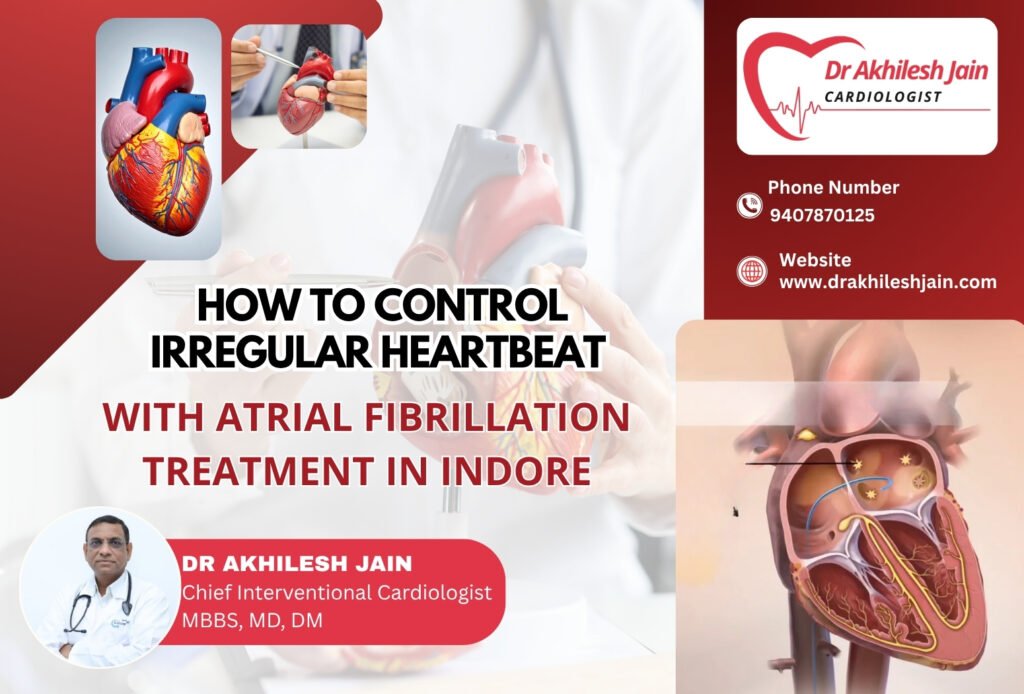
How to control irregular heartbeat with atrial fibrillation treatment in Indore by Dr. Akhilesh Jain with heart diagram.
Uncategorized

How to Control Irregular Heartbeat with Atrial Fibrillation Treatment in Indore

Your heart beats every second without you even noticing, but when that rhythm becomes irregular, it can be a sign of a serious condition. Atrial fibrillation (AFib) is one such condition that can cause an uneven heartbeat, discomfort, and anxiety. Seeking the Best Atrial Fibrillation Treatment in Indore at the right time can help control the condition and protect your heart from further complications. Irregular heartbeat should never be ignored. Studies show that atrial fibrillation can increase the risk of stroke by nearly 5 times if left untreated. Early consultation with a Best Cardiologist in Indore helps in accurate diagnosis and timely management of the condition. With proper care and guidance from a Best Heart Specialist in Indore, patients can effectively manage their heart rhythm, reduce risks, and lead a healthier, more active life. What Is Atrial Fibrillation? Atrial fibrillation is a condition in which the heart beats in an irregular or uneven rhythm, affecting the way blood flows through the body. In a healthy heart, the rhythm is steady and well-coordinated, but in AFib, the heartbeat can become fast and unpredictable. That is why timely care through the Best Atrial Fibrillation Treatment in Indore is important to manage the condition effectively. In atrial fibrillation: The heartbeat becomes fast or irregular Blood does not flow properly through the heart The heart becomes less efficient over time Think of your heart like a drum. When the beat is steady, everything feels smooth and balanced. But when the rhythm becomes irregular, it creates confusion and imbalance. Early diagnosis by a Best Cardiologist in Indore and proper guidance from a Best Heart Specialist in Indore can help restore a healthy heart rhythm and prevent complications. Why Irregular Heartbeat Is Dangerous Many people ignore an irregular heartbeat, assuming it is caused by stress or tiredness. However, it can be a sign of a serious heart condition that requires immediate attention. Seeking the Best Atrial Fibrillation Treatment in Indore at the right time can help prevent life-threatening complications. If left untreated, irregular heartbeat can lead to: Stroke (up to 5 times higher risk) Heart failure Blood clots Reduced heart efficiency Early diagnosis and proper treatment are essential to protect your heart. Consulting a Best Cardiologist in Indore and getting guidance from a Best Heart Specialist in Indore can help manage the condition effectively and reduce long-term risks. Common Symptoms of Atrial Fibrillation Atrial fibrillation can show different symptoms in different people. Some may feel clear warning signs, while others may not notice anything at all. Recognizing these symptoms early and seeking the Best Atrial Fibrillation Treatment in Indore can help prevent serious complications. Common symptoms include: Fast or irregular heartbeat Palpitations (a fluttering or racing feeling in the chest) Shortness of breath Fatigue or weakness Dizziness or lightheadedness In some cases, atrial fibrillation may not show any symptoms, which makes regular heart check-ups very important. Early consultation with a Best Cardiologist in Indore and proper guidance from a Best Heart Specialist in Indore can help detect the condition in time and ensure effective treatment. A Real Story – From Fear to Recovery Amit, a 45-year-old professional, started feeling his heart racing randomly. He ignored it at first. One day, he felt dizzy and collapsed briefly. After diagnosis, he was found to have atrial fibrillation. With timely care and proper treatment, Amit recovered well. Causes of Atrial Fibrillation Atrial fibrillation can develop due to various health conditions and lifestyle factors that affect the heart’s normal rhythm. Understanding these causes can help in early prevention and timely treatment. Common causes include: High blood pressure, which puts extra strain on the heart Existing heart disease or heart-related conditions Diabetes, which affects blood vessels and heart function Stress, which can disturb the heart’s rhythm Smoking, which damages blood vessels and the heart Excess alcohol consumption, which can trigger irregular heartbeat People above the age of 40 years are at a higher risk of developing atrial fibrillation, making regular heart check-ups important for early detection and management. Diagnosis – How Doctors Detect Atrial Fibrillation To diagnose atrial fibrillation accurately, a Best Heart Specialist in Indore may recommend a series of tests that help evaluate the heart’s rhythm and overall function. These tests allow doctors to detect irregularities early and plan the right treatment. Common diagnostic tests include: ECG (Electrocardiogram) This test records the electrical activity of the heart and helps identify irregular heart rhythms. Holter Monitoring A portable device is used to track the heart’s rhythm continuously for 24 hours or more. Echocardiography This imaging test uses ultrasound to check the heart’s structure and how well it is functioning. Early diagnosis helps in starting timely treatment and reducing the risk of complications. Treatment Options for Atrial Fibrillation The treatment for atrial fibrillation depends on the severity of the condition and the patient’s overall health. After proper evaluation, doctors choose the most suitable approach to control the heart rhythm and reduce complications. 1. Medications Help control heart rate and rhythm Prevent blood clots and reduce stroke risk 2. Cardioversion Uses controlled electrical shocks Helps restore the heart’s normal rhythm 3. Catheter Ablation Targets and blocks abnormal electrical signals Helps maintain a stable and regular heartbeat All these advanced treatment options are included in the Best Atrial Fibrillation Treatment in Indore, ensuring effective management and better heart health outcomes. Lifestyle Changes That Help Control Atrial Fibrillation Lifestyle plays a very important role in managing atrial fibrillation. Medical studies suggest that making the right lifestyle changes can improve heart health by up to 30% and help control irregular heartbeat more effectively. Simple daily habits that can make a difference include: Eating a healthy and balanced diet Exercising regularly to strengthen the heart Avoiding smoking, which can worsen heart rhythm problems Reducing caffeine intake to prevent irregular heartbeat triggers Managing stress through relaxation techniques like yoga or meditation Along with medical care, these lifestyle changes support the Best Atrial Fibrillation Treatment in Indore and help maintain a stable and healthy heart rhythm. Why

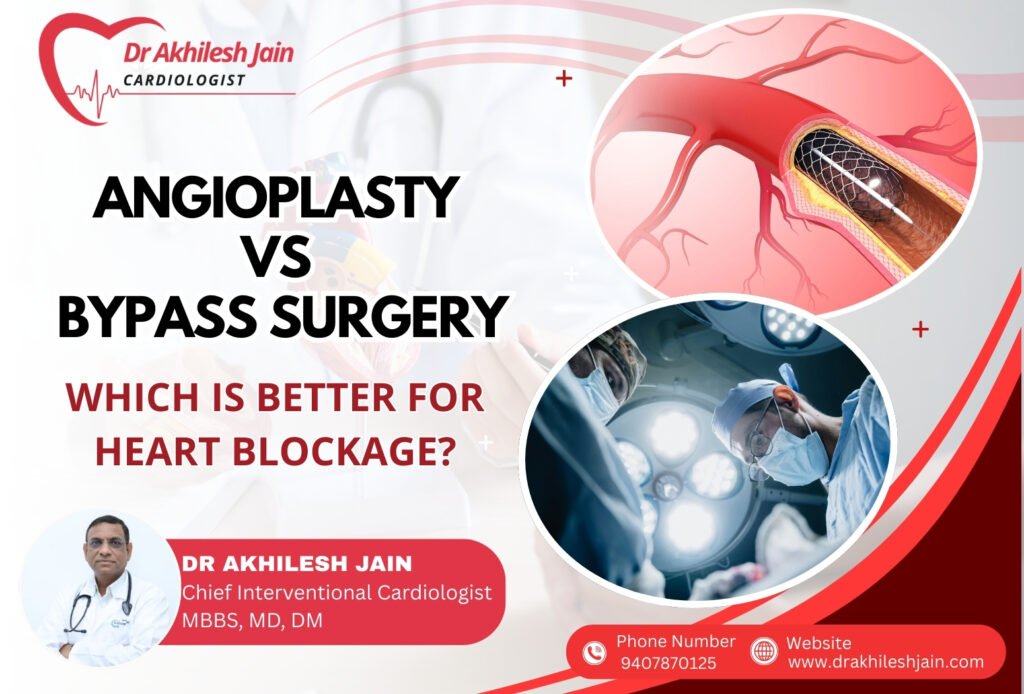
Angioplasty vs bypass surgery for heart blockage explained by Dr. Akhilesh Jain, interventional cardiologist.
Uncategorized

Angioplasty vs Bypass Surgery: Best Angioplasty in Indore or Best Bypass Surgery in Indore – Which Is Better for Heart Blockage?

Heart disease is one of the leading causes of death worldwide. Global health reports show that heart-related conditions cause nearly 17.9 million deaths every year, and blocked heart arteries contribute to many of these cases. When such problems occur, timely medical care and the Best Angioplasty in Indore can play a crucial role in restoring proper blood flow and protecting heart health. When arteries become blocked, doctors usually recommend two main treatment options: angioplasty and bypass surgery. Both procedures are effective, but the right choice depends on the severity of the blockage and the patient’s overall health. Consulting a Best Cardiologist in Indore helps patients understand their condition clearly and choose the most suitable treatment. In cases where blockages are severe or involve multiple arteries, doctors may recommend surgical options such as the Best Bypass Surgery in Indore. Understanding the differences between these treatments can help patients make informed decisions about their heart care. Understanding Heart Blockage Your heart needs a constant supply of oxygen-rich blood to function properly. This blood travels through special vessels called coronary arteries, which play a vital role in maintaining heart health. When these arteries become narrowed or blocked, doctors may recommend treatments such as the Best Angioplasty in Indore to restore normal blood flow and protect the heart. Over time, fat, cholesterol, and other substances can build up inside the artery walls. This buildup forms a substance called plaque, which gradually narrows the arteries and restricts blood circulation. In many cases, a Best Cardiologist in Indore evaluates the severity of the blockage and recommends the most suitable treatment based on the patient’s condition. Medical research shows that when artery blockage reaches 60–70%, the risk of a heart attack increases significantly. In severe cases, advanced treatments like the Best Bypass Surgery in Indore may be required to create a new pathway for blood flow. This condition is medically known as Coronary Artery Disease (CAD).   What Is Angioplasty? Angioplasty is a modern and minimally invasive procedure used to treat blocked or narrowed heart arteries. It helps restore proper blood flow to the heart without the need for major surgery. Many patients choose this procedure because recovery is faster and the treatment is highly effective, especially when performed by an experienced specialist like Dr. Akhilesh Jain as part of the Best Angioplasty in Indore. How Angioplasty Is Performed A thin, flexible tube called a catheter is inserted into a blood vessel, usually through the wrist or groin. The catheter is carefully guided toward the blocked coronary artery. Once it reaches the blockage, a small balloon is inflated to widen the narrowed artery. In many cases, doctors place a stent (tiny metal mesh tube) to keep the artery open and prevent future blockage. Procedure and Recovery The angioplasty procedure usually takes 30 to 60 minutes. Most patients can return home within 24–48 hours. Patients usually recover faster compared to major heart surgery. Because of its effectiveness and shorter recovery time, many patients prefer the Best Angioplasty in Indore for treating heart blockages safely and efficiently. What Is Bypass Surgery? Bypass surgery, medically known as Coronary Artery Bypass Grafting (CABG), is a surgical procedure used to treat severe or multiple heart artery blockages. Doctors recommend this treatment to restore blood flow to the heart when simpler procedures cannot treat severe artery blockages. How Bypass Surgery Works Doctors create a new pathway for blood flow around the blocked artery. A healthy blood vessel is taken from another part of the body, such as the chest, leg, or arm. This vessel is attached to the heart to bypass the blocked section of the artery, allowing blood to flow normally again. Procedure and Recovery The surgery usually takes 3 to 6 hours depending on the number of blockages. Patients typically stay in the hospital for several days after the procedure. Full recovery may take around 4 to 8 weeks. In cases where patients have multiple or severe blockages, doctors may recommend the Best Bypass Surgery in Indore to restore healthy blood circulation and reduce the risk of heart attack. Key Differences of Angioplasty vs Bypass Surgery  Feature Angioplasty Bypass Surgery Procedure Type Minimally invasive Major surgery Hospital Stay 1–2 days 5–7 days Recovery Time 1 week 4–8 weeks Best For Single blockage Multiple blockages Risk Level Lower Higher Both treatment options can provide excellent results when chosen based on proper diagnosis and expert medical advice. Consulting an experienced Best Cardiologist in Indore helps ensure the most suitable and safest treatment for each patient. When Do Doctors Recommend Angioplasty? Doctors usually recommend angioplasty when they can safely treat the blockage in the heart arteries without performing major surgery. After proper evaluation, a heart specialist may suggest the Best Angioplasty in Indore as an effective treatment option for restoring blood flow to the heart. Doctors generally recommend angioplasty when: Only one or two coronary arteries are blocked The blockage is not extremely complex or widespread The patient requires a faster recovery and shorter hospital stay Medical studies show that angioplasty has a success rate of more than 95% in many cases, making it a reliable and commonly preferred treatment for heart artery blockages. Why Experience Matters in Heart Treatment Heart procedures require high precision, accurate diagnosis, and careful decision-making. Even a small delay or incorrect treatment choice can affect the patient’s recovery, which is why experience plays a crucial role in heart care. Patients searching for a Best Cardiologist in Indore often prefer specialists who have extensive experience in diagnosing and treating heart artery blockages. An experienced cardiologist can evaluate the severity of the condition and recommend the most suitable treatment, whether it is angioplasty or bypass surgery. Dr. Akhilesh Jain, known as a Best Cardiologist in Indore is recognized for his patient-focused approach and expertise in advanced cardiac procedures. His priority is always to recommend the safest and most effective treatment plan to help patients recover and maintain long-term heart health. How Lifestyle Changes Help Prevent Heart Blockage While treatments like the

Dr. Akhilesh Jain explaining coronary artery disease treatment in Indore with a heart model and patient awareness graphic.
Uncategorized

Looking for Coronary Artery Disease Treatment in Indore? Here’s What You Should Know

Heart disease does not develop in a single day. It builds up slowly and silently over time, often without clear warning signs in the early stages. Many people ignore mild symptoms until the condition becomes serious, which is why seeking the Best Coronary Artery Disease Treatment in Indore at the right time can make a life-saving difference. In many cases, individuals delay visiting a specialist until chest pain becomes severe or a heart attack suddenly occurs. Early consultation with a Best Cardiologist in Indore helps detect problems before they turn critical and ensures proper guidance and timely treatment. Understanding coronary artery disease and acting early can protect your heart and improve your long-term health. What Is Coronary Artery Disease? Your heart needs oxygen to work properly, and this oxygen reaches the heart through special blood vessels called coronary arteries. When these arteries are healthy, blood flows smoothly and the heart functions efficiently. However, studies show that nearly 50–60% of heart attacks occur due to blocked coronary arteries, making early detection extremely important. This is why timely care and the Best Coronary Artery Disease Treatment in Indore can play a crucial role in preventing serious complications. Over time, fat, cholesterol, and other substances can slowly build up inside these arteries. As this buildup increases, the arteries become narrow and stiff. This condition is known as Coronary Artery Disease (CAD), and it reduces the amount of blood and oxygen reaching the heart muscle. Think of it like a water pipe in your home. If dirt and debris collect inside the pipe, the flow of water becomes slow and weak. In the same way, when arteries become blocked, blood flow to the heart decreases, making it harder for the heart to function properly. Why Coronary Artery Disease Is Dangerous Coronary artery disease can become serious when the arteries supplying blood to the heart become significantly blocked. When blood flow reduces, the heart does not receive enough oxygen, and this can lead to several warning signs and life-threatening complications. Seeking the Best Coronary Artery Disease Treatment in Indore at the right time can greatly reduce these risks. Blocked arteries may cause: Chest pain or pressure (Angina) Shortness of breath, even during mild activity Unusual fatigue or weakness Heart attack due to complete blockage Sudden cardiac arrest in severe cases Medical studies show that severe artery blockage can increase the risk of heart attack by more than 50% if left untreated. Without timely care and evaluation by a Best Cardiologist in Indore, the condition can quickly become life-threatening. Early diagnosis and proper treatment are essential to protect heart health and prevent serious damage. A Real-Life Story – When Ignoring Symptoms Became Risky Rajesh, a 48-year-old businessman, often experienced mild chest discomfort. Like many people, he assumed it was due to stress, long working hours, or acidity. He chose to ignore the symptoms, thinking they were temporary and not serious. One evening, however, the discomfort turned into intense chest pressure accompanied by sweating and breathlessness. His family quickly realized something was wrong and rushed him to a heart specialist. After detailed tests, doctors found severe blockage in his coronary arteries. Fortunately, Rajesh received timely medical care and underwent proper treatment. Today, he walks daily, follows a heart-healthy diet, and prioritizes regular check-ups. Symptoms You Should Never Ignore Coronary artery disease often shows early warning signs, but many people ignore them until the condition becomes serious. Recognizing these symptoms on time and seeking the Best Coronary Artery Disease Treatment in Indore can significantly reduce the risk of complications. Common symptoms include: Chest tightness, pressure, or heaviness Pain spreading to the arm, jaw, neck, or back Shortness of breath, even during light activity Dizziness or a faint feeling Unusual or extreme tiredness Even mild symptoms deserve immediate attention. Consulting a Best Cardiologist in Indore at the right time can help detect the problem early and protect your heart from severe damage. Who Is at Higher Risk? Coronary artery disease does not affect everyone in the same way. However, certain health conditions and lifestyle habits can significantly increase the risk. In fact, studies show that people with multiple risk factors are 2 to 4 times more likely to develop heart artery blockages. Seeking the Best Coronary Artery Disease Treatment in Indore at an early stage can help reduce these risks and prevent serious complications. You may be at higher risk if you have: Diabetes – Diabetic patients have nearly 2x higher risk of heart disease. High blood pressure – Increases strain on the arteries over time. High cholesterol – Responsible for plaque buildup inside arteries. Smoking habits – Smokers are up to 70% more likely to develop coronary artery disease. Family history of heart disease – Genetic factors can increase risk. Sedentary lifestyle – Lack of exercise weakens heart health. Regular heart check-ups with a Best Cardiologist in Indore and early screening can detect problems before they become severe, helping prevent major heart complications. Diagnosis – How Doctors Detect Coronary Artery Disease Diagnosing coronary artery disease at the right time can prevent serious heart complications. When you consult a heart specialist, they may recommend specific tests to understand how well your heart is functioning and whether there are any blockages in the arteries. Early detection plays a key role in planning the most effective treatment. Some common diagnostic tests include: ECG (Electrocardiogram) This test records the electrical activity of the heart and helps identify irregular rhythms or signs of reduced blood flow. EchocardiographyAn ultrasound-based scan that shows the structure and pumping function of the heart in real time. TMT (Treadmill Stress Test)This test evaluates how the heart performs during physical activity and can reveal symptoms that may not appear while resting. Coronary AngiographyA specialized imaging test that clearly shows the exact location and severity of artery blockages. With proper guidance from Dr. Akhilesh Jain, who is known as a Best Cardiologist in Indore, these diagnostic tests help identify the exact problem and allow doctors to plan the most

Scroll to Top