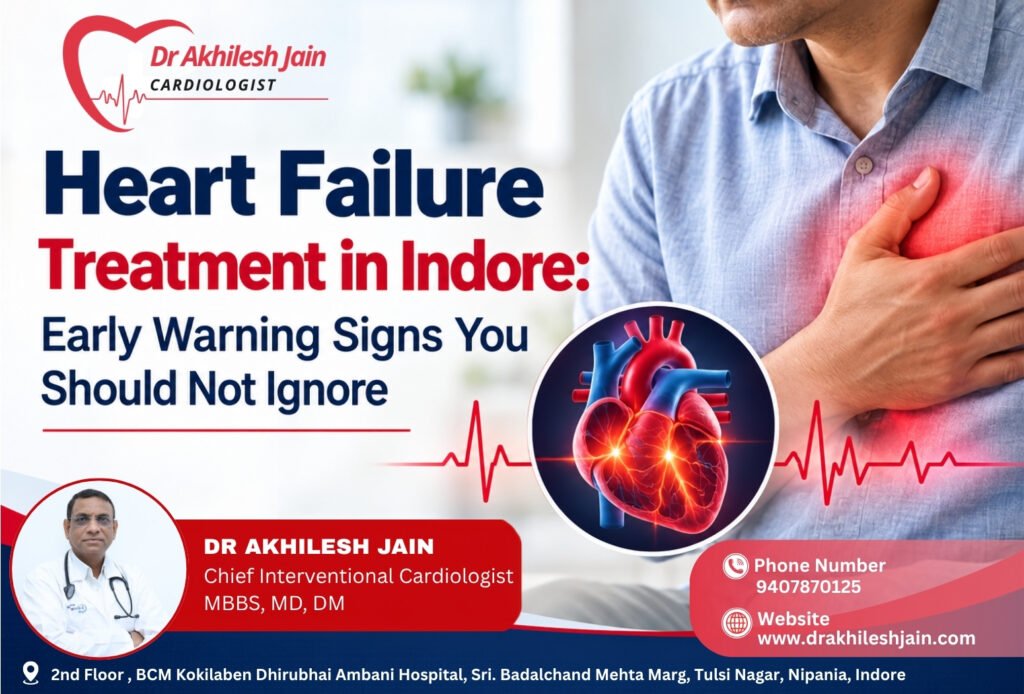
Heart Failure Treatment in Indore: Early Warning Signs You Should Not Ignore
Heart failure is a serious cardiovascular condition that develops when the heart cannot pump blood efficiently enough to meet the body’s needs. Many people overlook its early warning signs, assuming that tiredness, breathlessness, or reduced physical activity are simply part of ageing. For individuals seeking Heart Failure Treatment in Indore, Dr. Akhilesh Jain provides cardiac consultation in Tulsi Nagar, Nipania. As an Experienced Cardiologist in Indore, he evaluates different heart-related conditions and helps patients understand suitable management options. Heart failure does not mean that the heart has completely stopped working. Instead, it means that the heart has become too weak or stiff to pump or fill with blood effectively. This can affect circulation throughout the body and may lead to fluid accumulation in the lungs, legs, and other tissues. Recognising Heart Failure Symptoms at an early stage is important because timely diagnosis allows doctors to identify underlying cardiovascular problems. Patients searching for a Heart Doctor in Indore should pay attention to persistent breathlessness, unusual fatigue, swelling, and changes in their ability to perform everyday activities. Consulting a Heart Failure Specialist in Indore can help patients understand the condition, its possible causes, and available management options. This article explains Heart Failure Treatment in Indore, including early warning signs, risk factors, diagnosis, medical treatment, and lifestyle changes that support long-term cardiovascular health. What Is Heart Failure? Heart failure is a medical condition in which the heart cannot pump sufficient blood throughout the body or fill properly between heartbeats. Since the heart supplies oxygen-rich blood to vital organs, reduced cardiac function can affect several body systems and make everyday activities more difficult. In some individuals, the heart muscle becomes weak and loses its ability to contract effectively. In others, the muscle becomes stiff and cannot relax properly, reducing the amount of blood entering the heart between contractions. Both situations can interfere with normal circulation and may lead to fatigue, breathlessness, and swelling. Heart failure can affect the left side, right side, or both sides of the heart. Left-sided heart failure commonly causes fluid accumulation in the lungs, while right-sided heart failure may result in swelling around the feet, ankles, legs, or abdomen. Doctors also classify heart failure according to ejection fraction, which measures how much blood the left ventricle pumps out with each contraction. Heart failure with reduced ejection fraction involves impaired pumping ability, while heart failure with preserved ejection fraction generally involves difficulty relaxing and filling despite a relatively preserved pumping percentage. Understanding the type and severity of the condition is an important part of planning Heart Failure Treatment in Indore. Dr. Akhilesh Jain, a Cardiologist in Nipania Indore, considers the patient’s symptoms, medical history, and diagnostic findings when discussing appropriate management options. Early Heart Failure Symptoms You Should Never Ignore Heart failure often begins with mild symptoms that gradually become more noticeable. A person may initially experience difficulty completing activities that previously required little effort. Recognising these changes is important because symptoms may worsen when the underlying condition remains untreated. Dr. Akhilesh Jain advises individuals with existing cardiovascular conditions, diabetes, or hypertension to pay attention to persistent changes in breathing, physical stamina, and overall health. Consulting a Heart Specialist in Indore can help determine whether further cardiac investigations are necessary. Early recognition also plays an important role in Heart Failure Treatment in Indore, as identifying symptoms promptly allows doctors to investigate underlying conditions and recommend suitable medical care. 1. Shortness of Breath Breathlessness is one of the most common early signs of heart failure. It may initially occur during physical activities such as walking, climbing stairs, exercising, or carrying groceries. As the condition progresses, some individuals may experience breathing difficulties even while resting. Fluid accumulation in the lungs can make breathing uncomfortable, particularly when lying flat. Some patients may need additional pillows to sleep comfortably or wake up suddenly at night feeling short of breath. Persistent or worsening breathlessness should always be medically evaluated. 2. Unusual Fatigue and Weakness Feeling tired after a physically demanding day is normal. However, unexplained exhaustion that continues despite adequate rest may indicate an underlying health concern. When the heart cannot circulate blood effectively, muscles and other organs may receive less oxygen-rich blood, making routine activities more tiring. A person may notice that walking short distances, completing household work, or climbing a few stairs requires significantly more effort than before. Such changes should not automatically be attributed to ageing or poor fitness. 3. Swelling in the Feet, Ankles, and Legs Swelling, medically known as oedema, can occur when fluid accumulates in body tissues. In patients with heart failure, impaired circulation and fluid retention may cause noticeable swelling around the ankles, feet, and lower legs. Some individuals may observe that their footwear becomes tighter towards the evening or that pressing the swollen area leaves a temporary indentation. Although swelling can occur due to several medical conditions, persistent swelling accompanied by breathlessness or fatigue requires proper evaluation. 4. Persistent Coughing or Wheezing An ongoing cough may sometimes be associated with fluid accumulation in the lungs. Patients may notice that coughing becomes more troublesome at night or while lying down. Wheezing or difficulty breathing may also develop in certain cases. Because coughing can result from respiratory infections, allergies, asthma, and other conditions, it is important to identify the actual cause rather than assuming that it is always related to the lungs. 5. Sudden Weight Gain Unexplained weight gain over a short period may be associated with fluid retention rather than an increase in body fat. In patients already diagnosed with heart failure, monitoring body weight can help identify changes that require medical attention. Dr. Akhilesh Jain recommends that patients follow their treating doctor’s instructions regarding weight monitoring and report sudden changes according to their individual care plan. 6. Rapid or Irregular Heartbeat When the heart’s pumping efficiency decreases, the body may attempt to compensate by increasing the heart rate. Some individuals experience palpitations, a racing heartbeat, or an uncomfortable awareness of their heartbeat. Although palpitations do not always