
Dr Akhilesh Jain

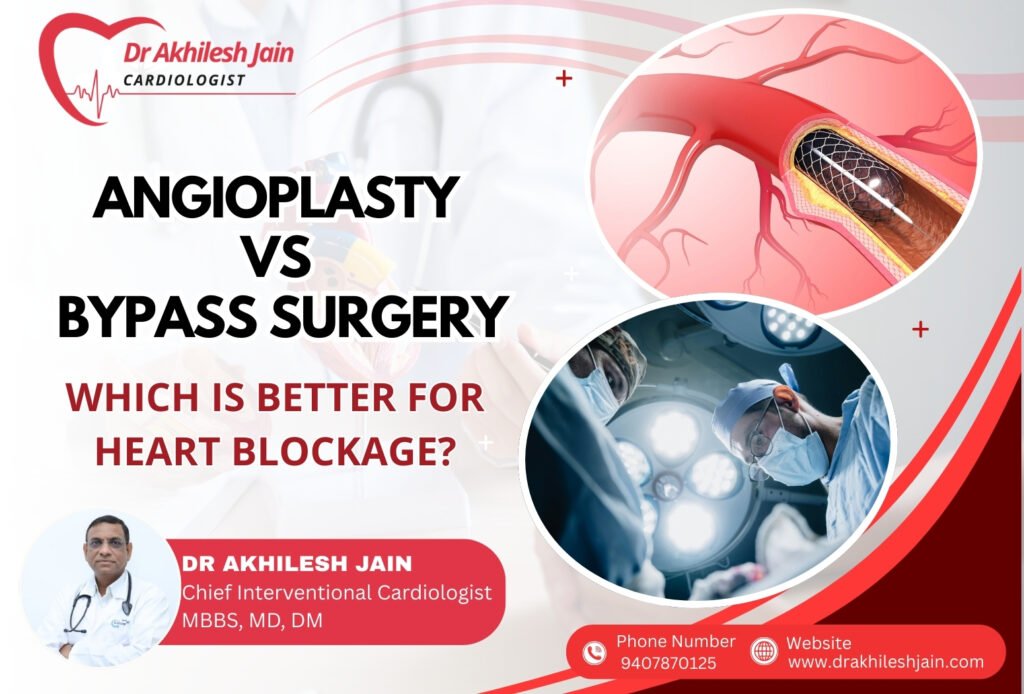
Angioplasty vs bypass surgery for heart blockage explained by Dr. Akhilesh Jain, interventional cardiologist.
Uncategorized

Angioplasty vs Bypass Surgery: Best Angioplasty in Indore or Best Bypass Surgery in Indore – Which Is Better for Heart Blockage?

Heart disease is one of the leading causes of death worldwide. Global health reports show that heart-related conditions cause nearly 17.9 million deaths every year, and blocked heart arteries contribute to many of these cases. When such problems occur, timely medical care and the Best Angioplasty in Indore can play a crucial role in restoring proper blood flow and protecting heart health. When arteries become blocked, doctors usually recommend two main treatment options: angioplasty and bypass surgery. Both procedures are effective, but the right choice depends on the severity of the blockage and the patient’s overall health. Consulting a Best Cardiologist in Indore helps patients understand their condition clearly and choose the most suitable treatment. In cases where blockages are severe or involve multiple arteries, doctors may recommend surgical options such as the Best Bypass Surgery in Indore. Understanding the differences between these treatments can help patients make informed decisions about their heart care. Understanding Heart Blockage Your heart needs a constant supply of oxygen-rich blood to function properly. This blood travels through special vessels called coronary arteries, which play a vital role in maintaining heart health. When these arteries become narrowed or blocked, doctors may recommend treatments such as the Best Angioplasty in Indore to restore normal blood flow and protect the heart. Over time, fat, cholesterol, and other substances can build up inside the artery walls. This buildup forms a substance called plaque, which gradually narrows the arteries and restricts blood circulation. In many cases, a Best Cardiologist in Indore evaluates the severity of the blockage and recommends the most suitable treatment based on the patient’s condition. Medical research shows that when artery blockage reaches 60–70%, the risk of a heart attack increases significantly. In severe cases, advanced treatments like the Best Bypass Surgery in Indore may be required to create a new pathway for blood flow. This condition is medically known as Coronary Artery Disease (CAD).   What Is Angioplasty? Angioplasty is a modern and minimally invasive procedure used to treat blocked or narrowed heart arteries. It helps restore proper blood flow to the heart without the need for major surgery. Many patients choose this procedure because recovery is faster and the treatment is highly effective, especially when performed by an experienced specialist like Dr. Akhilesh Jain as part of the Best Angioplasty in Indore. How Angioplasty Is Performed A thin, flexible tube called a catheter is inserted into a blood vessel, usually through the wrist or groin. The catheter is carefully guided toward the blocked coronary artery. Once it reaches the blockage, a small balloon is inflated to widen the narrowed artery. In many cases, doctors place a stent (tiny metal mesh tube) to keep the artery open and prevent future blockage. Procedure and Recovery The angioplasty procedure usually takes 30 to 60 minutes. Most patients can return home within 24–48 hours. Patients usually recover faster compared to major heart surgery. Because of its effectiveness and shorter recovery time, many patients prefer the Best Angioplasty in Indore for treating heart blockages safely and efficiently. What Is Bypass Surgery? Bypass surgery, medically known as Coronary Artery Bypass Grafting (CABG), is a surgical procedure used to treat severe or multiple heart artery blockages. Doctors recommend this treatment to restore blood flow to the heart when simpler procedures cannot treat severe artery blockages. How Bypass Surgery Works Doctors create a new pathway for blood flow around the blocked artery. A healthy blood vessel is taken from another part of the body, such as the chest, leg, or arm. This vessel is attached to the heart to bypass the blocked section of the artery, allowing blood to flow normally again. Procedure and Recovery The surgery usually takes 3 to 6 hours depending on the number of blockages. Patients typically stay in the hospital for several days after the procedure. Full recovery may take around 4 to 8 weeks. In cases where patients have multiple or severe blockages, doctors may recommend the Best Bypass Surgery in Indore to restore healthy blood circulation and reduce the risk of heart attack. Key Differences of Angioplasty vs Bypass Surgery  Feature Angioplasty Bypass Surgery Procedure Type Minimally invasive Major surgery Hospital Stay 1–2 days 5–7 days Recovery Time 1 week 4–8 weeks Best For Single blockage Multiple blockages Risk Level Lower Higher Both treatment options can provide excellent results when chosen based on proper diagnosis and expert medical advice. Consulting an experienced Best Cardiologist in Indore helps ensure the most suitable and safest treatment for each patient. When Do Doctors Recommend Angioplasty? Doctors usually recommend angioplasty when they can safely treat the blockage in the heart arteries without performing major surgery. After proper evaluation, a heart specialist may suggest the Best Angioplasty in Indore as an effective treatment option for restoring blood flow to the heart. Doctors generally recommend angioplasty when: Only one or two coronary arteries are blocked The blockage is not extremely complex or widespread The patient requires a faster recovery and shorter hospital stay Medical studies show that angioplasty has a success rate of more than 95% in many cases, making it a reliable and commonly preferred treatment for heart artery blockages. Why Experience Matters in Heart Treatment Heart procedures require high precision, accurate diagnosis, and careful decision-making. Even a small delay or incorrect treatment choice can affect the patient’s recovery, which is why experience plays a crucial role in heart care. Patients searching for a Best Cardiologist in Indore often prefer specialists who have extensive experience in diagnosing and treating heart artery blockages. An experienced cardiologist can evaluate the severity of the condition and recommend the most suitable treatment, whether it is angioplasty or bypass surgery. Dr. Akhilesh Jain, known as a Best Cardiologist in Indore is recognized for his patient-focused approach and expertise in advanced cardiac procedures. His priority is always to recommend the safest and most effective treatment plan to help patients recover and maintain long-term heart health. How Lifestyle Changes Help Prevent Heart Blockage While treatments like the

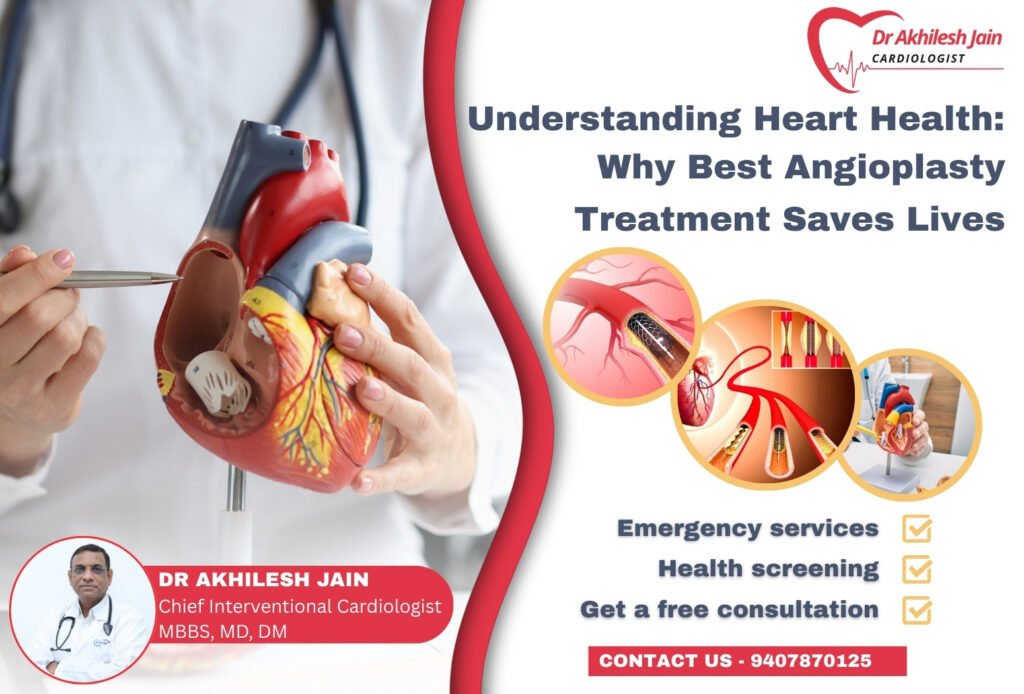
Doctor explaining a heart model while highlighting the importance of angioplasty treatment for blocked heart arteries
Uncategorized

Understanding Heart Health: Why Best Angioplasty Treatment in Indore Saves Lives

Heart health is something many people think about only when a serious problem suddenly appears. Daily responsibilities often make people ignore early warning signs until the situation becomes critical. A heart attack can come without warning and change life within minutes, affecting not only the patient but the entire family. That is why timely diagnosis and treatment are extremely important. The Best Angioplasty Treatment in Indore has helped many people get a second chance at life by restoring proper blood flow to the heart quickly and safely, often before permanent damage can occur. Angioplasty is a life-saving procedure that opens blocked heart arteries and allows oxygen-rich blood to reach the heart muscle again. Blocked arteries make the heart work harder, causing pain, weakness, and a high risk of serious complications. When angioplasty is performed at the right time under the care of an experienced Best Cardiologist in Indore like Dr. Akhilesh Jain, it can reduce chest pain, limit heart muscle damage, prevent future heart problems, and help patients return to a normal, active, and confident life. Early action truly makes the difference between fear and recovery. What is Angioplasty? Doctors use angioplasty to open heart arteries that have become narrow or blocked. These arteries carry blood and oxygen to the heart muscle, which is essential for the heart to work properly. When fat or cholesterol builds up inside these arteries, blood flow reduces and the heart begins to struggle, leading to symptoms such as chest pain, breathlessness, and extreme tiredness. This is why timely care through the Best Angioplasty Treatment in Indore is so important to restore healthy blood flow and protect the heart from serious damage. Angioplasty works by clearing the blockage inside the artery and allowing blood to flow smoothly again. Doctors use a small balloon or a stent to open the narrowed area and keep the artery open. When this procedure is performed at the right time by an experienced Best Cardiologist in Indore like Dr. Akhilesh Jain, it helps reduce strain on the heart, lowers the risk of heart attacks, and allows patients to return to a healthier and more active life. When Might You Need Angioplasty? Angioplasty may be needed when the heart is not receiving enough blood and oxygen to function properly. This usually happens when fat, cholesterol, and other substances slowly build up inside the heart arteries over time. As these arteries become narrow or blocked, blood flow to the heart muscle reduces, making it harder for the heart to work efficiently. In such cases, timely medical care and the Best Angioplasty Treatment in Indore can help restore healthy blood flow and prevent serious heart complications. Some common warning signs that may indicate the need for angioplasty include: Chest pain, pressure, tightness, or a heavy feeling Shortness of breath, even during mild activity or rest Sudden sweating without physical effort Pain spreading to the arm, jaw, neck, shoulder, or back These symptoms should never be ignored. If left untreated, they can increase the risk of a heart attack and lead to serious heart damage. Early evaluation and timely care from a Best Cardiologist in Indore like Dr. Akhilesh Jain can help detect heart problems early, guide the right treatment, and protect long-term heart health. Types of Angioplasty Angioplasty is not the same for every patient. Each heart condition is different, and the type of angioplasty is carefully chosen based on the severity of the blockage, the location of the affected artery, and the patient’s overall heart health. A detailed heart evaluation helps decide the most suitable and safest approach. Balloon Angioplasty In this method, a small balloon is gently inflated at the site of the blockage. This helps widen the narrowed artery and improve blood flow to the heart. It is often used in simpler or less severe blockages.   Stent Angioplasty A tiny metal stent is placed inside the artery after it is opened. The stent acts as a support, keeping the artery open and reducing the chances of it narrowing again in the future. Drug-Eluting Stent This advanced type of stent slowly releases medicine into the artery. The medicine helps prevent scar tissue formation and lowers the risk of the artery getting blocked again over time. After careful evaluation and planning, the most appropriate technique is selected to ensure the Best Angioplasty Treatment in Indore, offering safe results, better recovery, and long-term heart protection for every patient. What Happens During Angioplasty? Angioplasty is usually performed under local anesthesia, so the patient remains awake and comfortable during the procedure. There is no major pain involved. A thin, flexible tube is carefully guided through a blood vessel to reach the blocked heart artery. Once the blockage is located, it is gently opened to restore proper blood flow to the heart. This helps the heart receive the oxygen it needs to function well. Most patients feel relief soon after the artery is opened and are often surprised at how quick and smooth the entire experience of the Best Angioplasty Treatment in Indore feels. How Long Does Angioplasty Take? Angioplasty is usually a short and well-planned procedure. In most cases, it takes about 30 minutes to 1 hour. The exact time can vary based on a few important factors. The number of blocked arteries The location of the blockage The patient’s overall heart condition In emergency situations, quick action is extremely important. Early treatment helps reduce heart damage and supports a faster, smoother recovery. What Happens After Angioplasty? After angioplasty, patients are kept under observation for a short period to ensure everything is stable. Doctors closely monitor heart function and recovery during this time. Most patients are able to sit up and walk within a day. Gradually, normal daily activities are resumed based on medical advice. Medicines, healthy eating habits, regular exercise, and follow-up visits play a very important role in long-term heart health. With proper care and guidance, people can lead a healthy, active, and confident life after receiving the Best Angioplasty Treatment in

Dr. Akhilesh Jain explaining common myths and facts about angiography with cardiac procedure visuals.
Uncategorized

Common Myths and Facts About Angiography You Should Know

If your doctor has advised an angiography, you might feel worried or confused. Many people hear different stories about it some true, some not! That’s why in this blog, we’ll clear all your doubts and share the real facts about Angiography in Indore with guidance from Dr. Akhilesh Jain, the Best Cardiologist in Indore. Understanding the truth can help you feel calm and confident before your procedure. Let’s start by knowing what angiography really means. What is Angiography? Angiography is a special medical test that helps doctors see the blood vessels of your heart clearly. It shows whether any artery is blocked or narrowed. This test helps doctors find out the reason behind chest pain, shortness of breath, or other heart problems. During Angiography in Indore, a thin tube called a catheter is inserted into your blood vessel (usually through the wrist or groin). A special dye is then injected, and X-ray images are taken to see how blood flows through your heart. It’s safe, quick, and helps doctors plan the best treatment like medication, angioplasty, or stent placement if needed. Why is Angiography Important? Angiography helps doctors: Detect heart blockages early Prevent major heart attacks Plan proper treatment Save lives through early intervention That’s why experts like Dr. Akhilesh Jain, the Best Cardiologist in Indore, recommend timely angiography for people showing symptoms of heart disease. Common Myths and Facts About Angiography Let’s now look at some of the most common myths and facts that people believe about angiography. Myth 1: Angiography is a very painful test. Fact: This is false.Angiography is almost painless. Only a small prick is felt when local anesthesia is given to numb the area. Most patients remain awake during the procedure and feel comfortable throughout. Myth 2: Angiography is risky and unsafe. Fact: Angiography is one of the safest cardiac procedures when performed by an expert.Under the care of specialists like Dr. Akhilesh Jain, Angiography in Indore is done using advanced technology and strict safety protocols. Complications are extremely rare. Myth 3: You need to stay in the hospital for many days. Fact: Most patients can go home the same day or the next day after angiography.It’s usually a day-care procedure, especially when done through the wrist (radial artery). Myth 4: Angiography is only for elderly people. Fact: Heart problems can happen at any age.If a young person experiences chest pain, dizziness, or breathlessness, the doctor may advise angiography to rule out heart disease. Angiography in Indore is performed on patients of all age groups, depending on the symptoms. Myth 5: Angiography damages the heart. Fact: This is not true at all.Angiography doesn’t harm your heart. In fact, it helps the doctor understand your heart’s condition better so that the right treatment can be started early. Myth 6: You cannot live normally after angiography. Fact: You can return to normal life soon after angiography.After resting for a few hours, patients can usually walk, eat, and go home within 24 hours. Following simple care instructions from your cardiologist ensures a smooth recovery. Myth 7: Every angiography leads to angioplasty. Fact: Not always!Angiography is only a diagnostic test — it helps identify if you need further treatment like angioplasty or not. Many people only require medicines and lifestyle changes after angiography. Myth 8: Angiography is only done in serious heart attack cases. Fact: Angiography can be done for several reasons — Chest pain or tightness Abnormal ECG or stress test Shortness of breath Family history of heart disease It’s not limited to emergencies; sometimes it’s done as a preventive check-up, too. Myth 9: Angiography is very expensive. Fact: The cost of Angiography in Indore is quite reasonable compared to other cities.Dr. Akhilesh Jain and his team ensure quality care at an affordable cost, making it accessible for everyone. Myth 10: You can’t eat or drink before and after angiography. Fact: You may be asked to fast for a few hours before the test, but after angiography, you can eat normally once the doctor allows it. Drinking water is encouraged to flush out the dye used during the procedure. How to Prepare for Angiography If you are going for Angiography in Indore, here’s what you should keep in mind: Don’t eat or drink for 4–6 hours before the test. Inform your doctor about all medicines you take. Wear loose, comfortable clothes. Follow all the instructions given by your cardiologist carefully. Recovery After Angiography Recovery is usually quick and smooth. After the procedure: You may need to lie flat for a few hours. Avoid heavy exercise for 24 hours. Drink plenty of fluids to remove the dye from your body. If you notice swelling or pain at the insertion site, inform your doctor. Under the guidance of Dr. Akhilesh Jain, patients usually resume their normal life within a day. Why Choose Dr. Akhilesh Jain for Angiography in Indore? 20+ years of experience in clinical and interventional cardiology Performed 10,000+ angiographies successfully Expert in handling complex and high-risk cases Known for his compassionate care and accuracy Recognized as the Best Cardiologist in Indore When you choose Dr. Akhilesh Jain for Angiography in Indore, you get advanced care with a personal touch, ensuring your heart’s health and your peace of mind. Preventing Heart Problems Before They Start While angiography helps in diagnosis, prevention is always better. Follow these simple tips shared by the Best Cardiologist in Indore: Eat a heart-healthy diet (fruits, vegetables, and whole grains) Exercise regularly Avoid smoking and alcohol Get your cholesterol and blood pressure checked regularly Stay stress-free through meditation or yoga These small changes can make a big difference to your heart health. Frequently Asked Questions (FAQs) 1. Is angiography painful? No, angiography is almost painless. Only a small prick is felt for anesthesia. Most patients stay comfortable during the procedure. 2. How long does Angiography in Indore take? It usually takes 15 to 30 minutes, depending on your heart’s condition. You can go home the same or next day. 3. What is the cost of Angiography in Indore?

Scroll to Top